Department of Dermatology, Hubei Provincial Hospital of Traditional Chinese Medicine, Hubei Province Academy of Traditional Chinese Medicine, Wuhan 430061, China.
Department of Dermatology, The First Clinical School, Hubei University of Chinese Medicine, Wuhan 430061, China.
Biomed Res Int. 2020 Jul 17;2020:5149417. doi: 10.1155/2020/5149417. eCollection 2020.
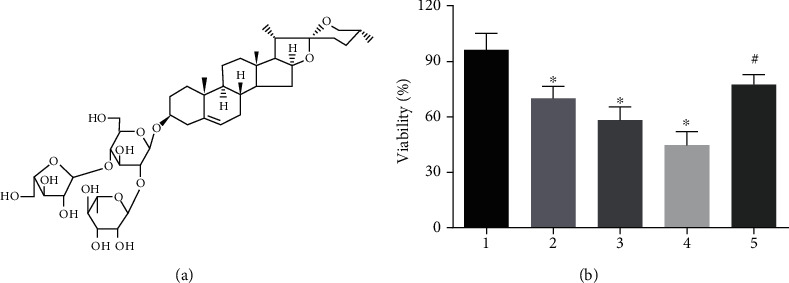
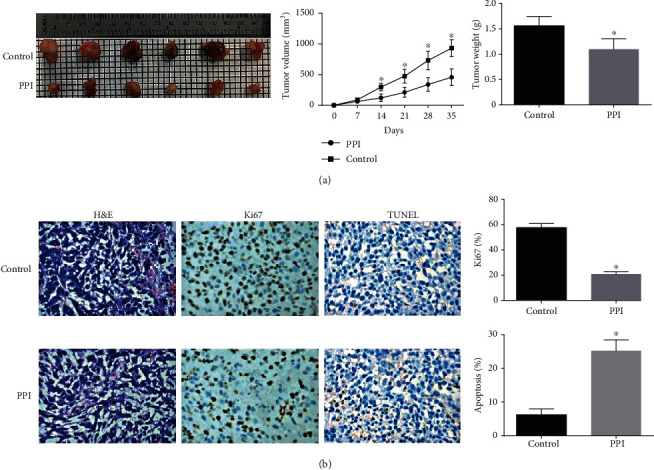
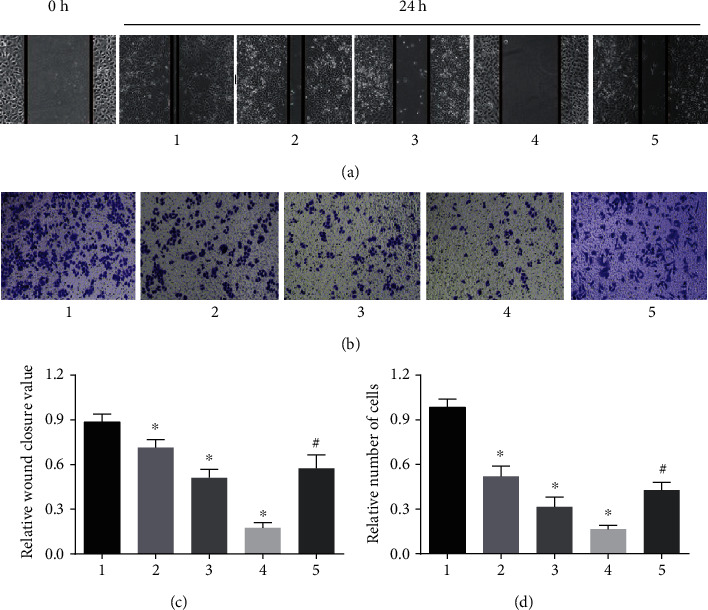
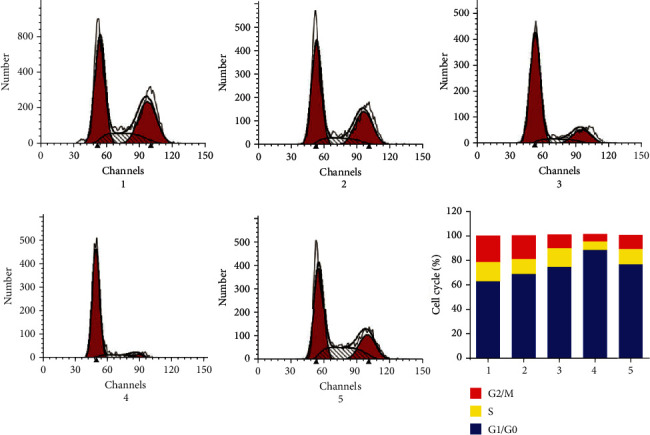
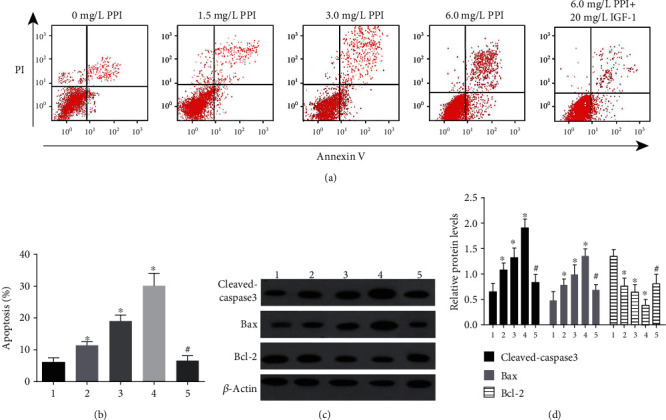
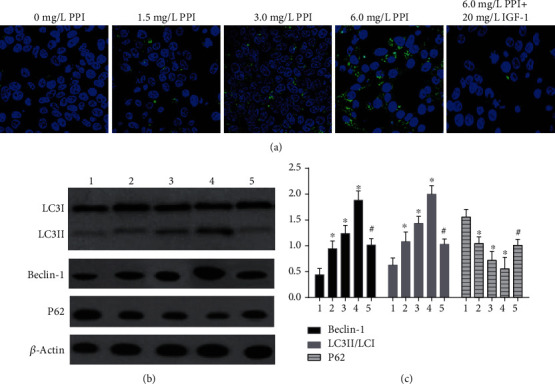
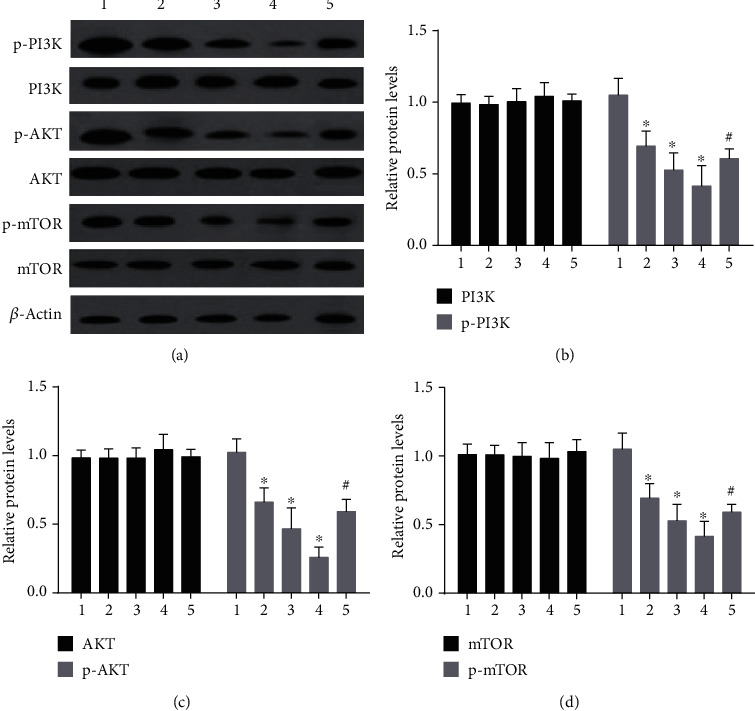
To investigate whether Polyphyllin I (PPI) might induce the autophagy and apoptosis of melanoma cells by regulating PI3K/Akt/mTOR signal pathway. Melanoma A375 cells were incubated with different concentrations of Polyphyllin I (0, 1.5, 3.0, and 6.0 mg/L) and PI3K/Akt/mTOR signaling pathway activator IGF-1(20 mg/L). CCK-8 assay was utilized to detect cell proliferation; Cell apoptosis and cell cycle were measured by flow cytometry; Western blot was used to examine the expressions of proteins. Immunofluorescence analysis was performed to evaluate autophagy of A375 cells; In addition, xenograft-bearing nude mice were applied to study the role of Polyphyllin I on melanoma development, melanoma cell proliferation, as well as melanoma cell apoptosis in vivo. The outcomes represented that Polyphyllin I promoted A375 cell apoptosis via upregulating Bax level and cleaved caspase-3 level and downregulating Bcl-2 level, inhibited the growth of A375 cells at the G0/G1 phase, and enhanced cell autophagy via regulating the levels of Beclin 1, LC3II, and p62. However, IGF-1 (an activator of PI3K/Akt/mTOR signal pathway) attenuated these changes that Polyphyllin I induced. Furthermore, the xenograft model experiment confirmed that Polyphyllin I treatment suppressed xenograft tumor growth, increased apoptotic index evaluated by the TUNEL method, and reduced the level of Ki67 in tumor tissues in vivo. In conclusion, Polyphyllin I treatment enhanced melanoma cell autophagy and apoptosis, as well as blocked melanoma cell cycle via suppressing PI3K/Akt/mTOR signal pathway. Meanwhile, Polyphyllin I treatment suppressed the development of melanoma in vivo. Therefore, Polyphyllin I possibly is a promising molecular targeted agent used in melanoma therapy.
为了研究重楼苷 I(PPI)是否可以通过调节 PI3K/Akt/mTOR 信号通路诱导黑素瘤细胞自噬和凋亡,用不同浓度的重楼苷 I(0、1.5、3.0 和 6.0mg/L)和 PI3K/Akt/mTOR 信号通路激活剂 IGF-1(20mg/L)孵育黑素瘤 A375 细胞。CCK-8 法检测细胞增殖;流式细胞术检测细胞凋亡和细胞周期;Western blot 法检测蛋白表达。免疫荧光分析评估 A375 细胞自噬;此外,还应用裸鼠异种移植模型研究重楼苷 I 对黑素瘤发展、黑素瘤细胞增殖以及黑素瘤细胞凋亡的体内作用。结果表明,重楼苷 I 通过上调 Bax 水平和裂解 caspase-3 水平,下调 Bcl-2 水平,促进 A375 细胞凋亡,抑制 A375 细胞在 G0/G1 期的生长,并通过调节 Beclin 1、LC3II 和 p62 的水平增强细胞自噬。然而,IGF-1(PI3K/Akt/mTOR 信号通路的激活剂)减弱了重楼苷 I 诱导的这些变化。此外,异种移植模型实验证实,重楼苷 I 治疗抑制异种移植肿瘤生长,增加 TUNEL 法评估的凋亡指数,并降低肿瘤组织中 Ki67 的水平。综上所述,重楼苷 I 通过抑制 PI3K/Akt/mTOR 信号通路增强黑素瘤细胞自噬和凋亡,阻断黑素瘤细胞周期,同时抑制体内黑素瘤的发展。因此,重楼苷 I 可能是一种有前途的用于黑素瘤治疗的分子靶向药物。