Department of Anesthesiology, Cancer Hospital of the University of Chinese Academy of Sciences (Zhejiang Cancer Hospital), Hangzhou, Zhejiang, China.
Department of Anesthesiology, Institute of Basic Medicine and Cancer (IBMC), Chinese Academy of Sciences, Hangzhou, Zhejiang, China.
Bioengineered. 2021 Dec;12(2):9162-9173. doi: 10.1080/21655979.2021.1995103.
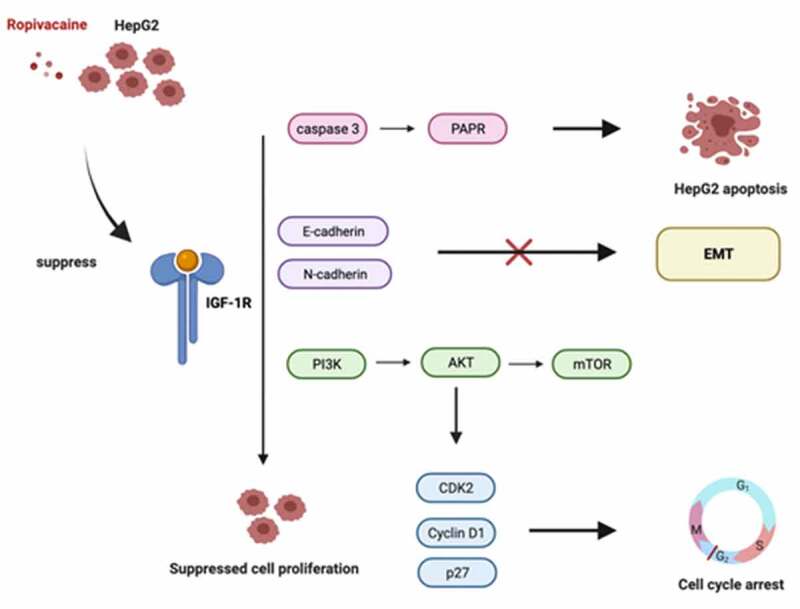
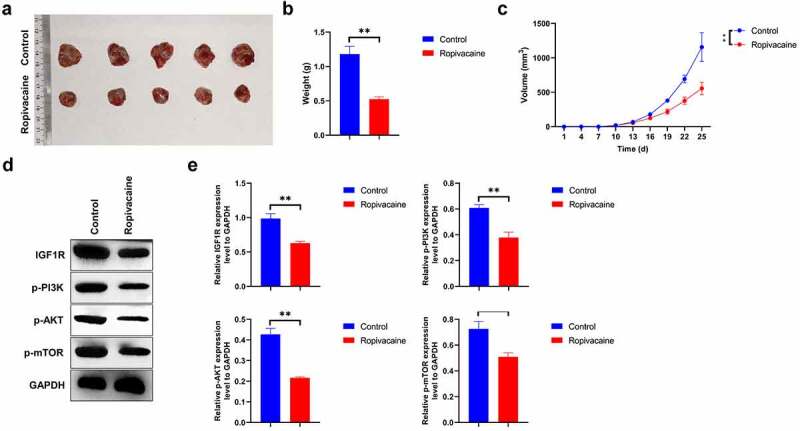
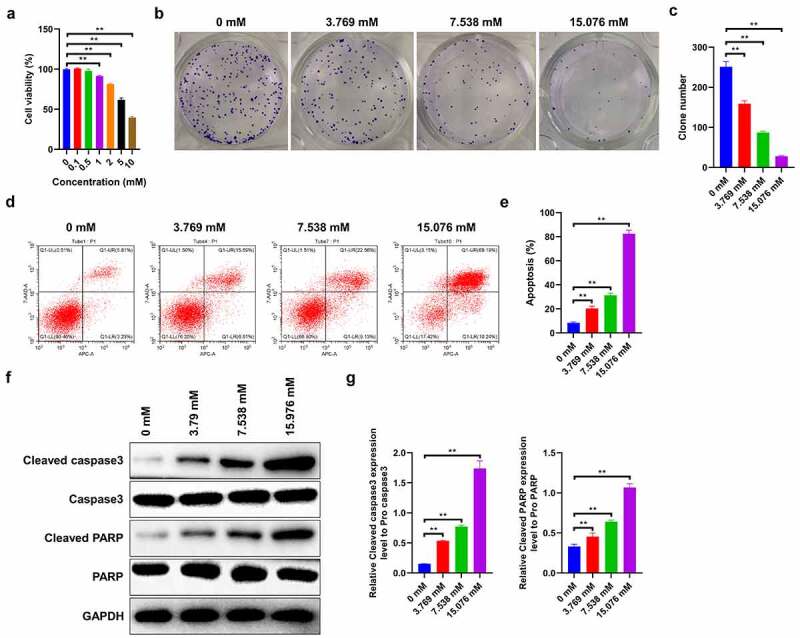
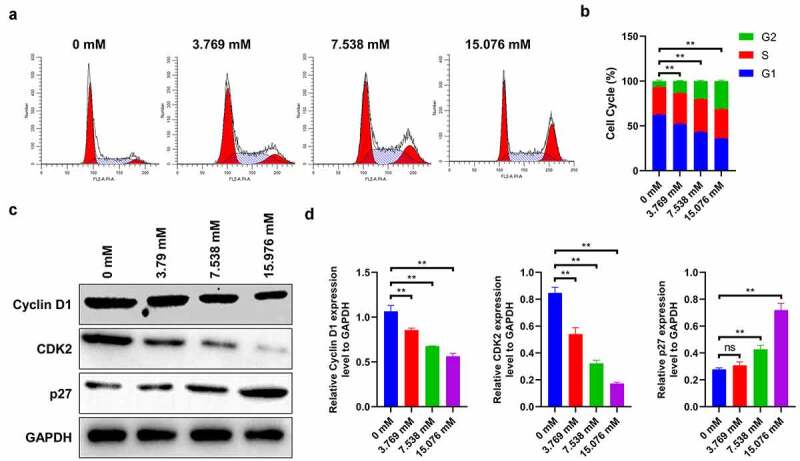
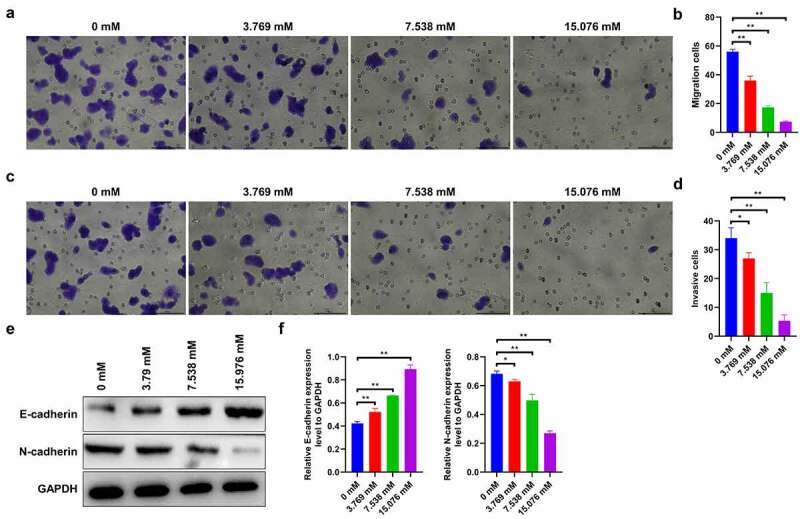
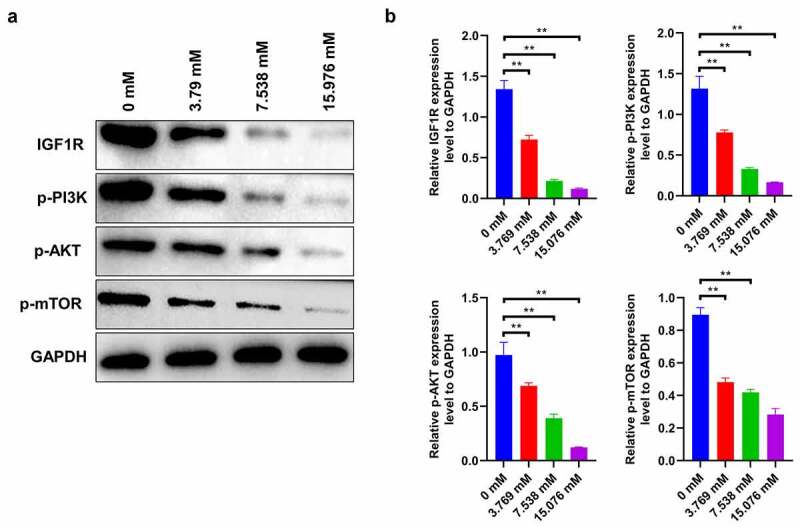
Ropivacaine, a common local anesthetic in the clinic, has anti-proliferative and pro-apoptotic effects in numerous cancers, however, the underlying regulatory mechanism of ropivacaine in hepatocellular carcinoma remains unclear. In the current study, human HepG2 cells were stimulated with different ropivacaine concentrations. Cell Counting Kit-8 assay, cell colony formation, and cell cycle were used to monitor cell viability. Cell apoptosis, migration, and invasion were determined by flow cytometry and transwell assays. Tumor xenograft experiments were performed to prove the anti-cancer effect of ropivacaine . A high dose of ropivacaine inhibited proliferation and promoted apoptosis of HepG2 cells in a dose-dependent manner. Ropivacaine challenge also arrested cells in the G2 phase, followed by a decline in the protein expression of cyclin D1 and cyclin-dependent kinase 2, and an increase in p27 levels in HepG2 cells. Additionally, different ropivacaine doses suppressed cell migration and invasion by upregulating E-cadherin expression and downregulating N-cadherin expression. Mechanically, ropivacaine challenge gradually restrained insulin-like growth factor-1 receptor (IGF-1 R) expression and the activities of phosphorylated-PI3K, AKT, and mTOR in HepG2 cells with increased ropivacaine doses. In the tumor xenograft experiment, ropivacaine was confirmed to inhibit tumor growth, accompanied by inhibition of the IGF-1 R/PI3K/AKT/mTOR signaling axis. In conclusion, ropivacaine suppressed tumor biological characteristics and promoted apoptosis, resulting in the suppression of hepatocellular carcinoma progression by targeting the IGF-1 R/PI3K/AKT/mTOR signaling pathway. It is possible that ropivacaine-mediated local anesthesia may be developed as a novel surgical adjuvant drug for treating hepatocellular carcinoma.
罗哌卡因是临床常用的局部麻醉药,在多种癌症中具有抗增殖和促凋亡作用,但罗哌卡因在肝细胞癌中的作用机制尚不清楚。在本研究中,用不同浓度的罗哌卡因刺激人 HepG2 细胞。用细胞计数试剂盒-8 检测、细胞集落形成和细胞周期来监测细胞活力。用流式细胞术和 Transwell 实验测定细胞凋亡、迁移和侵袭。进行肿瘤异种移植实验以证明罗哌卡因的抗癌作用。高剂量罗哌卡因呈剂量依赖性抑制 HepG2 细胞的增殖并促进其凋亡。罗哌卡因处理还使细胞停滞在 G2 期,随后细胞周期蛋白 D1 和细胞周期蛋白依赖性激酶 2 的蛋白表达下降,p27 水平升高。此外,不同剂量的罗哌卡因通过上调 E-钙黏蛋白表达和下调 N-钙黏蛋白表达抑制细胞迁移和侵袭。在机制上,随着罗哌卡因剂量的增加,罗哌卡因处理逐渐抑制胰岛素样生长因子-1 受体(IGF-1R)表达及其磷酸化-PI3K、AKT 和 mTOR 的活性。在肿瘤异种移植实验中,罗哌卡因被证实抑制肿瘤生长,同时抑制 IGF-1R/PI3K/AKT/mTOR 信号通路。总之,罗哌卡因抑制肿瘤生物学特性并促进凋亡,通过靶向 IGF-1R/PI3K/AKT/mTOR 信号通路抑制肝细胞癌的进展。罗哌卡因介导的局部麻醉可能被开发为治疗肝细胞癌的新型手术辅助药物。