Oba Jiro, Okabe Motonori, Yoshida Toshiko, Soko Chika, Fathy Moustafa, Amano Koji, Kobashi Daisuke, Wakasugi Masahiro, Okudera Hiroshi
Department of Emergency and Disaster Medicine, University of Toyama, Toyama 930-0194, Japan.
Department of Regenerative Medicine, Graduate School of Medicine and Pharmaceutical Sciences, University of Toyama, Toyama 930-0194, Japan.
Burns Trauma. 2020 Jul 27;8:tkaa014. doi: 10.1093/burnst/tkaa014. eCollection 2020.
Severe burn injuries create large skin defects that render the host susceptible to bacterial infections. Burn wound infection often causes systemic sepsis and severe septicemia, resulting in an increase in the mortality of patients with severe burn injuries. Therefore, appropriate wound care is important to prevent infection and improve patient outcomes. However, it is difficult to heal a third-degree burn injury. The aim of this study was to investigate whether hyperdry human amniotic membrane (HD-AM) could promote early granulation tissue formation after full-thickness skin excision in third-degree burn injury sites in mice.
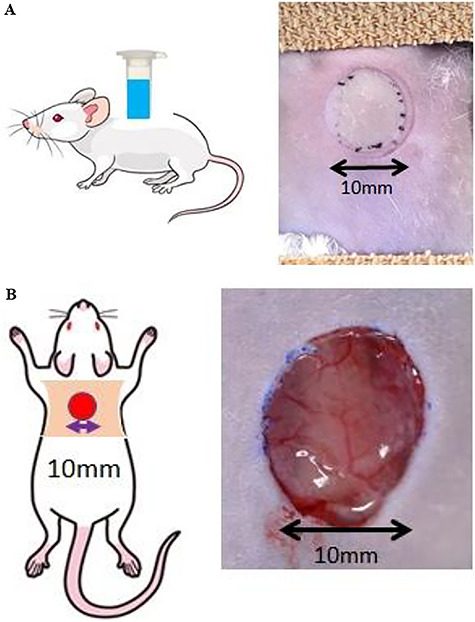
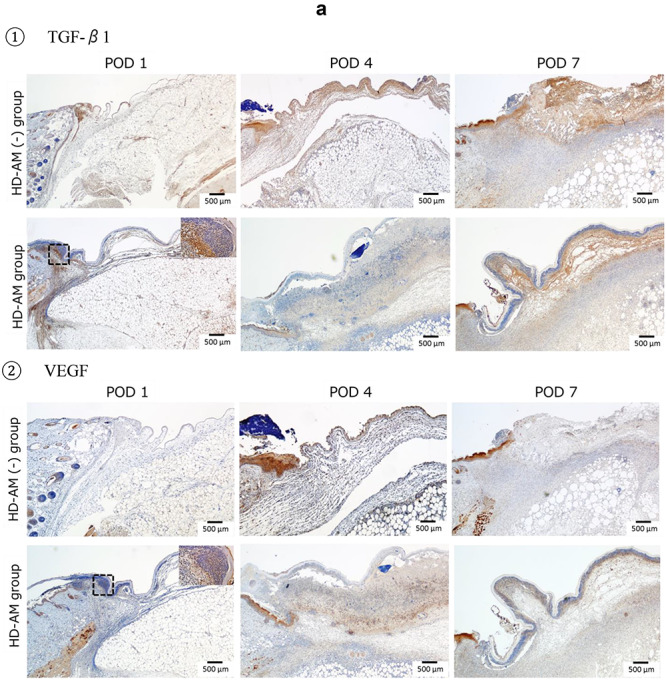
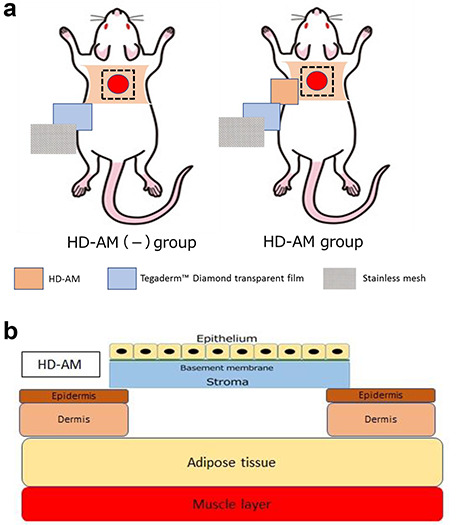
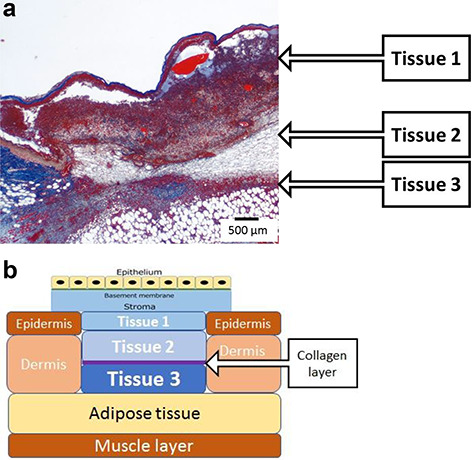
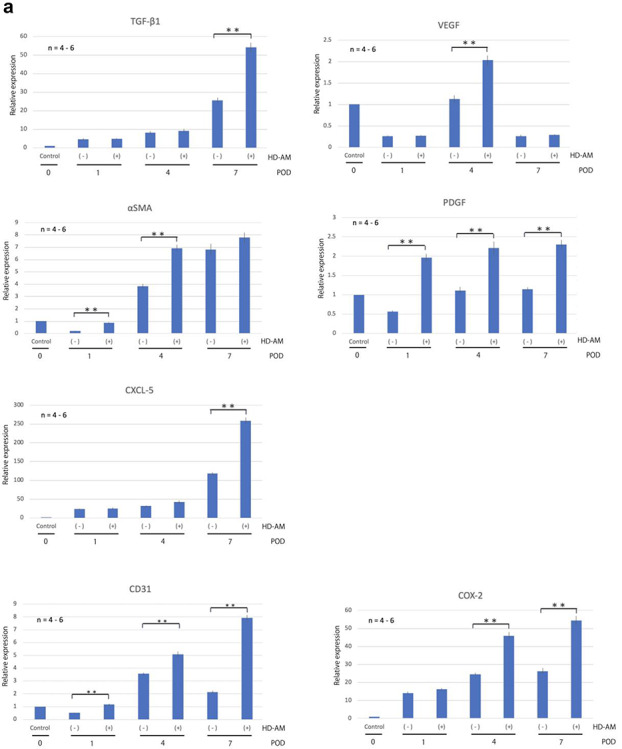
After the development of HD-AM and creation of a third-degree burn injury model, the HD-AM was either placed or not placed on the wound area in the HD-AM group or HD-AM group, respectively. The groups were prepared for evaluation on postoperative days 1, 4 and 7. Azan staining was used for granulation tissue evaluation, and estimation of CD163, transforming growth factor beta-1 (TGF-β1), vascular endothelial growth factor (VEGF), CD31, alpha-smooth muscle actin (α-SMA) and Iba1 expression was performed by immunohistochemical staining. Quantitative reverse-transcription polymerase chain reaction (PCR) was used to investigate gene expression of growth factors, cell migration chemokines and angiogenic and inflammatory markers.
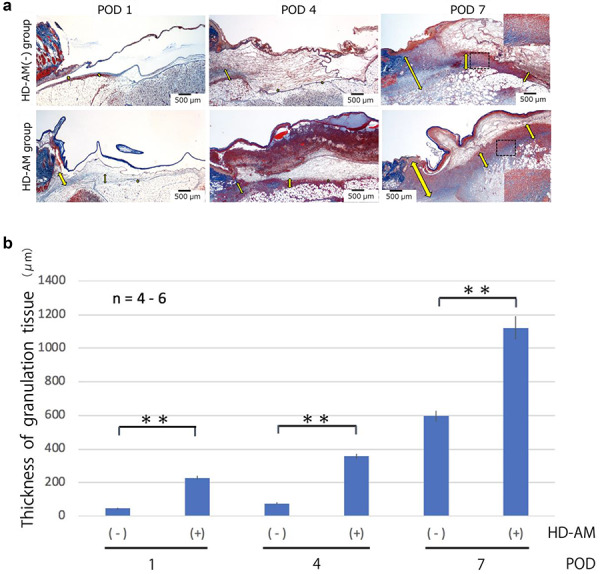
The HD-AM group showed significant early and qualitatively good growth of granulation tissue on the full-thickness skin excision site. HD-AM promoted early-phase inflammatory cell infiltration, fibroblast migration and angiogenesis in the granulation tissue. Additionally, the early infiltration of cells of the immune system was observed.
HD-AM may be useful as a new wound dressing material for full-thickness skin excision sites after third-degree burn injuries, and may be a new therapeutic technique for improving the survival rate of patients with severe burn injuries.
严重烧伤会造成大面积皮肤缺损,使宿主易受细菌感染。烧伤创面感染常导致全身脓毒症和严重败血症,从而增加严重烧伤患者的死亡率。因此,适当的创面护理对于预防感染和改善患者预后至关重要。然而,三度烧伤创面很难愈合。本研究的目的是探讨超干燥人羊膜(HD-AM)是否能促进小鼠三度烧伤创面全层皮肤切除术后早期肉芽组织的形成。
在制备HD-AM并建立三度烧伤模型后,HD-AM组和非HD-AM组分别将HD-AM置于或不置于创面区域。在术后第1、4和7天对各组进行评估。采用阿赞染色评估肉芽组织,通过免疫组织化学染色估计CD163、转化生长因子β-1(TGF-β1)、血管内皮生长因子(VEGF)、CD31、α-平滑肌肌动蛋白(α-SMA)和Iba1的表达。采用定量逆转录聚合酶链反应(PCR)研究生长因子、细胞迁移趋化因子以及血管生成和炎症标志物的基因表达。
HD-AM组在全层皮肤切除部位显示出明显的早期且质量良好的肉芽组织生长。HD-AM促进了肉芽组织中早期炎症细胞浸润、成纤维细胞迁移和血管生成。此外,还观察到免疫系统细胞的早期浸润。
HD-AM可能作为三度烧伤后全层皮肤切除部位的新型创面敷料材料,并且可能是提高严重烧伤患者生存率的一种新的治疗技术。