
COVID-19 大流行的时空传播动态及其对关键医疗保健能力的影响。
Spatiotemporal transmission dynamics of the COVID-19 pandemic and its impact on critical healthcare capacity.
机构信息
Department of Geography and Geographic Information Science, University of Cincinnati, Cincinnati, OH, USA; Health Geography and Disease Modeling Laboratory, University of Cincinnati, Cincinnati, OH, USA; Geospatial Health Advising Group, University of Cincinnati, Cincinnati, OH, USA.
Geospatial Health Advising Group, University of Cincinnati, Cincinnati, OH, USA; Department of Mathematical Sciences, University of Cincinnati, Cincinnati, USA.
出版信息
Health Place. 2020 Jul;64:102404. doi: 10.1016/j.healthplace.2020.102404. Epub 2020 Jul 25.
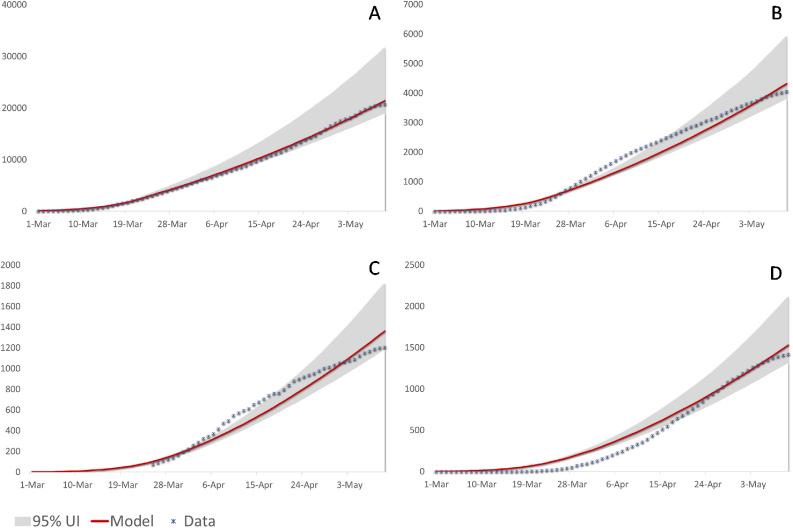
The role of geospatial disparities in the dynamics of the COVID-19 pandemic is poorly understood. We developed a spatially-explicit mathematical model to simulate transmission dynamics of COVID-19 disease infection in relation with the uneven distribution of the healthcare capacity in Ohio, U.S. The results showed substantial spatial variation in the spread of the disease, with localized areas showing marked differences in disease attack rates. Higher COVID-19 attack rates experienced in some highly connected and urbanized areas (274 cases per 100,000 people) could substantially impact the critical health care response of these areas regardless of their potentially high healthcare capacity compared to more rural and less connected counterparts (85 cases per 100,000). Accounting for the spatially uneven disease diffusion linked to the geographical distribution of the critical care resources is essential in designing effective prevention and control programmes aimed at reducing the impact of COVID-19 pandemic.
地理空间差异在 COVID-19 大流行动态中的作用还不太清楚。我们开发了一个空间显式数学模型,以模拟与美国俄亥俄州医疗能力分布不均相关的 COVID-19 疾病感染的传播动态。结果表明,疾病的传播存在明显的空间差异,一些局部地区的疾病发病率存在明显差异。在一些高度连接和城市化的地区(每 10 万人中有 274 例),COVID-19 的发病率较高,这可能会对这些地区的关键医疗保健反应产生重大影响,而不管它们与农村地区和连接较少的地区相比,潜在的高医疗保健能力如何(每 10 万人中有 85 例)。在设计旨在减轻 COVID-19 大流行影响的有效预防和控制计划时,考虑与关键护理资源的地理分布相关的疾病扩散的空间不均匀性至关重要。



 Zotero 插件