Peggy and Charles Stephenson Cancer Center, University of Oklahoma Health Science Center, Oklahoma City, OK 73104, USA.
Department of Pathology, University of Oklahoma Health Science Center, Oklahoma City, OK 73104, USA.
Sci Adv. 2020 Jul 22;6(30):eaba5379. doi: 10.1126/sciadv.aba5379. eCollection 2020 Jul.
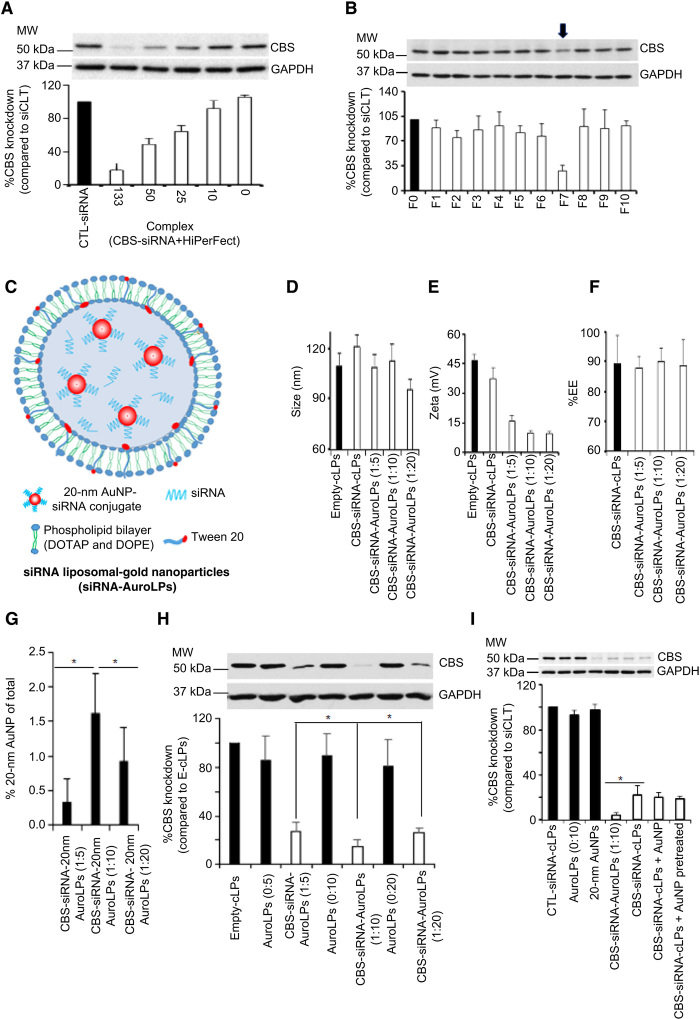
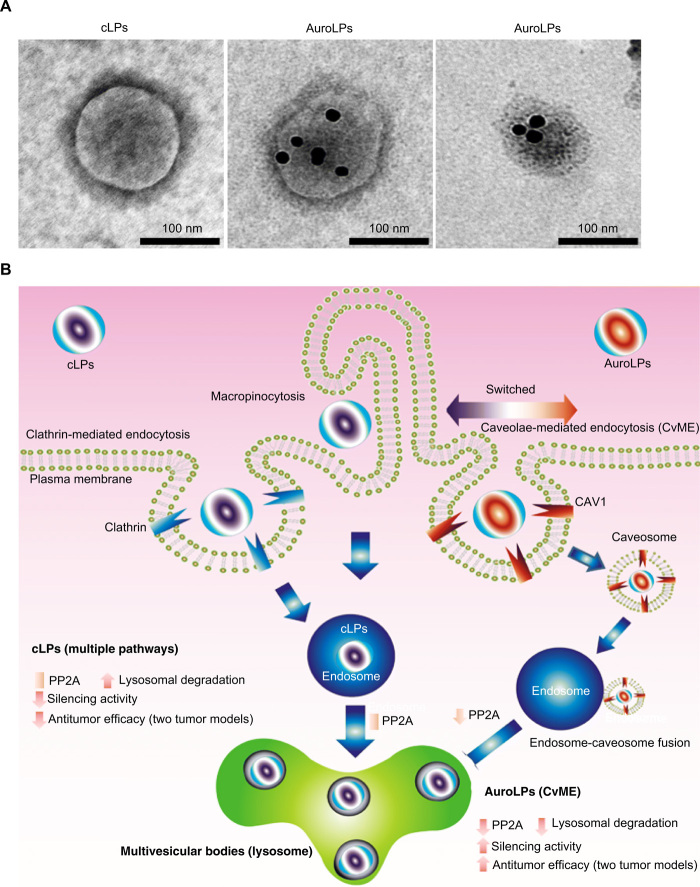
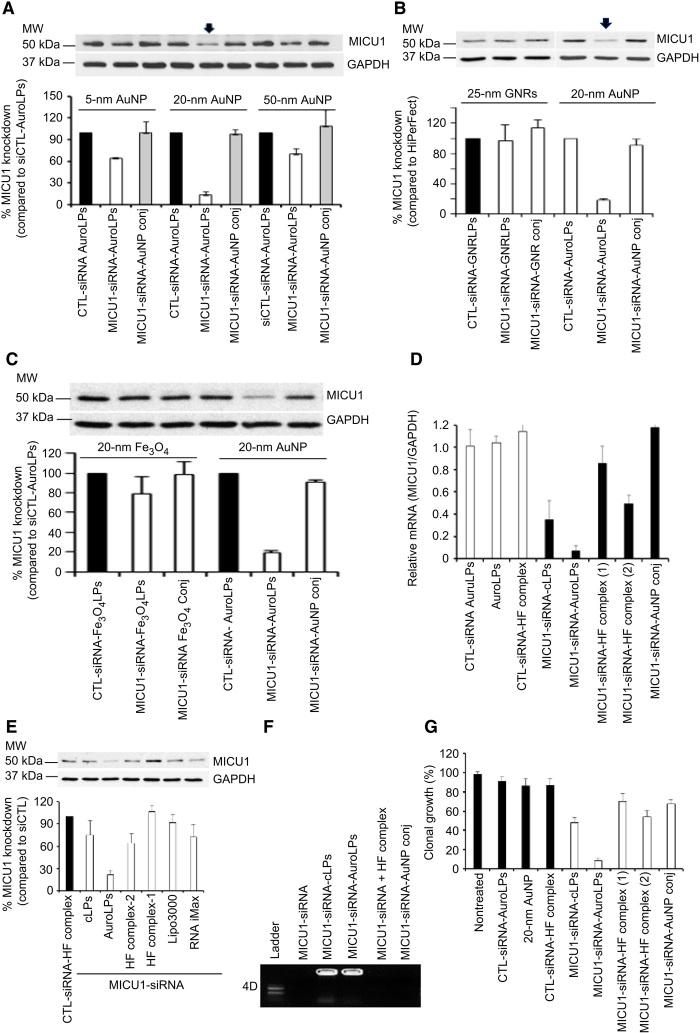
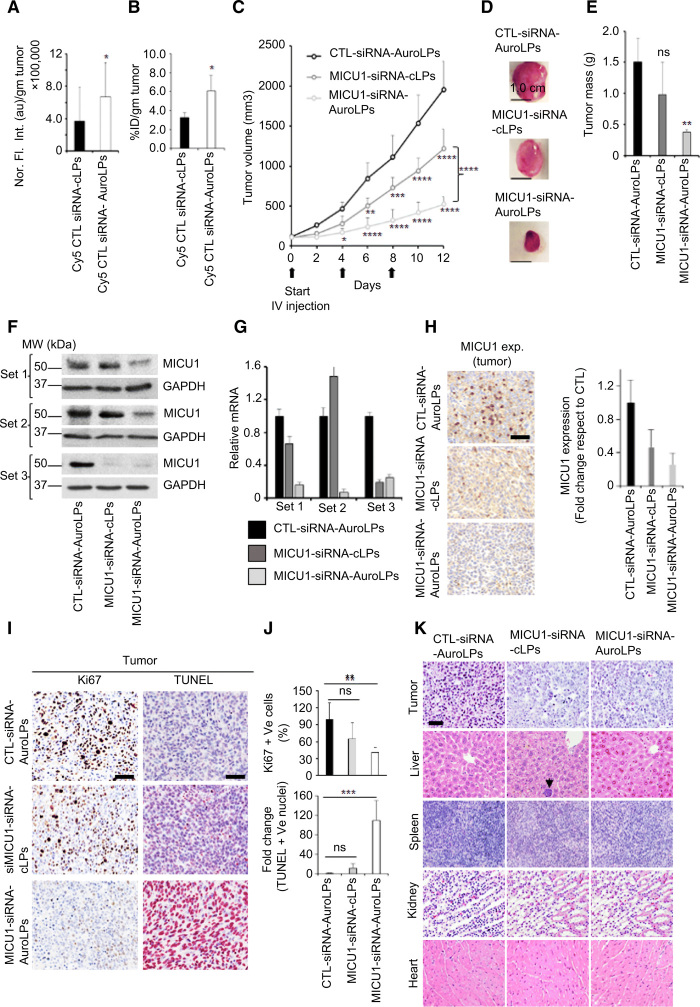
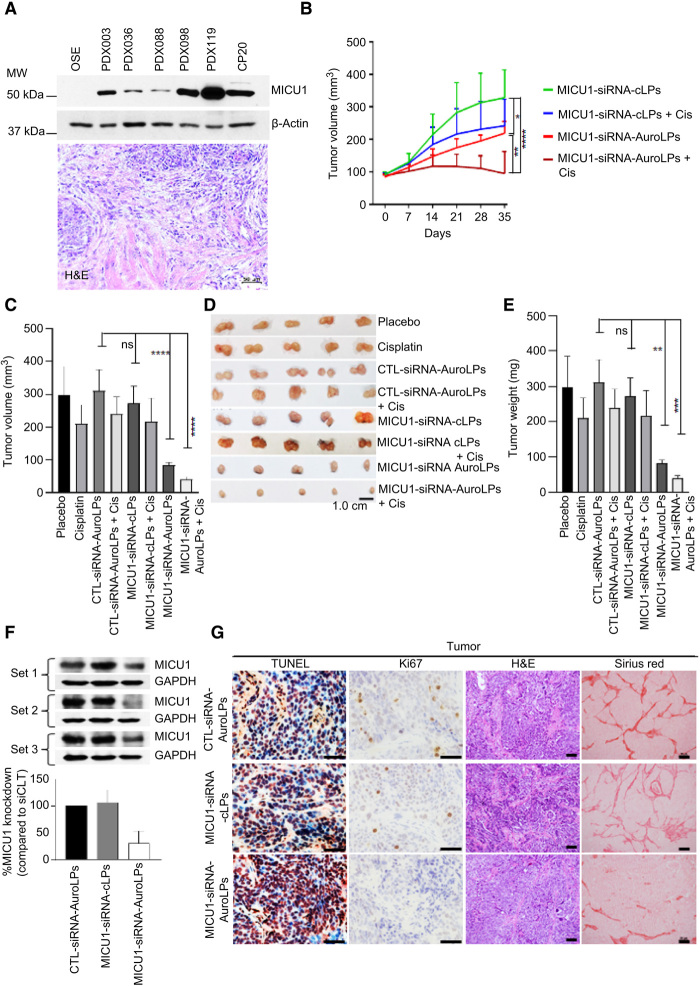
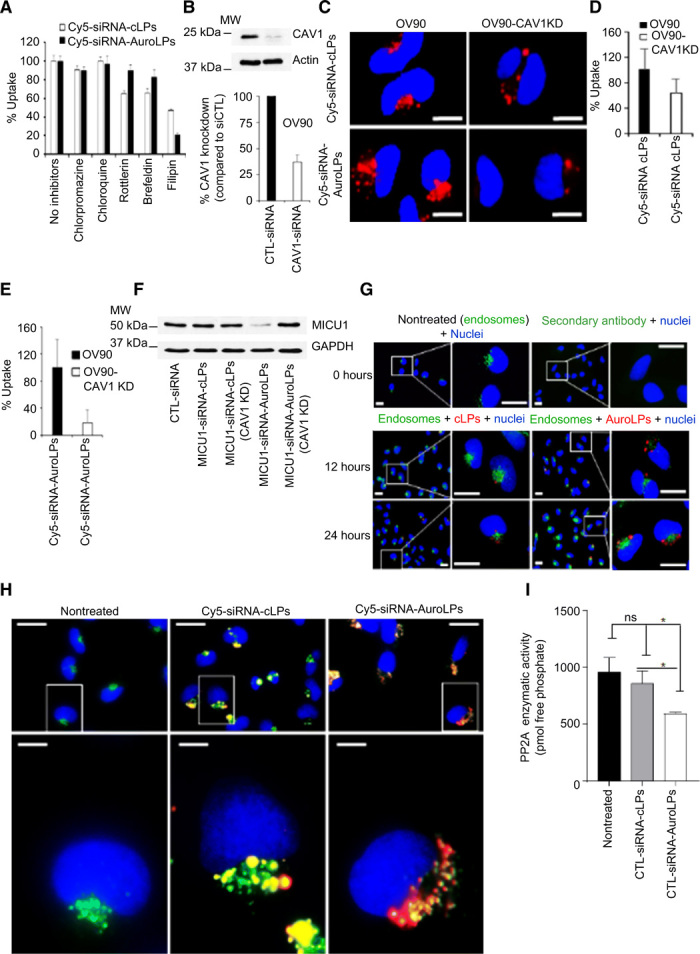
Gene silencing using small-interfering RNA (siRNA) is a viable therapeutic approach; however, the lack of effective delivery systems limits its clinical translation. Herein, we doped conventional siRNA-liposomal formulations with gold nanoparticles to create "auroliposomes," which significantly enhanced gene silencing. We targeted MICU1, a novel glycolytic switch in ovarian cancer, and delivered MICU1-siRNA using three delivery systems-commercial transfection agents, conventional liposomes, and auroliposomes. Low-dose siRNA via transfection or conventional liposomes was ineffective for MICU1 silencing; however, in auroliposomes, the same dose gave >85% gene silencing. Efficacy was evident from both in vitro growth assays of ovarian cancer cells and in vivo tumor growth in human ovarian cell line-and patient-derived xenograft models. Incorporation of gold nanoparticles shifted intracellular uptake pathways such that liposomes avoided degradation within lysosomes. Auroliposomes were nontoxic to vital organs. Therefore, auroliposomes represent a novel siRNA delivery system with superior efficacy for multiple therapeutic applications.
利用小干扰 RNA(siRNA)进行基因沉默是一种可行的治疗方法;然而,缺乏有效的递送系统限制了其临床转化。在此,我们将常规的 siRNA-脂质体制剂与金纳米粒子掺杂,以创建“金载脂质体”,从而显著增强基因沉默效果。我们针对卵巢癌中的新型糖酵解开关 MICU1,并使用三种递送系统——商业转染试剂、常规脂质体和金载脂质体来递送 MICU1-siRNA。低剂量的 siRNA 通过转染或常规脂质体对 MICU1 的沉默效果不佳;然而,在金载脂质体中,相同剂量的 siRNA 可实现超过 85%的基因沉默。该疗效在卵巢癌细胞的体外生长测定和人卵巢细胞系和患者来源的异种移植模型中的体内肿瘤生长中均得到了证实。金纳米粒子的掺入改变了细胞内摄取途径,使得脂质体避免了在溶酶体中的降解。金载脂质体对重要器官没有毒性。因此,金载脂质体代表了一种新型的 siRNA 递送系统,具有多种治疗应用的优异疗效。