Di Paola Monica, Rizzetto Lisa, Stefanini Irene, Vitali Francesco, Massi-Benedetti Cristina, Tocci Noemi, Romani Luigina, Ramazzotti Matteo, Lionetti Paolo, De Filippo Carlotta, Cavalieri Duccio
Department of Biology, University of Florence, Via Madonna Del Piano 6, 50019 Sesto Fiorentino, Florence, Italy.
Research and Innovation Centre, Fondazione Edmund Mach, Via E. Mach 1, 38010, San Michele All' Adige (Trento), Italy.
J Transl Autoimmun. 2020 Jan 26;3:100036. doi: 10.1016/j.jtauto.2020.100036. eCollection 2020.
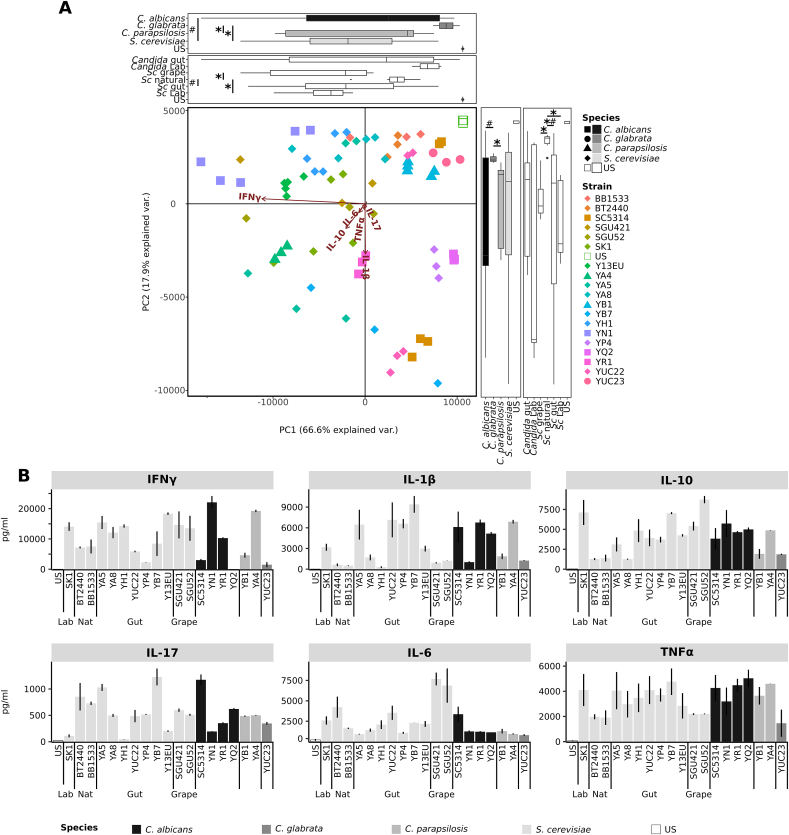
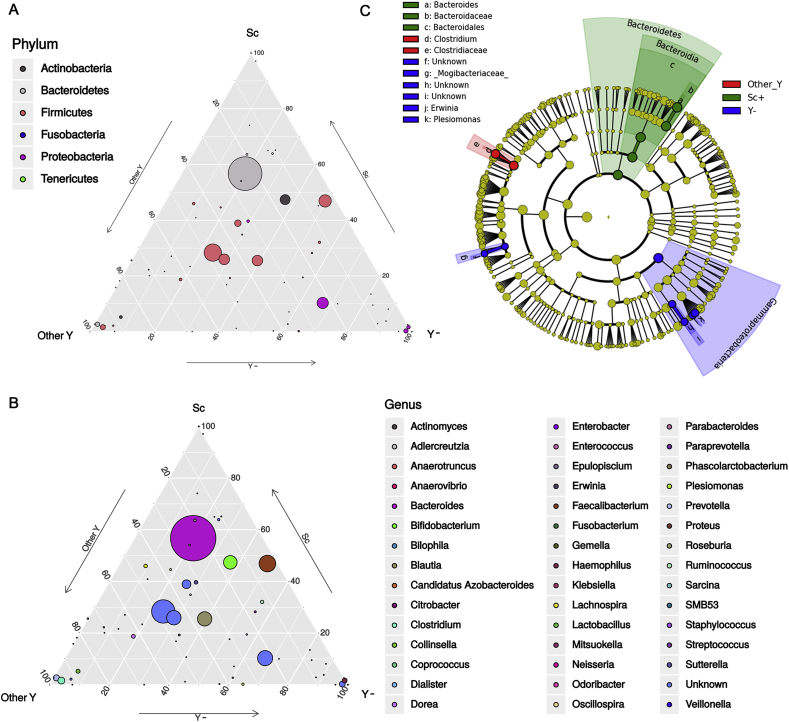
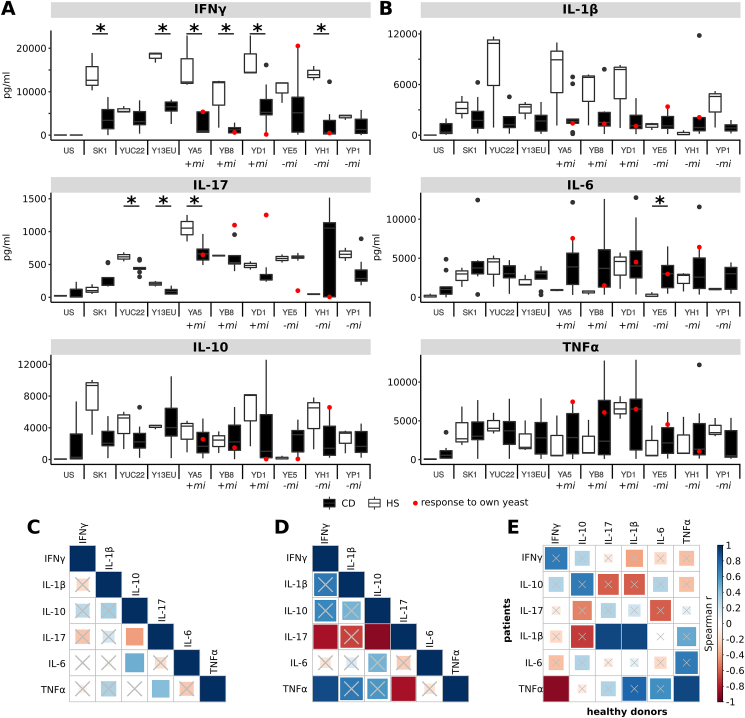
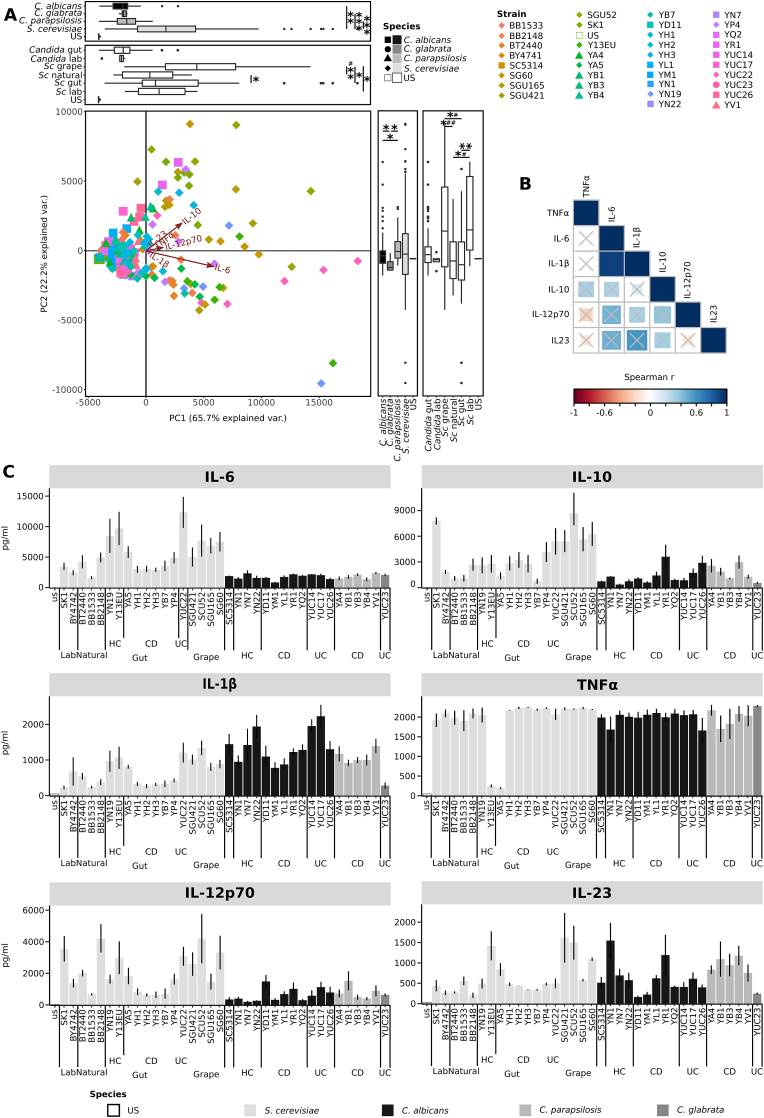
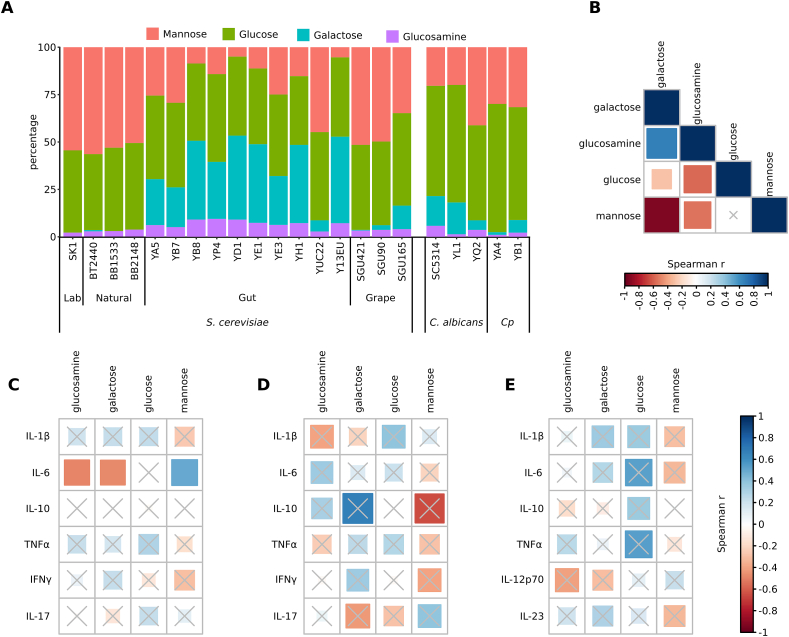
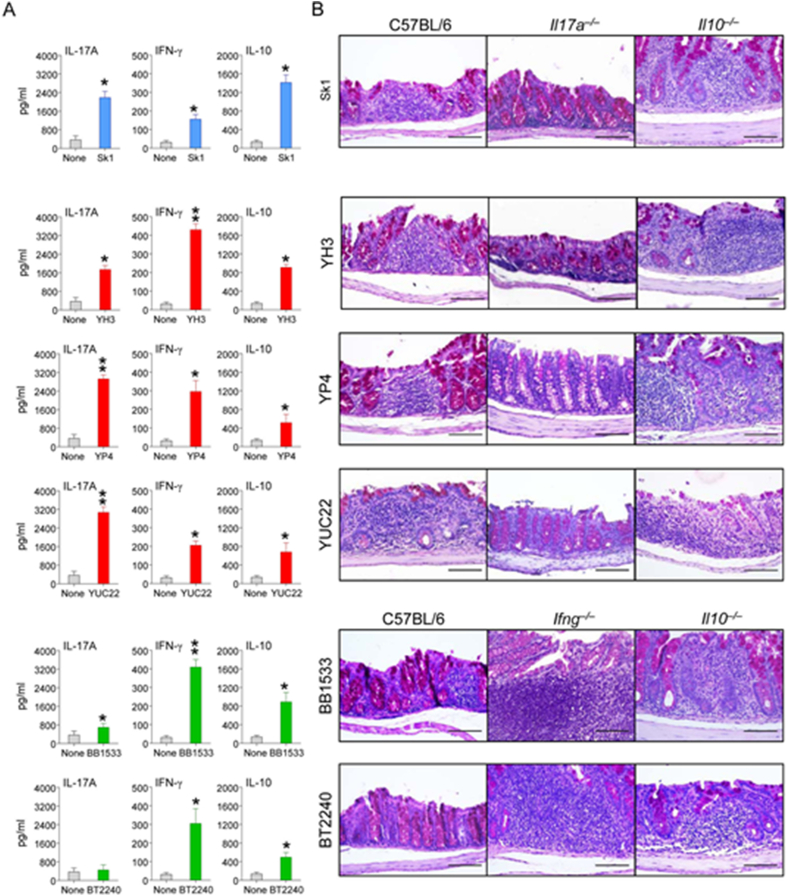
Investigation of the fungal communities in animal models of Inflammatory Bowel Diseases (IBD) showed a controversial role of and spp In health and disease. These conflicting observations could be ascribed to immunogenic differences among co-specific strains. To assess the relevance of intra-strains differences on yeast immunogenicity and impact on the microbiota, we screened and spp. Strains isolated from fecal samples of IBD patients. We compared the cytokine profiles, obtained upon stimulation of Peripheral Blood Mononuclear Cells (PBMCs) and Dendritic Cells with different yeast strains, and evaluated the relationship between strain's cell wall sugar amount and immune response. Moreover, the gut microbiota composition was explored in relation to fungal isolation from fecal samples by metabarcoding analysis. The comparison of cytokine profiles showed strain dependent rather than species-dependent differences in immune responses. Differences in immunogenicity correlated with the cell wall composition of intestinal strains. Stimulation of human healthy PBMCs with different strains showed a pro-inflammatory IL-6 response counterbalanced by IL-10 production. Interestingly, Crohn's (CD) patients responded differently to "self" and "non-self" strains, eliciting pure Th1 or Th17 cytokine patterns. The differences observed were recapitulated , where different strains contributed in dramatically different ways to local epithelial activity and to the inflammation of wild type and Interleukin-deficient mice. Furthermore, we observed that the gut microbiota profiles significantly differentiated according to the presence of or spp. or the absence of fungal isolates in fecal samples. Our results show the importance to deepen metagenomics and immunophenotyping analyses to the strain level, to elucidate the role of fungal and bacterial communities in health and disease.
对炎症性肠病(IBD)动物模型中的真菌群落进行调查显示,[未提及的两种真菌名称]在健康和疾病中发挥着有争议的作用。这些相互矛盾的观察结果可能归因于同属菌株之间的免疫原性差异。为了评估菌株内差异对酵母免疫原性的相关性以及对微生物群的影响,我们筛选了从IBD患者粪便样本中分离出的[未提及的两种真菌名称]菌株。我们比较了用不同酵母菌株刺激外周血单核细胞(PBMC)和树突状细胞后获得的细胞因子谱,并评估了菌株细胞壁糖含量与免疫反应之间的关系。此外,通过元条形码分析探索了肠道微生物群组成与粪便样本中真菌分离的关系。细胞因子谱的比较显示,免疫反应存在菌株依赖性差异,而非物种依赖性差异。免疫原性差异与[未提及的真菌名称]肠道菌株的细胞壁组成相关。用不同菌株刺激人类健康PBMC显示,促炎细胞因子IL-6反应被IL-10的产生所抵消。有趣的是,克罗恩病(CD)患者对“自身”和“非自身”菌株的反应不同,引发了纯Th1或Th17细胞因子模式。在[未提及的实验模型]中重现了观察到的差异,其中不同菌株以截然不同的方式对局部上皮活性以及野生型和白细胞介素缺陷型小鼠的炎症产生影响。此外,我们观察到,根据粪便样本中是否存在[未提及的两种真菌名称]或是否存在真菌分离株,肠道微生物群谱存在显著差异。我们的结果表明,有必要将宏基因组学和免疫表型分析深入到菌株水平,以阐明真菌和细菌群落在健康和疾病中的作用。