Centre for Diagnostic, Technical University of Denmark, Kemitorvet, 2800 Kgs., Lyngby, Denmark.
Department of Animal Health and Food Safety, Norwegian Veterinary Institute, Sentrum, P.O. Box 750, 0106, Oslo, Norway.
Acta Vet Scand. 2020 Aug 3;62(1):41. doi: 10.1186/s13028-020-00539-x.
Similar to the situation in other European countries, Danish wild boars may harbour a wide range of pathogens infectious to humans and domestic pigs. Although wild boars must be kept behind fences in Denmark, hunting and consumption of the meat may cause zoonotic transmission. Moreover, most infections of wild boars are transmissible to domestic pigs, which may have important economic consequences. The aim of this study was to investigate whether Danish wild boars were infected with bacteria and parasites transmissible to humans or domestic pigs: Brucella suis, methicillin-resistant Staphylococcus aureus (MRSA), Salmonella spp., Trichinella spp., lungworms and gastrointestinal parasites, especially Ascaris suum. This is the first study to investigate the prevalence of these important pathogens in Danish wild boars.
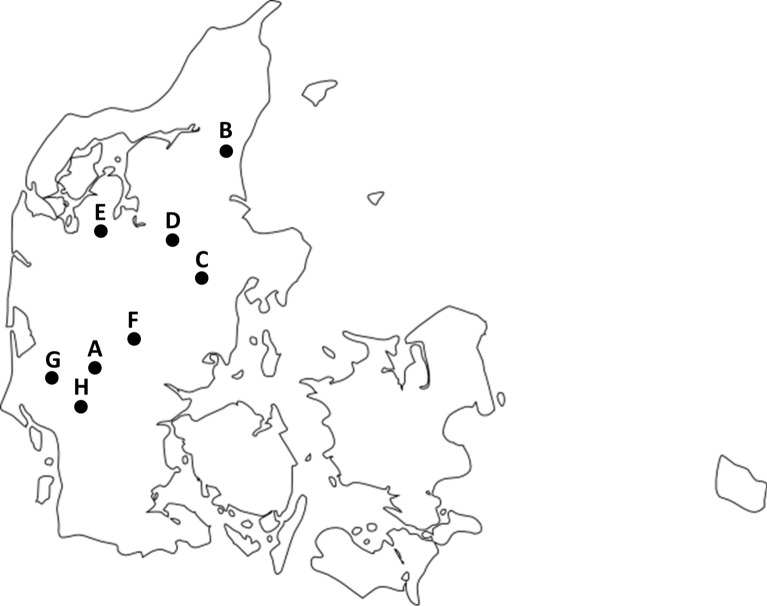
Wild boars from eight enclosures were analysed over a 5-year period. All tested wild boars were negative for B. suis (n = 240), MRSA (n = 244), Salmonella spp. (n = 115) and Trichinella spp. (n = 232), while eight parasite genera were identified in the faeces (n = 254): Ascaris suum, Capillaria sp., Cystoisospora suis, Eimeria spp., Metastrongylus sp. (lungworm), Strongyloides ransomi, Trichuris suis and strongylid eggs, i.e. strongyles not identified to the genera. Eimeria spp. and Metastrongylus sp. had the highest prevalence (92.3 and 79.5%, respectively) and were identified in wild boars from all eight enclosures, while the remaining parasite genera were present more sporadically.
Wild boars from Denmark constitute a low risk of transmitting B. suis, MRSA, Salmonella spp. and Trichinella spp. to humans or domestic pigs, while economically important parasites transmissible to domestic pigs are highly prevalent in the wild boar population.
与其他欧洲国家的情况类似,丹麦野猪可能携带多种可感染人类和家猪的病原体。尽管丹麦的野猪必须被关在围栏里,但狩猎和食用它们的肉可能会导致人畜共患的传播。此外,大多数野猪感染可传播给家猪,这可能会产生重要的经济后果。本研究旨在调查丹麦野猪是否感染了可传染给人类或家猪的细菌和寄生虫:猪布鲁氏菌、耐甲氧西林金黄色葡萄球菌(MRSA)、沙门氏菌、旋毛虫、肺蠕虫和胃肠道寄生虫,尤其是猪蛔虫。这是首次调查这些重要病原体在丹麦野猪中的流行情况。
在五年期间对来自八个围栏的野猪进行了分析。所有检测的野猪均为 B. suis(n=240)、MRSA(n=244)、沙门氏菌(n=115)和旋毛虫(n=232)阴性,而在粪便中鉴定出了八个寄生虫属(n=254):猪蛔虫、毛细线虫、Cystoisospora suis、艾美耳球虫、类圆线虫、后圆线虫、毛首线虫和 Strongyloides ransomi、猪蛔虫和 Strongyloides 卵,即未鉴定到属的 Strongyloides 。艾美耳球虫和类圆线虫的流行率最高(分别为 92.3%和 79.5%),并在来自八个围栏的野猪中均有发现,而其他寄生虫属则更为零星存在。
来自丹麦的野猪传播猪布鲁氏菌、耐甲氧西林金黄色葡萄球菌、沙门氏菌和旋毛虫给人类或家猪的风险较低,而可传播给家猪的具有重要经济意义的寄生虫在野猪种群中高度流行。