Hong Hong, Chen Xiaochuan, Li Kun, Wang Nan, Li Mengjie, Yang Bo, Yu Xiaoqi, Wei Xi
Hospital of Stomatology, Guanghua School of Stomatology, Guangdong Provincial Key Laboratory of Stomatology, Sun Yat-sen University, Guangzhou, 510055, People's Republic of China.
Department of Stomatology, The Third Affiliated Hospital of Sun Yat-sen University, Guangzhou, 510630, People's Republic of China.
Stem Cell Res Ther. 2020 Aug 3;11(1):333. doi: 10.1186/s13287-020-01841-1.
Pulpitis is a common dental disease characterized by sustained inflammation and impaired pulp self-repair. Mesenchymal stem cell-based minimally invasive vital pulp therapy (MSC-miVPT) is a potential treatment method, but its application is limited by the difficulty in acquiring MSCs. We recently revealed the immunomodulatory effects of rat dental follicle stem cells (rDFSCs) on acute lung injury. The present study focused on the paracrine effects of rDFSCs on the inflammation and regeneration of rat injured dental pulp to detect whether DFSCs are a potential candidate for MSC-miVPT.
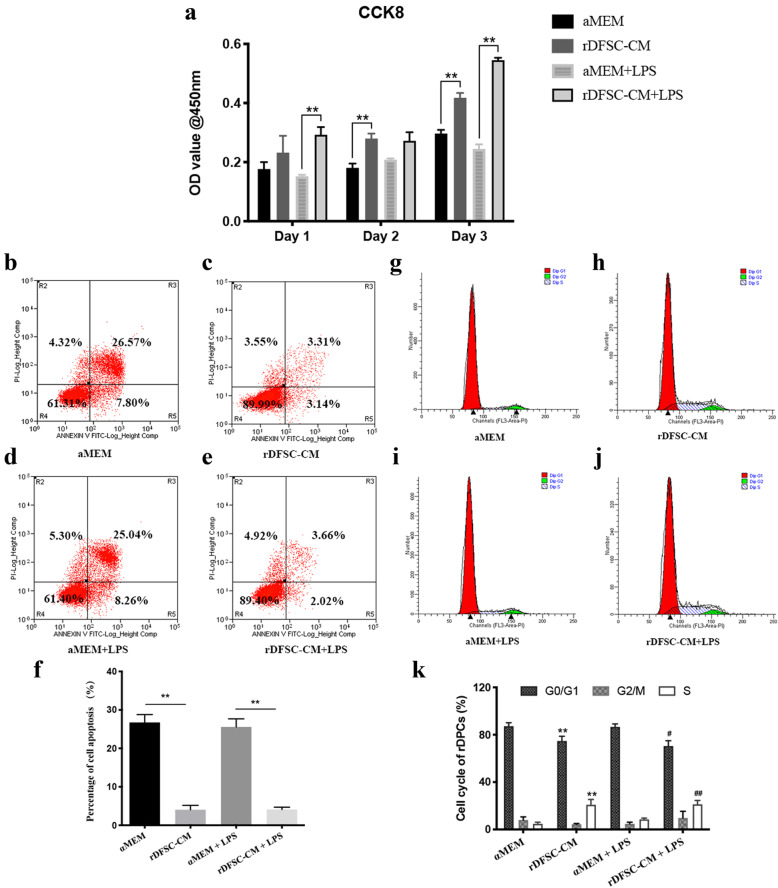
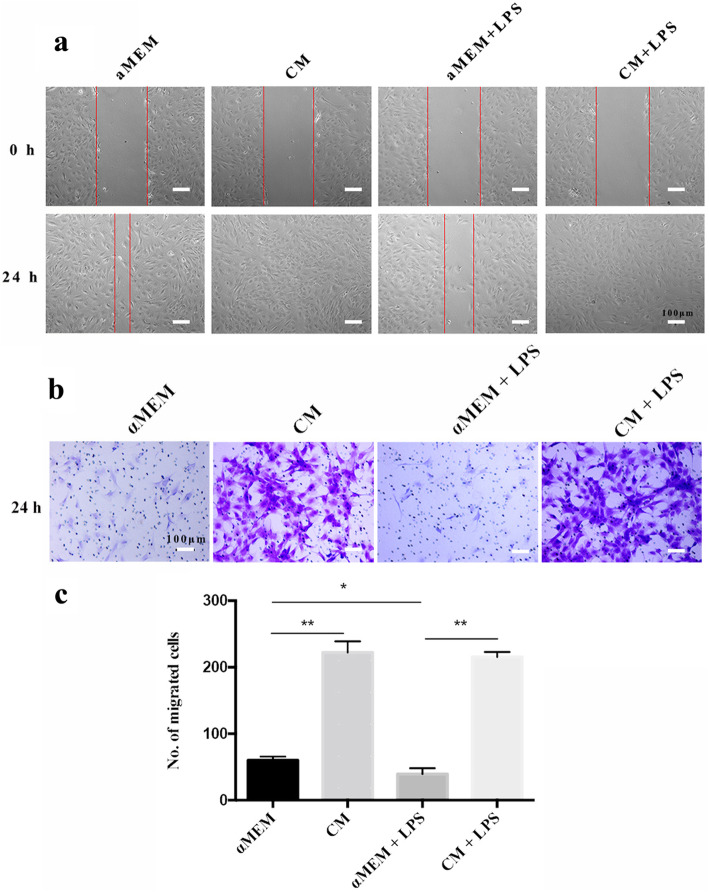
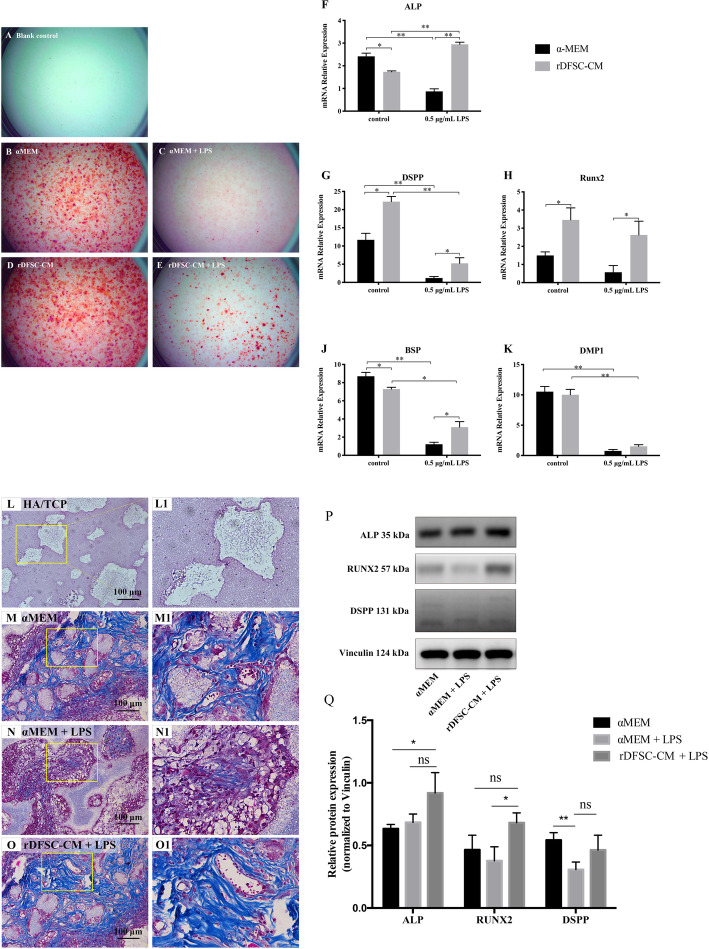
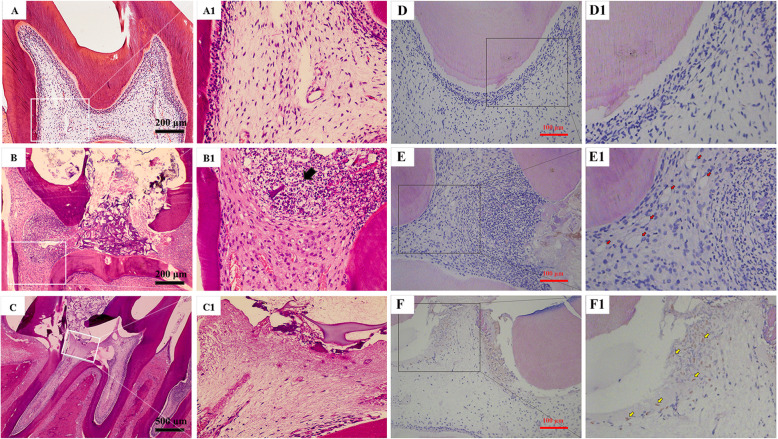
Conditioned medium from rDFSCs (rDFSC-CM) was applied to lipopolysaccharide (LPS)-induced inflammatory rat dental pulp cells (rDPCs). The inflammation and regeneration of rDPCs were detected by RT-qPCR, Western blotting, immunofluorescence staining, Cell Counting Kit-8 (CCK-8) assay, flow cytometry, wound-healing assay, and Masson's staining. The effects of rDFSC-CM on inflamed rat dental pulp were further evaluated by hematoxylin-eosin and immunohistochemical staining.
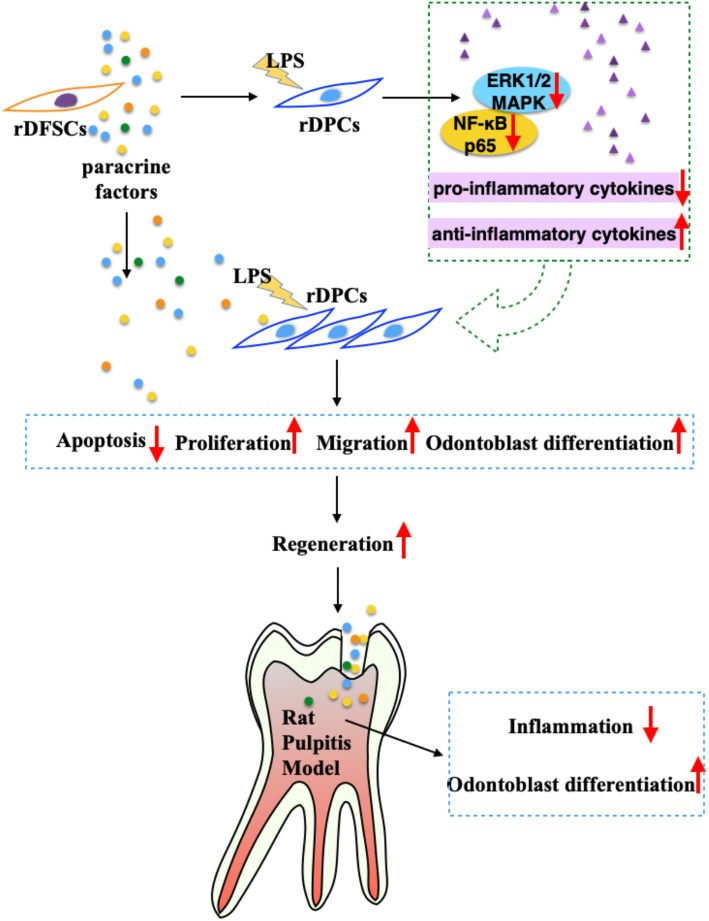
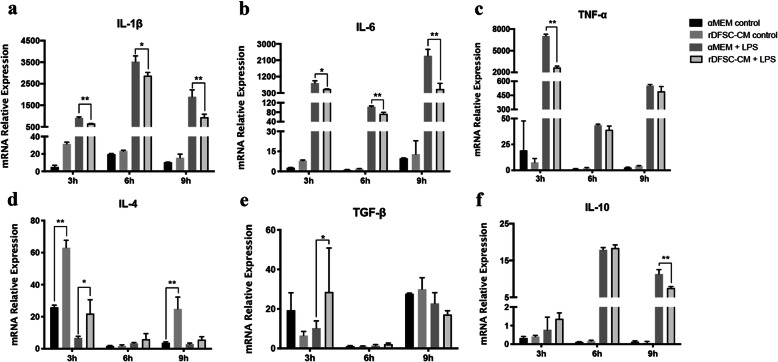
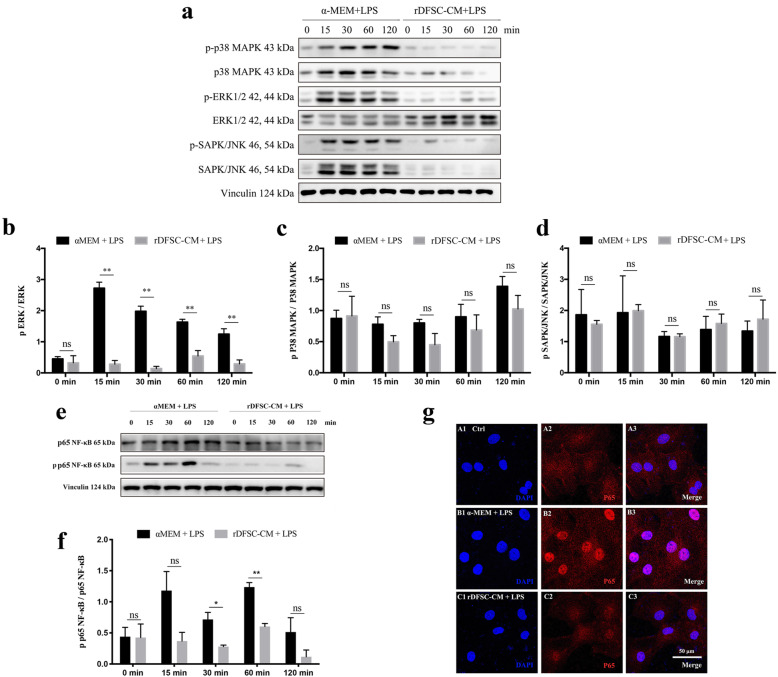
rDFSC-CM downregulated the ERK1/2 and NF-κB signaling pathways, which resulted in suppression of the expression of IL-1β, IL-6, and TNF-α and promotion of the expression of IL-4 and TGF-β, and these findings lead to the attenuation of rDPC inflammation. rDFSC-CM enhanced the in vitro proliferation, migration, and odontogenic differentiation of inflammatory rDPCs and their in vivo ectopic dentinogenesis. Furthermore, rDFSC-CM inhibited inflammatory cell infiltration in rat pulpitis and triggered Runx2 expression in some of the odontoblast-like cells surrounding the injured site, and these effects were conducive to the repair of inflamed dental pulp.
rDFSC-CM exhibits therapeutic potential by rescuing the regeneration of the inflamed rat dental pulp through an immunomodulatory mechanism, indicating the application prospects of DFSCs in biological regenerative endodontics.
牙髓炎是一种常见的牙科疾病,其特征为持续炎症和牙髓自我修复受损。基于间充质干细胞的微创牙髓活力保存治疗(MSC-miVPT)是一种潜在的治疗方法,但其应用受到获取间充质干细胞困难的限制。我们最近揭示了大鼠牙囊干细胞(rDFSCs)对急性肺损伤的免疫调节作用。本研究聚焦于rDFSCs对大鼠损伤牙髓炎症和再生的旁分泌作用,以检测牙囊干细胞是否是MSC-miVPT的潜在候选者。
将rDFSCs的条件培养基(rDFSC-CM)应用于脂多糖(LPS)诱导的炎性大鼠牙髓细胞(rDPCs)。通过RT-qPCR、蛋白质免疫印迹、免疫荧光染色、细胞计数试剂盒-8(CCK-8)检测、流式细胞术、伤口愈合检测和Masson染色来检测rDPCs的炎症和再生情况。通过苏木精-伊红染色和免疫组织化学染色进一步评估rDFSC-CM对炎性大鼠牙髓的影响。
rDFSC-CM下调ERK1/2和NF-κB信号通路,导致白细胞介素-1β(IL-1β)、白细胞介素-6(IL-6)和肿瘤坏死因子-α(TNF-α)表达受到抑制,白细胞介素-4(IL-4)和转化生长因子-β(TGF-β)表达得到促进,这些结果导致rDPCs炎症减轻。rDFSC-CM增强了炎性rDPCs的体外增殖、迁移和牙源性分化以及它们在体内的异位牙本质形成。此外,rDFSC-CM抑制大鼠牙髓炎中的炎性细胞浸润,并在损伤部位周围的一些成牙本质细胞样细胞中触发Runx2表达,这些作用有利于炎性牙髓的修复。
rDFSC-CM通过免疫调节机制挽救炎性大鼠牙髓的再生,展现出治疗潜力,表明牙囊干细胞在生物再生牙髓病学中的应用前景。