Department of Pharmacology, Johannes Gutenberg University Medical Center, Langenbeck Str. 1, 55131, Mainz, Germany.
Department of Anaesthesiology, Institute of Anaesthesiology and Critical Care Medicine, Union Hospital, Tongji Medical College Huazhong University of Science and Technology, Wuhan, China.
J Mol Med (Berl). 2020 Sep;98(9):1287-1299. doi: 10.1007/s00109-020-01949-0. Epub 2020 Aug 3.
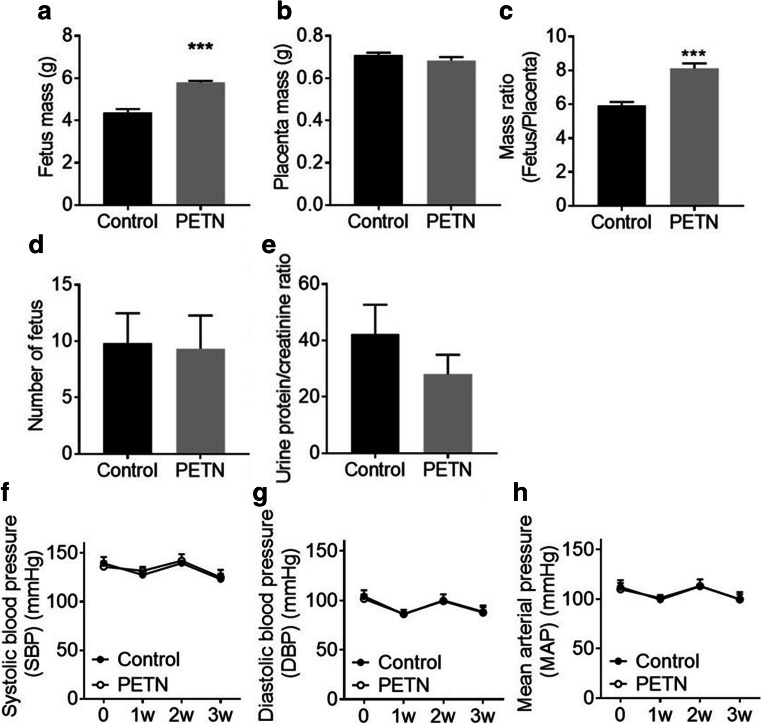
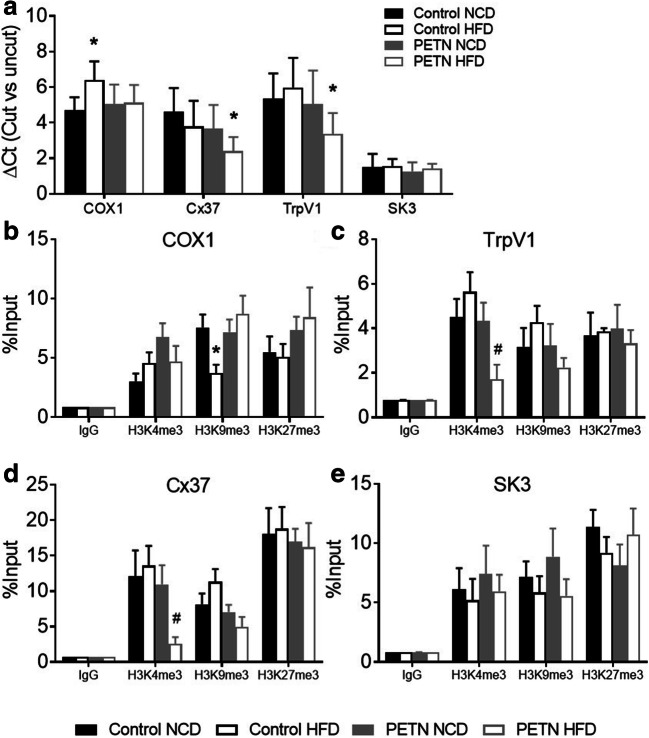
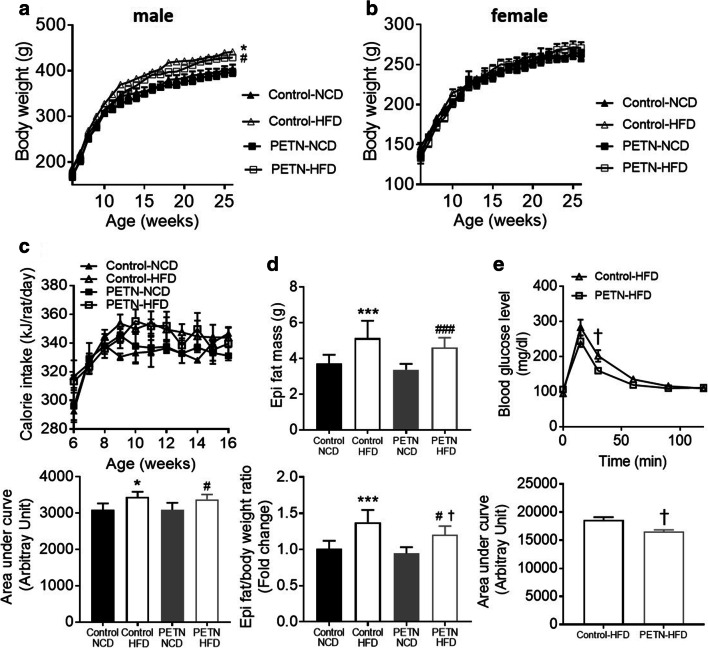
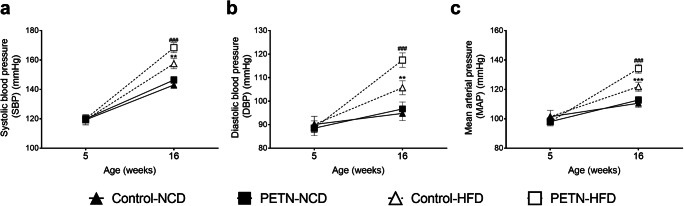
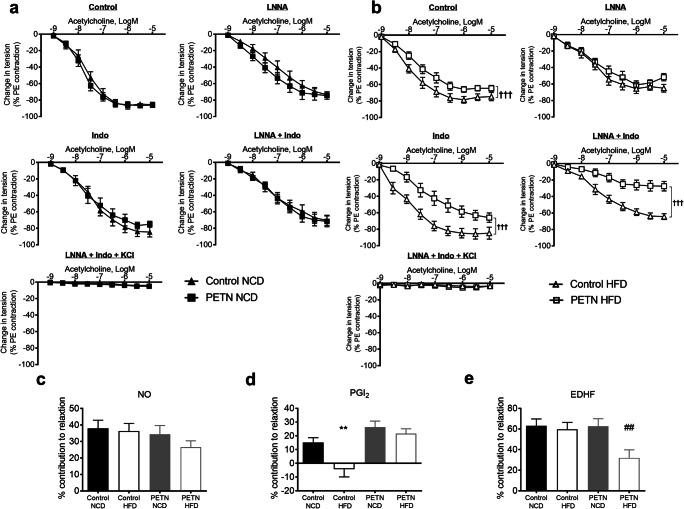
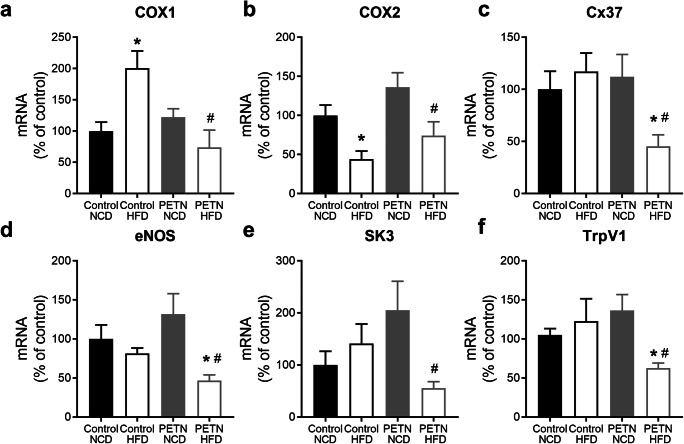
Preeclampsia is a common medical condition during pregnancy and a major cause of maternal and prenatal mortality. The present study was conducted to investigate the effects of maternal treatment with pentaerythritol tetranitrate (PETN) in Dahl salt-sensitive rats (DSSR), a model of superimposed preeclampsia. F0 parental DSSR were treated with PETN (50 mg/kg) from the time point of mating to the end of lactation. Maternal PETN treatment improved fetal growth and had no effect on blood pressure in DSSR offspring fed with normal chow or high-salt diet. Upon high-fat diet (HFD) feeding, offspring from PETN-treated mother showed improved glucose tolerance despite similar weight gain. Unexpectedly, maternal PETN treatment significantly potentiated the HFD-induced blood pressure elevation in male DSSR offspring. Endothelium-derived hyperpolarization factor (EDHF)-mediated vasodilation was similar between NCD-fed and HFD-fed control offspring but was markedly reduced in HFD-fed PETN offspring. EDHF genes were downregulated in the vasculature of HFD-fed PETN offspring, which was associated with epigenetic changes in histone modifications. In conclusion, maternal PETN treatment in DSSR shows both beneficial and unfavorable effects. It improves fetal growth and ameliorates glucose tolerance in the offspring. Although maternal PETN treatment has no effect on blood pressure in offspring fed with normal chow or high-salt diet, the offspring is at higher risk to develop HFD-induced hypertension. PETN may potentiate the blood pressure response to HFD by epigenetic modifications of EDHF genes. KEY MESSAGES: The core findings of this article suggest that maternal PETN treatment of DSSR, a rat model of a spontaneous superimposed preeclampsia, leads to • Improvement of fetal growth; • No changes of maternal blood pressure or markers of preeclampsia; • Amelioration of HFD-induced glucose intolerance in adult offspring; • No changes in blood pressure development of the offspring on normal chow or high salt-diet; • Potentiation of blood pressure elevation of the offspring on HFD.
子痫前期是一种常见的妊娠疾病,也是孕产妇和围产儿死亡的主要原因。本研究旨在探讨母体给予五亚乙基六硝酸酯(PETN)治疗对 Dahl 盐敏感大鼠(DSSR)的影响,DSSR 是一种叠加子痫前期的模型。F0 亲代 DSSR 从交配到哺乳期结束时给予 PETN(50mg/kg)治疗。母体 PETN 治疗改善了胎儿生长,对正常饮食或高盐饮食喂养的 DSSR 后代的血压没有影响。给予高脂肪饮食(HFD)后,来自 PETN 治疗母亲的后代尽管体重增加相似,但葡萄糖耐量得到改善。出乎意料的是,母体 PETN 治疗显著增强了 HFD 诱导的雄性 DSSR 后代的血压升高。内皮衍生超极化因子(EDHF)介导的血管舒张在 NCD 喂养和 HFD 喂养的对照组后代之间相似,但在 HFD 喂养的 PETN 后代中明显降低。EDHF 基因在 HFD 喂养的 PETN 后代的血管中下调,这与组蛋白修饰的表观遗传变化有关。总之,母体给予 DSSR 的 PETN 治疗既有有益作用,也有不利影响。它改善胎儿生长,改善后代的葡萄糖耐量。尽管母体 PETN 治疗对正常饮食或高盐饮食喂养的后代的血压没有影响,但后代发生 HFD 诱导的高血压的风险更高。PETN 可能通过 EDHF 基因的表观遗传修饰增强对 HFD 的血压反应。 关键信息:本文的核心发现表明,母体给予 DSSR(自发性叠加子痫前期的大鼠模型)的 PETN 治疗导致: • 胎儿生长改善; • 母体血压或子痫前期标志物无变化; • HFD 诱导的成年后代葡萄糖耐量改善; • 正常饮食或高盐饮食喂养的后代血压无变化; • HFD 喂养的后代血压升高增强。