Liu Yu, Rossi Merja, Liang Xu, Zhang Hui, Zou Li, Ong Choon Nam
State Key Laboratory of Reproductive Regulation and Breeding of Grassland Livestock, School of Life Sciences, Inner Mongolia University, Hohhot 010070, China.
Saw Swee Hock School of Public Health, National University of Singapore, Singapore 117549, Singapore.
Metabolites. 2020 Jul 31;10(8):313. doi: 10.3390/metabo10080313.
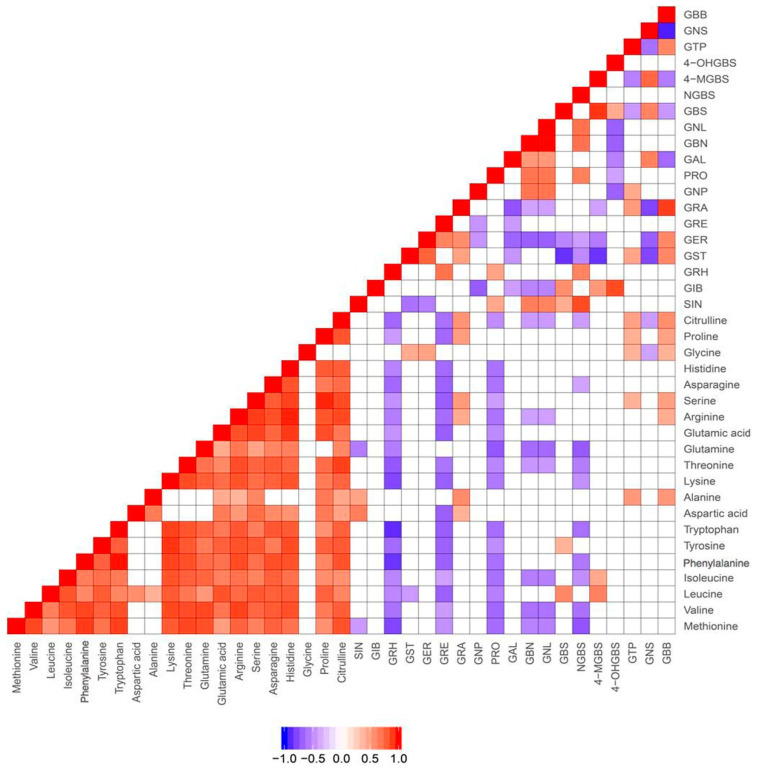
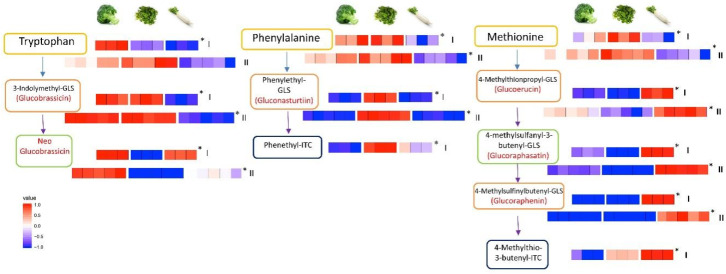
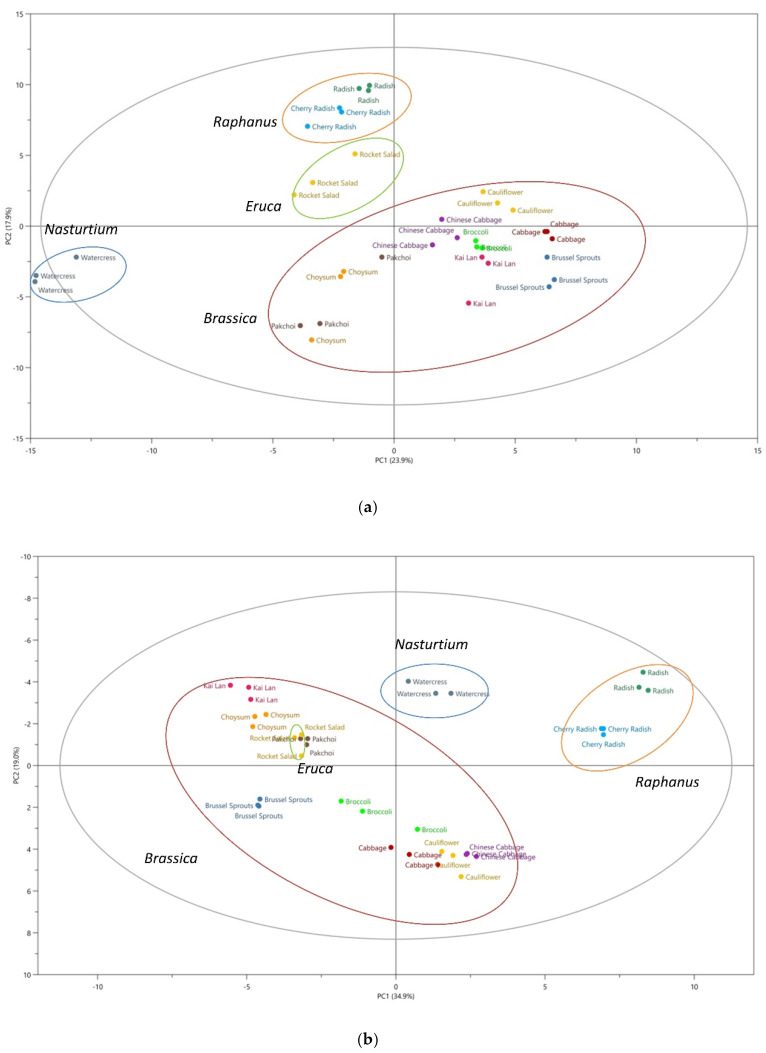
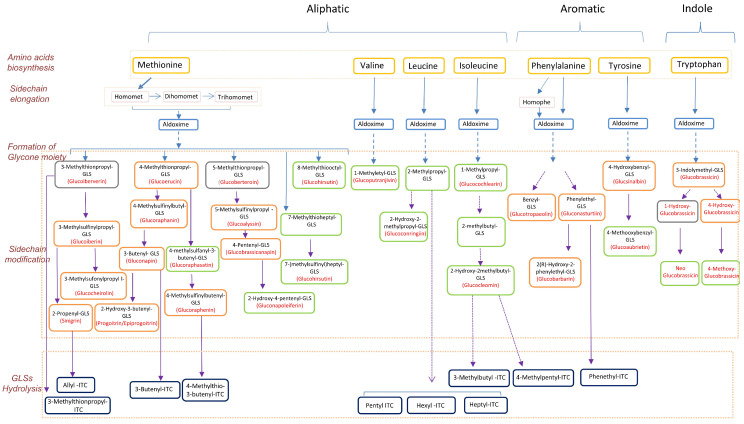
Glucosinolates are a group of plant secondary metabolites that can be hydrolyzed into a variety of breakdown products such as isothiocyanates, thiocyanates, and nitriles. These breakdown products can facilitate plant defense and function as attractants to natural enemies of insect pests. As part of the diet, some of these compounds have shown cancer-preventing activities, and the levels of these metabolites in the edible parts of the plants are of interest. In this study, we systematically examined variations in glucosinolates, their precursors, and their breakdown products in 12 commonly consumed vegetables of the Brassicaceae family with gas chromatography-quadrupole time-of-flight mass spectrometer (GC-Q-TOF/MS), liquid chromatography-quadrupole time-of-flight mass spectrometer (LC-Q-TOF/MS), and liquid chromatography-triple quadrupole mass spectrometer (LC-QQQ/MS), using both untargeted and targeted approaches. The findings were integrated with data from literature to provide a comprehensive map of pathways for biosynthesis of glucosinolates and isothiocyanates. The levels of precursor glucosinolates are found to correlate well with their downstream breakdown products. Further, the types and abundances of glucosinolates among different genera are significantly different, and these data allow the classification of plants based on morphological taxonomy. Further validation on three genera, which are grown underground, in damp soil, and above ground, suggests that each genus has its specific biosynthetic pathways and that there are variations in some common glucosinolate biosynthesis pathways. Our methods and results provide a good starting point for further investigations into specific aspects of glucosinolate metabolism in the Brassica vegetables.
硫代葡萄糖苷是一类植物次生代谢产物,可水解为多种分解产物,如异硫氰酸盐、硫氰酸盐和腈类。这些分解产物有助于植物防御,并作为害虫天敌的引诱剂发挥作用。作为饮食的一部分,其中一些化合物已显示出防癌活性,因此人们对这些代谢产物在植物可食用部分中的含量很感兴趣。在本研究中,我们使用气相色谱-四极杆飞行时间质谱仪(GC-Q-TOF/MS)、液相色谱-四极杆飞行时间质谱仪(LC-Q-TOF/MS)和液相色谱-三重四极杆质谱仪(LC-QQQ/MS),采用非靶向和靶向方法,系统地研究了十字花科12种常见食用蔬菜中硫代葡萄糖苷、其前体及其分解产物的变化。研究结果与文献数据相结合,提供了硫代葡萄糖苷和异硫氰酸盐生物合成途径的综合图谱。发现前体硫代葡萄糖苷的水平与其下游分解产物密切相关。此外,不同属之间硫代葡萄糖苷的类型和丰度存在显著差异,这些数据有助于根据形态分类学对植物进行分类。对生长在地下、潮湿土壤中和地上的三个属进行的进一步验证表明,每个属都有其特定的生物合成途径,并且一些常见的硫代葡萄糖苷生物合成途径存在差异。我们的方法和结果为进一步研究芸苔属蔬菜硫代葡萄糖苷代谢的具体方面提供了一个良好的起点。