Anti-Aging Research Center, Dong-Eui University, Busan 47340, Korea.
Department of Molecular Biology, Pusan National University, Busan 46241, Korea.
Int J Mol Sci. 2020 Jul 31;21(15):5502. doi: 10.3390/ijms21155502.
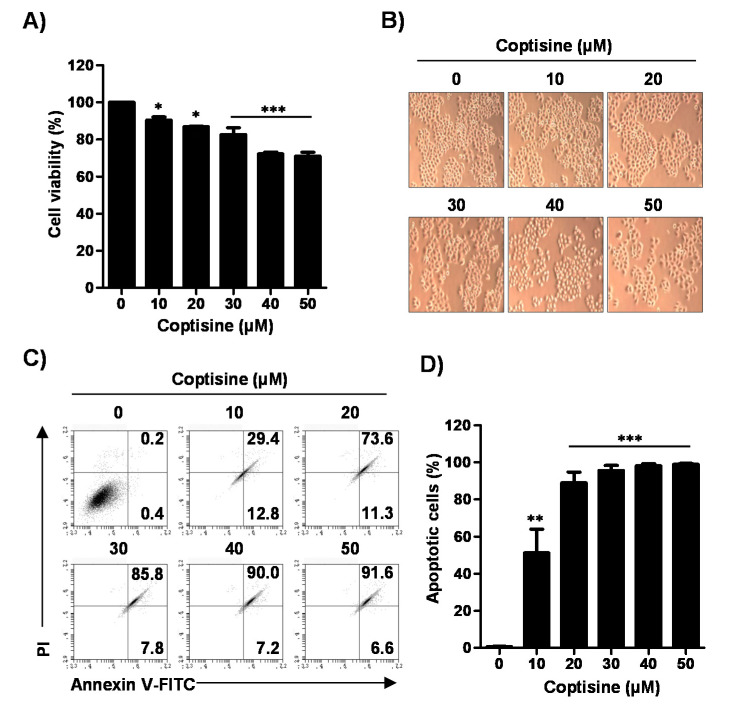
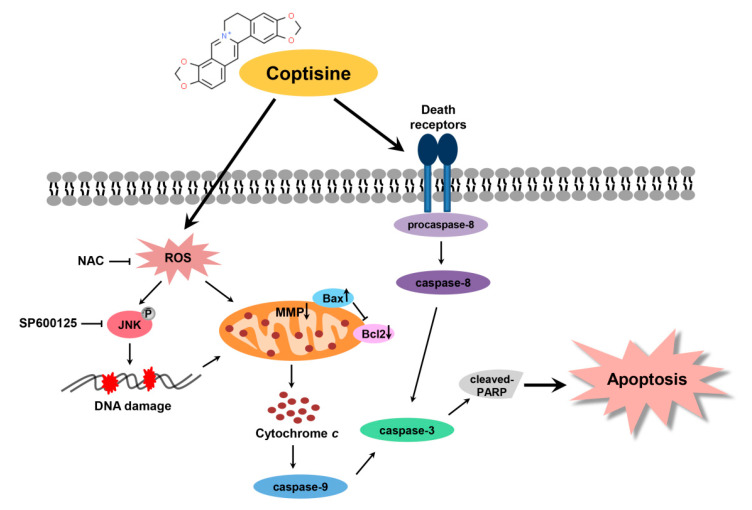
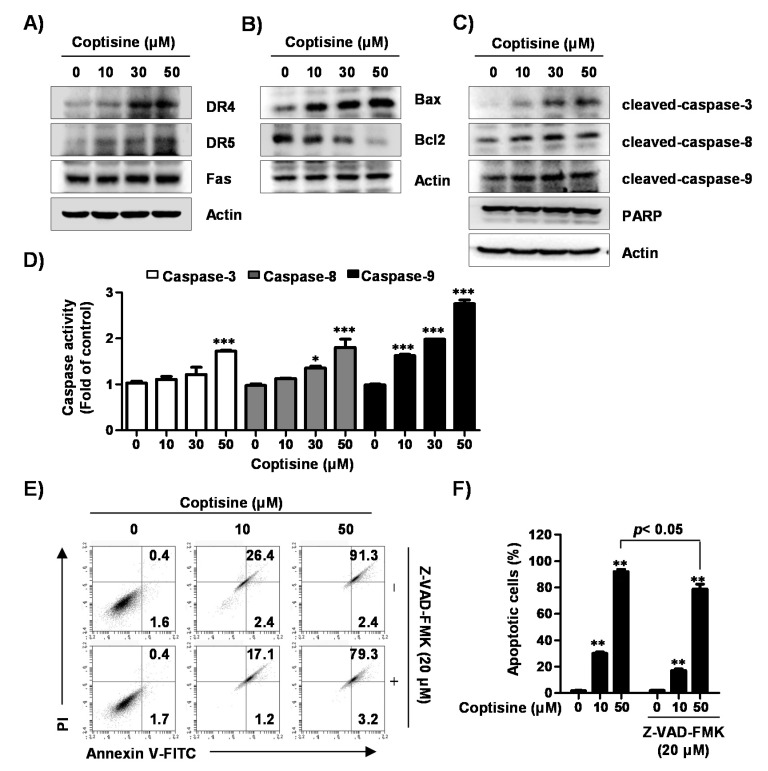
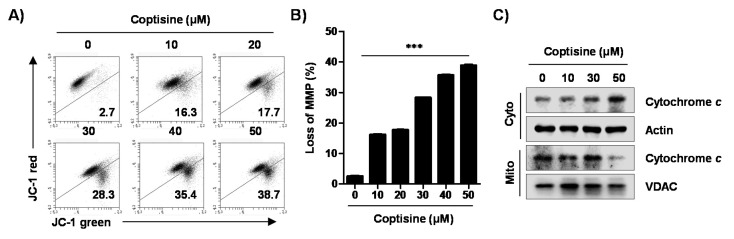
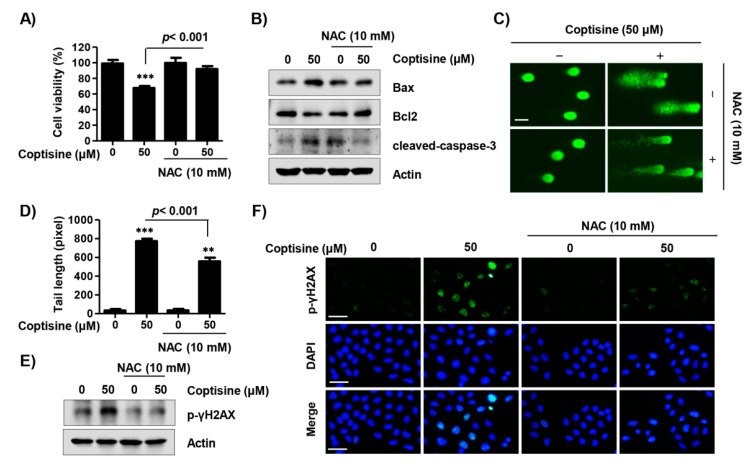
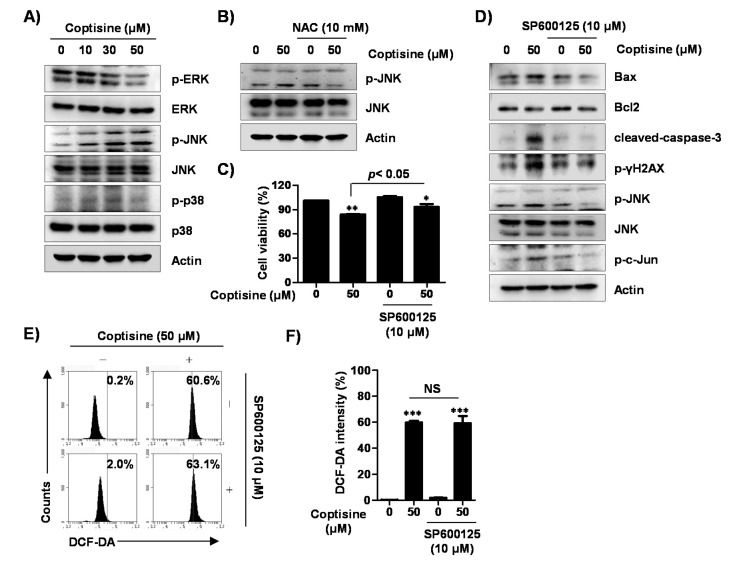
Hepatocellular carcinoma (HCC) has a high mortality rate worldwide, and treatment is very limited due to its high recurrence and low diagnosis rate, and therefore there is an increasing need to develop more effective drugs to treat HCC. Coptisine is one of the isoquinoline alkaloids, and it has various pharmacological effects. However, the evidence for the molecular mechanism of the anticancer efficacy is still insufficient. Therefore, this study investigated the antiproliferative effect of coptisine on human HCC Hep3B cells and identified the action mechanism. Our results showed that coptisine markedly increased DNA damage and apoptotic cell death, which was associated with induction of death receptor proteins. Coptisine also significantly upregulated expression of proapoptotic Bax protein, downregulated expression of anti-apoptotic Bcl-2 protein, and activated caspase-3, -8, and -9. In addition, coptisine remarkably increased the generation of reactive oxygen species (ROS), loss of mitochondrial membrane potential (MMP), and release of cytochrome into the cytoplasm. However, -acetylcysteine (NAC), a ROS scavenger, significantly attenuated the apoptosis-inducing effect of coptisine. It is worth noting that coptisine significantly upregulated phosphorylation of ROS-dependent c-Jun N-terminal kinase (JNK), whereas treatment with JNK inhibitor could suppress an apoptosis-related series event. Taken together, our results suggest that coptisine has an anticancer effect in Hep3B cells through ROS-mediated activation of the JNK signaling pathway.
肝细胞癌(HCC)在全球范围内死亡率很高,由于其高复发率和低诊断率,治疗非常有限,因此,开发更有效的药物来治疗 HCC 的需求日益增加。黄连碱是异喹啉生物碱之一,具有多种药理作用。然而,其抗癌功效的分子机制证据仍然不足。因此,本研究探讨了黄连碱对人 HCC Hep3B 细胞的增殖抑制作用,并确定了其作用机制。我们的结果表明,黄连碱显著增加了 DNA 损伤和凋亡细胞死亡,这与死亡受体蛋白的诱导有关。黄连碱还显著上调了促凋亡 Bax 蛋白的表达,下调了抗凋亡 Bcl-2 蛋白的表达,并激活了 caspase-3、-8 和 -9。此外,黄连碱还显著增加了活性氧(ROS)的产生、线粒体膜电位(MMP)的丧失和细胞色素 c 向细胞质的释放。然而,ROS 清除剂 N-乙酰半胱氨酸(NAC)显著减弱了黄连碱的诱导凋亡作用。值得注意的是,黄连碱显著上调了 ROS 依赖性 c-Jun N-末端激酶(JNK)的磷酸化,而 JNK 抑制剂的处理可以抑制一系列与凋亡相关的事件。综上所述,我们的结果表明,黄连碱通过 ROS 介导的 JNK 信号通路的激活对 Hep3B 细胞具有抗癌作用。