Department of Medicine, University of California Irvine (UCI) School of Medicine, USA.
Applied Medical Technologies LLC, Los Angeles, CA, USA.
Med Hypotheses. 2020 Oct;143:110122. doi: 10.1016/j.mehy.2020.110122. Epub 2020 Jul 21.
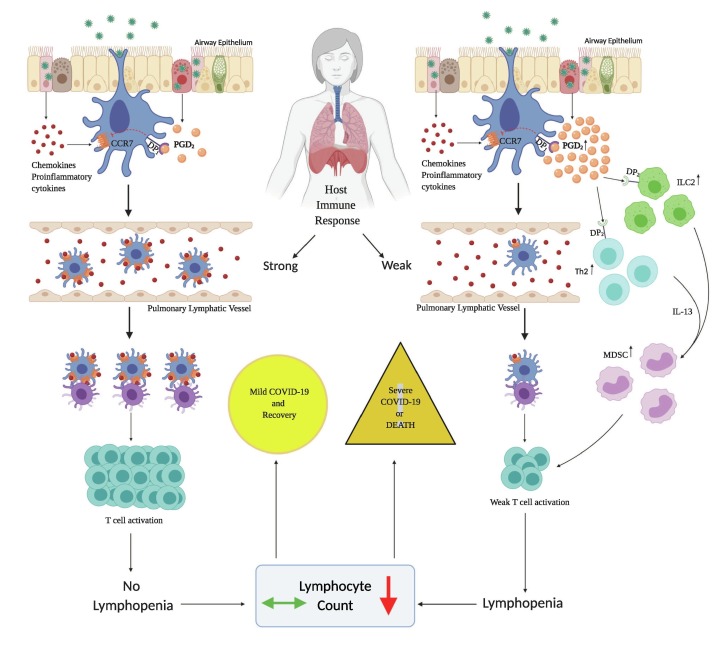
A characteristic feature of COVID-19 disease is lymphopenia. Lymphopenia occurs early in the clinical course and is a predictor of disease severity and outcomes. The mechanism of lymphopenia in COVID-19 is uncertain. It has been variously attributed to the release of inflammatory cytokines including IL-6 and TNF-α; direct infection of the lymphocytes by the virus; and rapid sequestration of lymphocytes in the tissues. Additionally, we postulate that prostaglandin D (PGD) is a key meditator of lymphopenia in COVID-19. First, SARS-CoV infection is known to stimulate the production of PGD in the airways, which inhibits the host dendritic cell response via the DP receptor signaling. Second, PGD is known to upregulate monocytic myeloid-derived suppressor cells (MDSC) via the DP receptor signaling in group 2 innate lymphoid cells (ILC2). We propose targeting PGD/DP signaling using a receptor antagonist such as ramatroban as an immunotherapy for immune dysfunction and lymphopenia in COVID-19 disease.
COVID-19 的一个特征是淋巴细胞减少。淋巴细胞减少发生在临床病程早期,是疾病严重程度和结局的预测指标。COVID-19 中淋巴细胞减少的机制尚不确定。有人认为其与包括白细胞介素 6(IL-6)和肿瘤坏死因子-α(TNF-α)在内的炎症细胞因子的释放、病毒对淋巴细胞的直接感染以及淋巴细胞在组织中的迅速隔离有关。此外,我们假设前列腺素 D(PGD)是 COVID-19 中淋巴细胞减少的关键调节因子。首先,已知 SARS-CoV 感染会刺激气道中 PGD 的产生,通过 DP 受体信号抑制宿主树突状细胞反应。其次,已知 PGD 通过 DP 受体信号上调 2 型先天淋巴样细胞(ILC2)中的单核细胞髓样来源抑制细胞(MDSC)。我们建议使用受体拮抗剂(如拉曲前列素)靶向 PGD/DP 信号,作为 COVID-19 疾病免疫功能障碍和淋巴细胞减少的免疫疗法。