Department of Anatomy, Histology and Neuroscience, Medical School, Autonoma University of Madrid, c/ Arzobispo Morcillo 2, 28029, Madrid, Spain.
Programme in Neuroscience, Doctoral School, Autonoma University of Madrid, Madrid, Spain.
J Headache Pain. 2020 Aug 6;21(1):96. doi: 10.1186/s10194-020-01161-y.
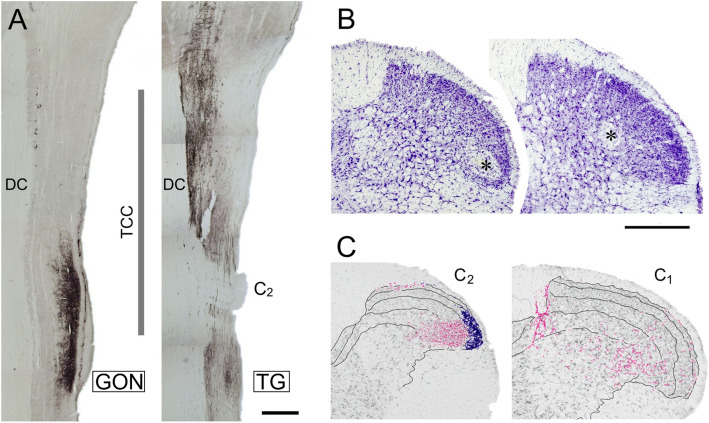
Stimulation of the occipital or trigeminal nerves has been successfully used to treat chronic refractory neurovascular headaches such as migraine or cluster headache, and painful neuropathies. Convergence of trigeminal and occipital sensory afferents in the 'trigeminocervical complex' (TCC) from cutaneous, muscular, dural, and visceral sources is a key mechanism for the input-induced central sensitization that may underlie the altered nociception. Both excitatory (glutamatergic) and inhibitory (GABAergic and glycinergic) mechanisms are involved in modulating nociception in the spinal and medullary dorsal horn neurons, but the mechanisms by which nerve stimulation effects occur are unclear. This study was aimed at investigating the acute effects of electrical stimulation of the greater occipital nerve (GON) on the responses of neurons in the TCC to the mechanical stimulation of the vibrissal pad.
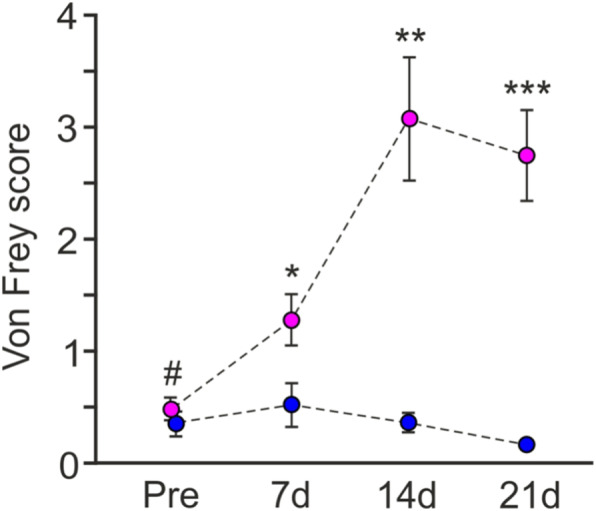
Adult male Wistar rats were used. Neuronal recordings were obtained in laminae II-IV in the TCC in control, sham and infraorbital chronic constriction injury (CCI-IoN) animals. The GON was isolated and electrically stimulated. Responses to the stimulation of vibrissae by brief air pulses were analyzed before and after GON stimulation. In order to understand the role of the neurotransmitters involved, specific receptor blockers of NMDA (AP-5), GABA (bicuculline, Bic) and Glycine (strychnine, Str) were applied locally.
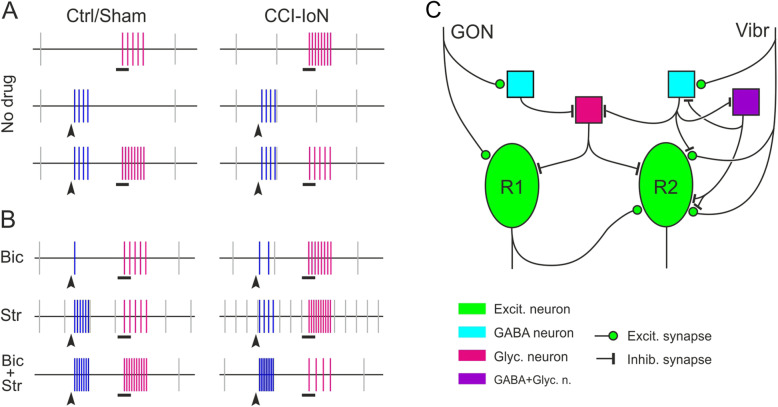
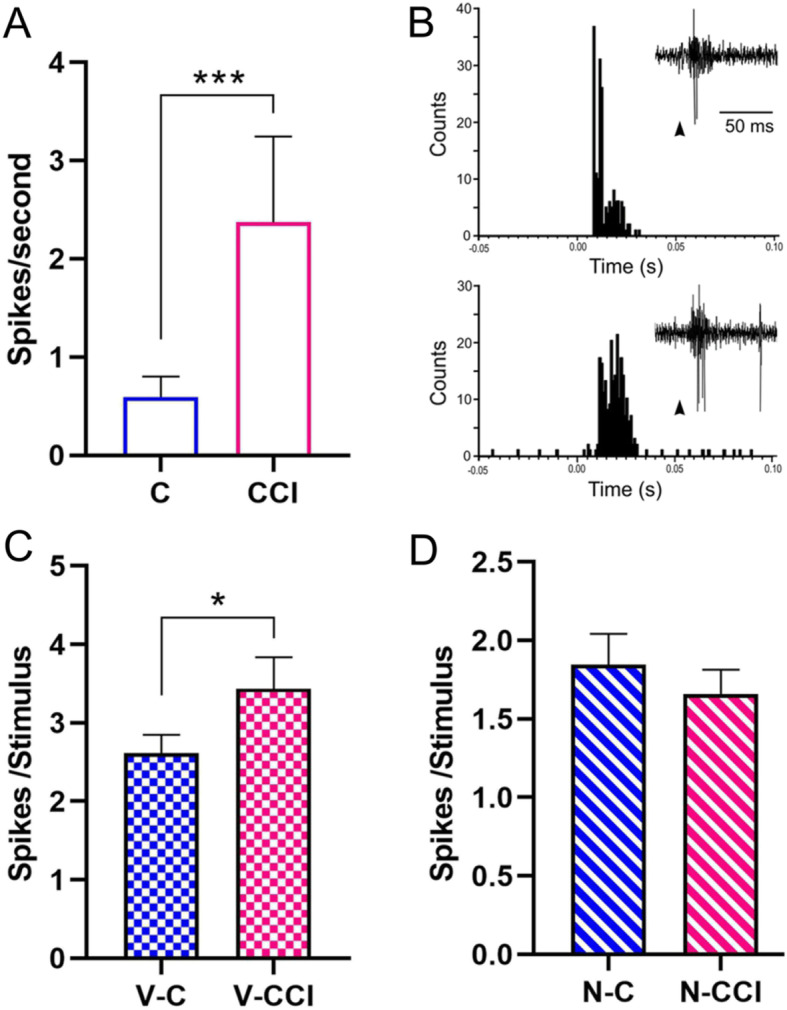
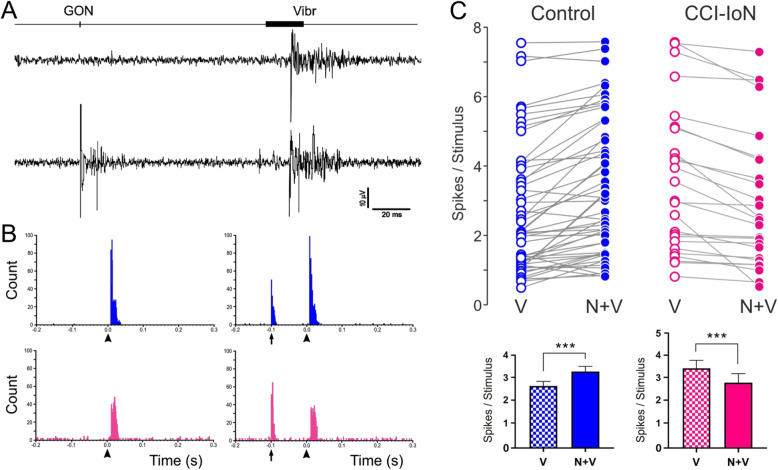
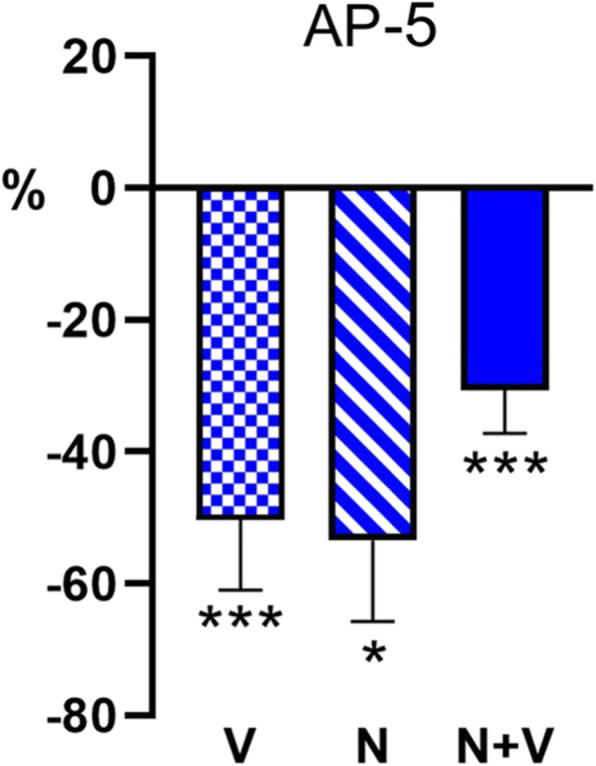
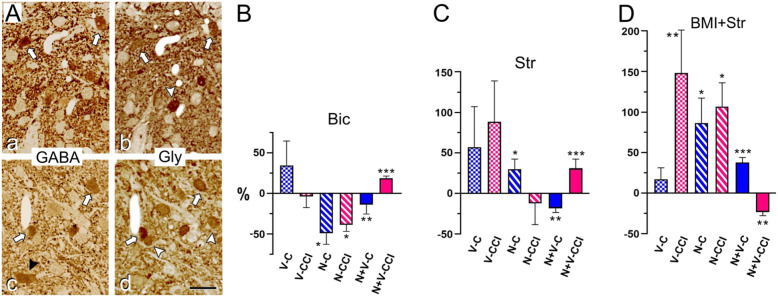
GON stimulation produced a facilitation of the response to light facial mechanical stimuli in controls, and an inhibition in CCI-IoN cases. AP-5 reduced responses to GON and vibrissal stimulation and blocked the facilitation of GON on vibrissal responses found in controls. The application of Bic or Str significantly reduced the facilitatory effect of GON stimulation on the response to vibrissal stimulation in controls. However, the opposite effect was found when GABAergic or Glycinergic transmission was prevented in CCI-IoN cases.
GON stimulation modulates the responses of TCC neurons to light mechanical input from the face in opposite directions in controls and under CCI-IoN. This modulation is mediated by GABAergic and Glycinergic mechanisms. These results will help to elucidate the neural mechanisms underlying the effectiveness of nerve stimulation in controlling painful craniofacial disorders, and may be instrumental in identifying new therapeutic targets for their prevention and treatment.
刺激枕神经或三叉神经已成功用于治疗慢性难治性神经血管性头痛,如偏头痛或丛集性头痛,以及疼痛性神经病。来自皮肤、肌肉、硬脑膜和内脏的三叉和枕感觉传入在“三叉颈复合体”(TCC)中的汇聚是引起输入诱导的中枢敏化的关键机制,这种敏化可能是疼痛改变的基础。兴奋性(谷氨酸能)和抑制性(GABA 能和甘氨酸能)机制都参与调制脊髓和延髓背角神经元中的伤害感受,但是神经刺激作用发生的机制尚不清楚。本研究旨在研究枕大神经(GON)电刺激对 TCC 中神经元对触须垫机械刺激的反应的急性影响。
使用成年雄性 Wistar 大鼠。在对照、假手术和眶下神经慢性缩窄损伤(CCI-IoN)动物的 TCC 中的 II-IV 层记录神经元。分离并电刺激 GON。在 GON 刺激之前和之后分析通过短暂空气脉冲刺激触须的反应。为了了解涉及的神经递质的作用,局部应用 NMDA(AP-5)、GABA(Bic)和甘氨酸(Str)的特定受体阻滞剂。
GON 刺激在对照中产生对面部轻机械刺激反应的易化,而在 CCI-IoN 病例中产生抑制。AP-5 降低了对 GON 和触须刺激的反应,并阻断了对照中发现的 GON 对触须反应的易化。Bic 或 Str 的应用显著降低了 GON 刺激对对照中触须刺激反应的易化作用。然而,当在 CCI-IoN 病例中阻止 GABA 能或甘氨酸能传递时,会发现相反的效果。
GON 刺激以相反的方向调节对照和 CCI-IoN 下 TCC 神经元对面部轻机械输入的反应。这种调制是由 GABA 能和甘氨酸能机制介导的。这些结果将有助于阐明神经刺激控制疼痛性颅面疾病的有效性的神经机制,并可能有助于确定预防和治疗这些疾病的新治疗靶点。