Department of Kinesiology & Physical Education, University of Lethbridge, 4401 University Drive, Lethbridge, AB, T1K 3M4, Canada.
Faculty of Health Sciences, University of Lethbridge, Lethbridge, Canada.
BMC Geriatr. 2020 Aug 6;20(1):277. doi: 10.1186/s12877-020-01647-z.
Prolonged daily sedentary time is associated with increased risk of cardiometabolic diseases, impaired physical function, and mortality. Older adults are more sedentary than any other age group and those in assisted living residences accumulate more sedentary time as they often have little need to engage in light-intensity or standing activities such as cleaning or meal preparation. This "low movement" environment can hasten functional decline. Thus, the purpose of this study was to develop a multi-level intervention to reduce and interrupt sedentary time within assisted living residences and conduct a pilot study to determine if the intervention is feasible and if further testing is warranted.
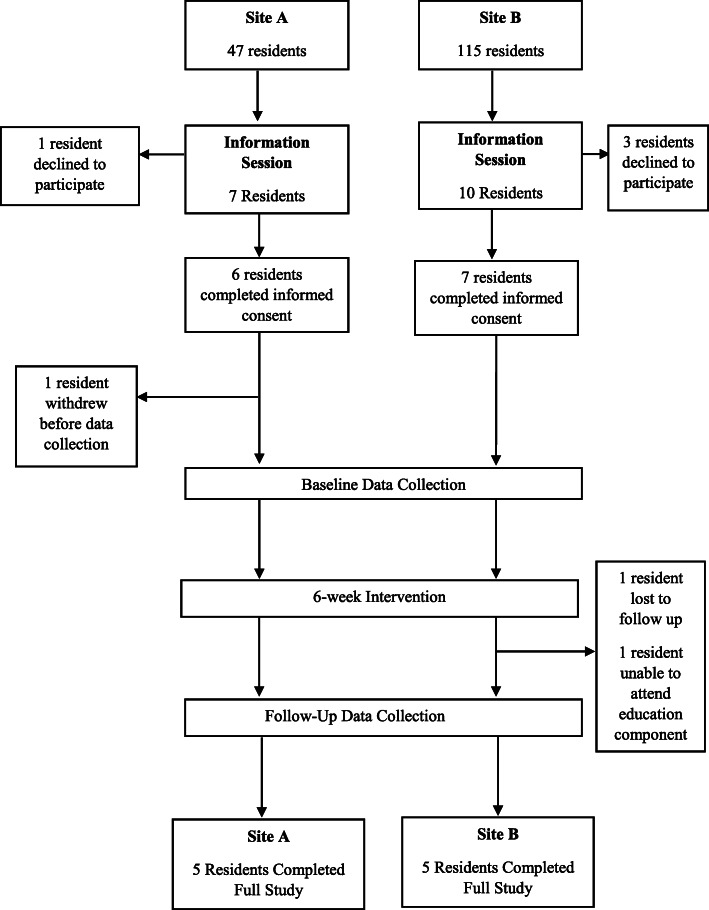
"Stand When You Can" (SWYC) was developed using a Social Ecological framework based on a review of literature and consultation with residents and staff at assisted living residences. After development, a six-week pilot study was conducted in two different residences with 10 older adults (82.2 ± 8.7 years). Before and after the 6 weeks, ActivPAL™ inclinometers were used to measure daily movement behaviours and self-report questionnaires assessed time spent in different sedentary behaviours and quality of life. Physical function was assessed using the Short Physical Performance Battery. Paired sample t-tests examined pre-post differences for pooled data and individual sites. At the end of the pilot study, feedback on the intervention was gathered from both residents and staff to examine feasibility.
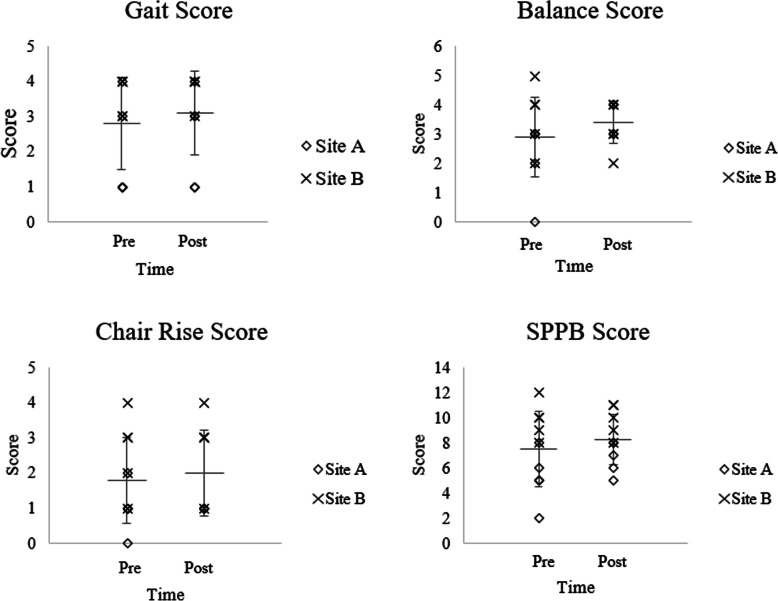
There was a trend towards a decrease in self-reported sitting time (142 min/day; p = 0.09), although device-measured sedentary time did not change significantly. Participants with lower physical function at baseline showed clinically meaningful improvements in physical function after the 6 weeks (p = 0.04, Cohen's d = 0.89). There was no change in quality of life. Residents and staff reported that the intervention strategies were acceptable and practical.
This study suggests that a multi-level intervention for reducing prolonged sedentary time is feasible for implementation at assisted living residences. The intervention could potentially help delay functional decline among older adults when they transition to a supportive living environment. Longer and larger trials to test the efficacy of SWYC are necessary.
Name of Clinical Trial Registry: clinicaltrials.gov Trial Registration number: NCT04458896 . Date of registration: July 8, 2020. (Retrospectively registered).
长时间的日常久坐与心血管代谢疾病风险增加、身体功能受损和死亡率升高有关。老年人比任何其他年龄段的人都更久坐,而且他们在辅助生活住所中积累的久坐时间更多,因为他们通常很少需要从事轻度或站立活动,如清洁或准备饭菜。这种“低运动量”的环境会加速功能衰退。因此,本研究的目的是开发一种多层面的干预措施,以减少和中断辅助生活住所内的久坐时间,并进行一项试点研究,以确定该干预措施是否可行,以及是否需要进一步测试。
“Stand When You Can”(SWYC)是根据文献综述和对辅助生活住所居民和工作人员的咨询,使用社会生态学框架开发的。开发后,在两个不同的住所进行了为期六周的试点研究,共有 10 名老年人(82.2±8.7 岁)参与。在 6 周前后,使用 ActivPAL™倾斜计测量日常运动行为,自我报告问卷评估不同久坐行为和生活质量的时间。使用短程体能表现电池评估身体功能。对 pooled 数据和个别地点进行配对样本 t 检验,以检验预-后差异。在试点研究结束时,从居民和工作人员那里收集对干预措施的反馈,以评估可行性。
自我报告的久坐时间呈下降趋势(142 分钟/天;p=0.09),尽管设备测量的久坐时间没有显著变化。基线身体功能较低的参与者在 6 周后身体功能有显著改善(p=0.04,Cohen's d=0.89)。生活质量没有变化。居民和工作人员报告称,干预策略是可接受和实用的。
本研究表明,一种多层面的干预措施,用于减少长时间的久坐时间,在辅助生活住所中是可行的。当老年人过渡到支持性生活环境时,该干预措施可能有助于延缓他们的功能衰退。需要进行更长和更大的试验来测试 SWYC 的疗效。
clinicaltrials.gov 注册号:NCT04458896 。注册日期:2020 年 7 月 8 日(回顾性注册)。