School of Life Sciences, University of Warwick, Coventry CV4 7AL, UK.
Plant Systems Biology, Technical University of Munich, 85354 Freising, Germany.
Curr Biol. 2020 Oct 5;30(19):3703-3712.e4. doi: 10.1016/j.cub.2020.07.012. Epub 2020 Aug 6.
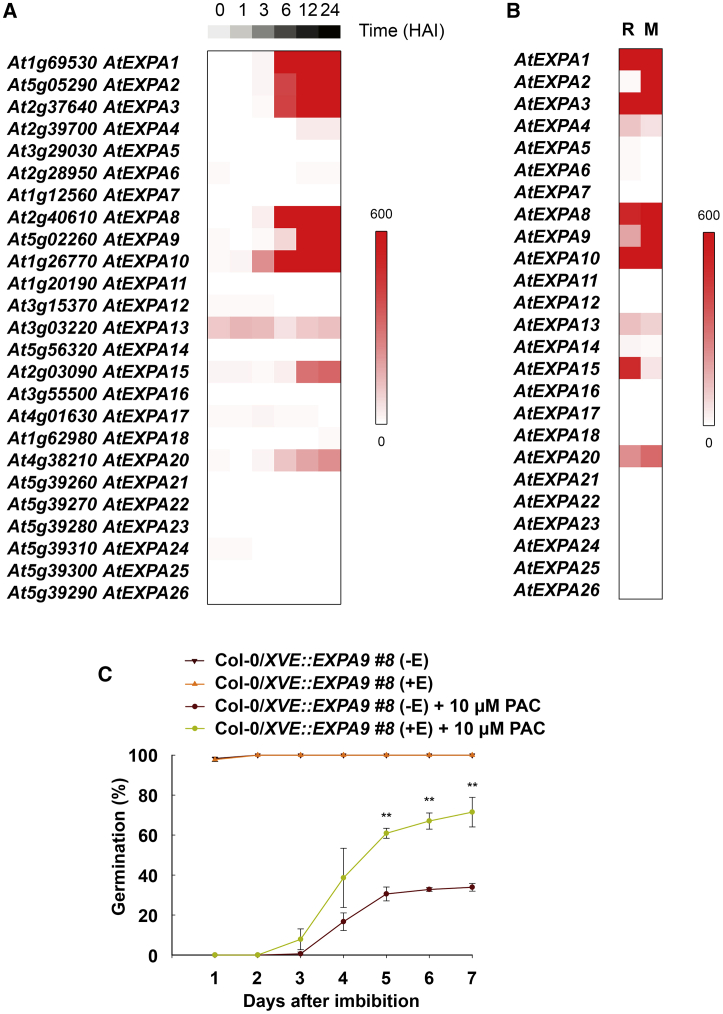
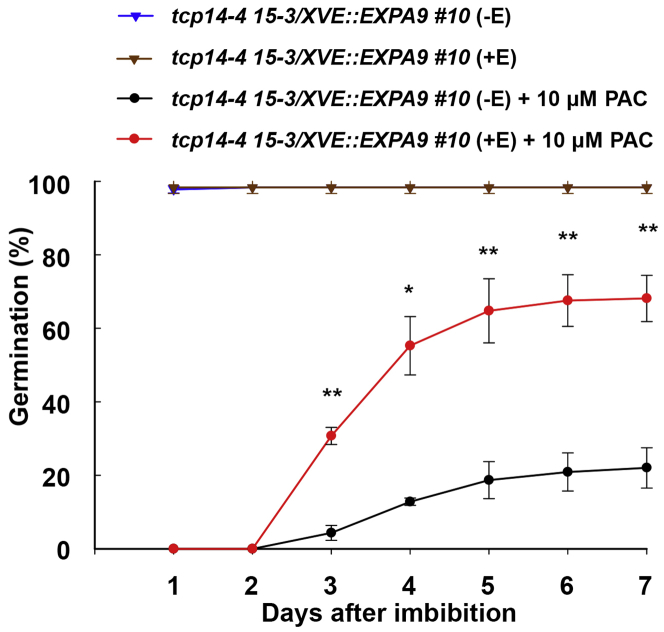
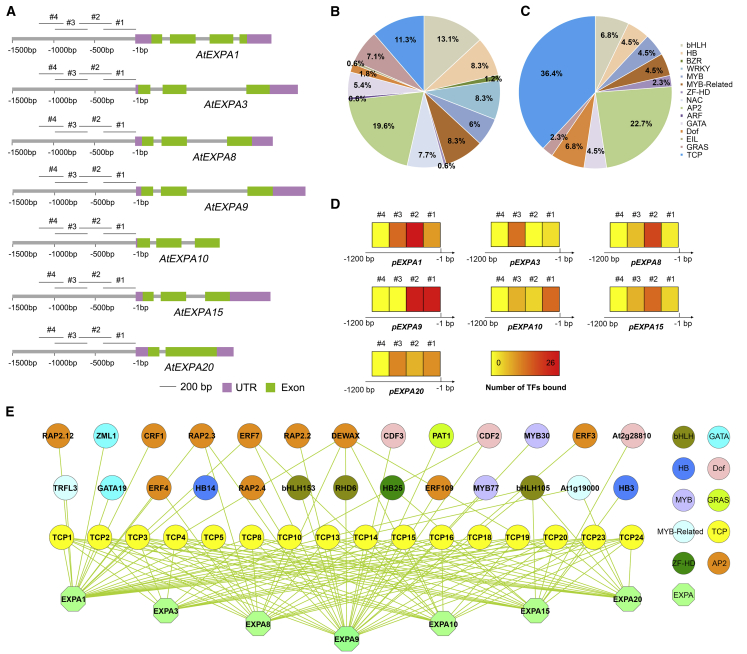
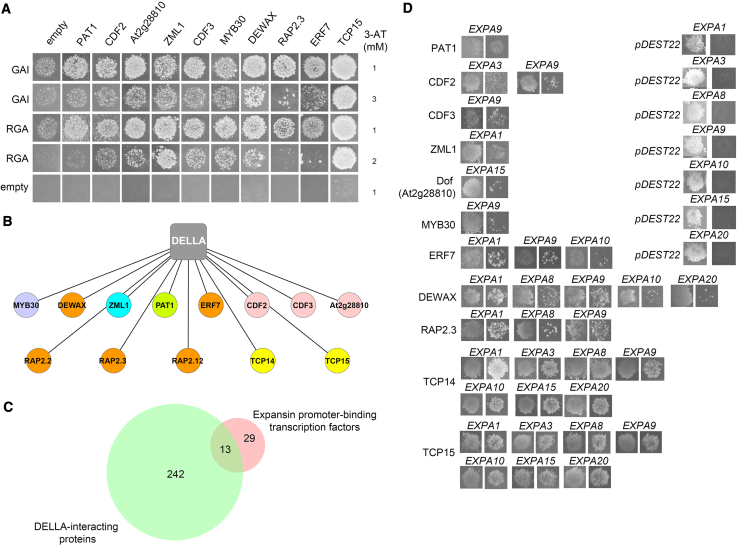
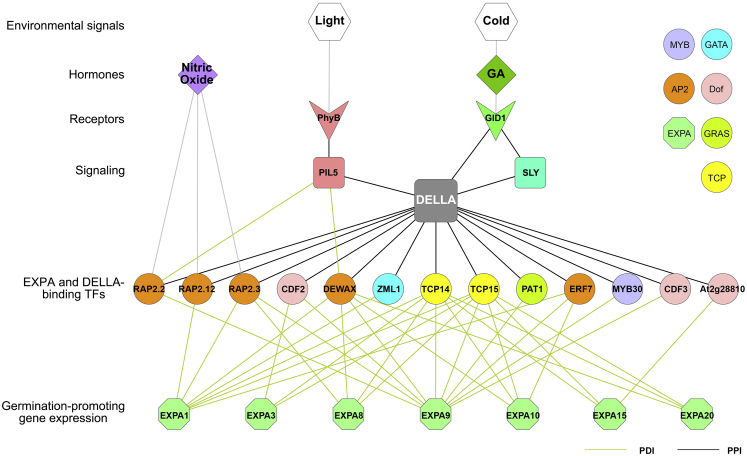
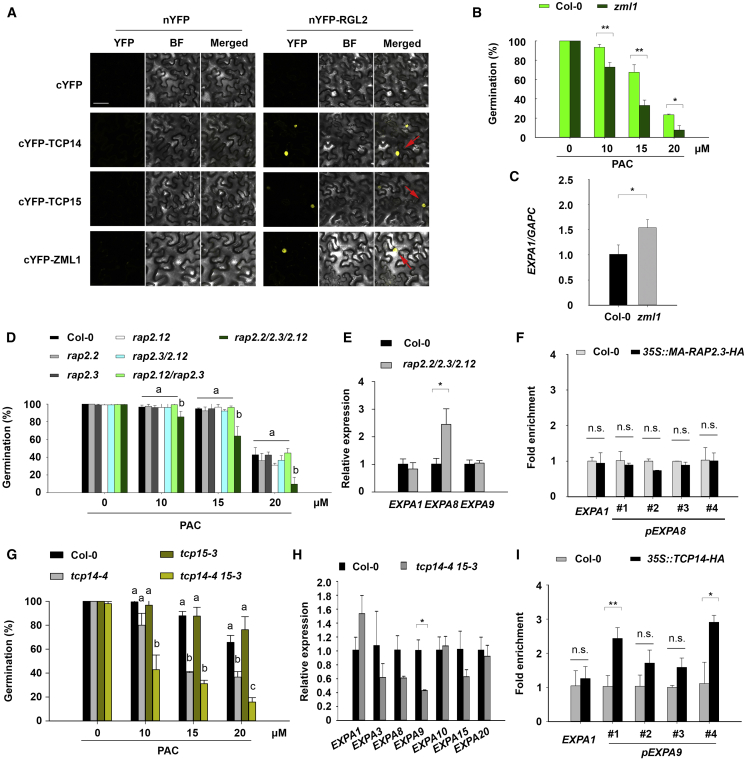
Seed dormancy is an adaptive trait defining where and when plants are established. Diverse signals from the environment are used to decide when to initiate seed germination, a process driven by the expansion of cells within the embryo. How these signals are integrated and transduced into the biomechanical changes that drive embryo growth remains poorly understood. Using Arabidopsis seeds, we demonstrate that cell-wall-loosening EXPANSIN (EXPA) genes promote gibberellic acid (GA)-mediated germination, identifying EXPAs as downstream molecular targets of this developmental phase transition. Molecular interaction screening identified transcription factors (TFs) that bind to both EXPA promoter fragments and DELLA GA-response regulators. A subset of these TFs is targeted each by nitric oxide (NO) and the phytochrome-interacting TF PIL5. This molecular interaction network therefore directly links the perception of an external environmental signal (light) and internal hormonal signals (GA and NO) with downstream germination-driving EXPA gene expression. Experimental validation of this network established that many of these TFs mediate GA-regulated germination, including TCP14/15, RAP2.2/2.3/2.12, and ZML1. The reduced germination phenotype of the tcp14 tcp15 mutant seed was partially rescued through ectopic expression of their direct target EXPA9. The GA-mediated control of germination by TCP14/15 is regulated through EXPA-mediated control of cell wall loosening, providing a mechanistic explanation for this phenotype and a previously undescribed role for TCPs in the control of cell expansion. This network reveals the paths of signal integration that culminate in seed germination and provides a resource to uncover links between the genetic and biomechanical bases of plant growth.
种子休眠是一种适应性特征,决定了植物的定居位置和时间。环境中的各种信号被用来决定何时开始种子发芽,这个过程是由胚胎细胞的扩张驱动的。这些信号是如何整合并转化为驱动胚胎生长的生物力学变化的,目前还知之甚少。利用拟南芥种子,我们证明细胞壁松弛扩展蛋白(EXPA)基因促进赤霉素(GA)介导的发芽,将 EXPA 鉴定为这种发育阶段转变的下游分子靶标。分子相互作用筛选鉴定出与 EXPA 启动子片段和 DELLA GA 反应调节剂结合的转录因子(TFs)。这些 TF 中的一部分分别被一氧化氮(NO)和光受体相互作用 TF PIL5 靶向。因此,这个分子相互作用网络直接将外部环境信号(光)和内部激素信号(GA 和 NO)的感知与下游的发芽驱动 EXPA 基因表达联系起来。对这个网络的实验验证确立了许多这些 TF 介导 GA 调节的发芽,包括 TCP14/15、RAP2.2/2.3/2.12 和 ZML1。tcp14 tcp15 突变体种子的发芽率降低表型部分通过其直接靶标 EXPA9 的异位表达得到挽救。TCP14/15 通过 EXPA 介导的细胞壁松弛控制 GA 介导的发芽的调控,为这种表型提供了一个机制解释,并为 TCP 在控制细胞扩张中的以前未描述的作用提供了一个机制解释。这个网络揭示了导致种子发芽的信号整合途径,并提供了一个资源来揭示植物生长的遗传和生物力学基础之间的联系。