Wageningen Seed Science Centre, Laboratory of Plant Physiology, Wageningen University, 6708PB Wageningen, the Netherlands.
Laboratory of Genetics, Wageningen University, 6708PB Wageningen, the Netherlands.
Plant Cell. 2024 May 1;36(5):1358-1376. doi: 10.1093/plcell/koad328.
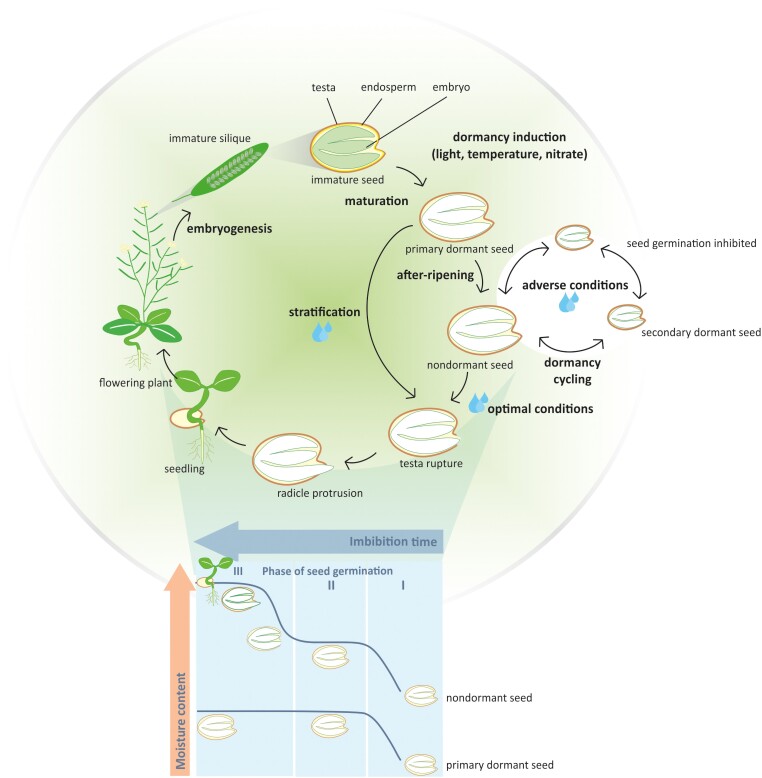
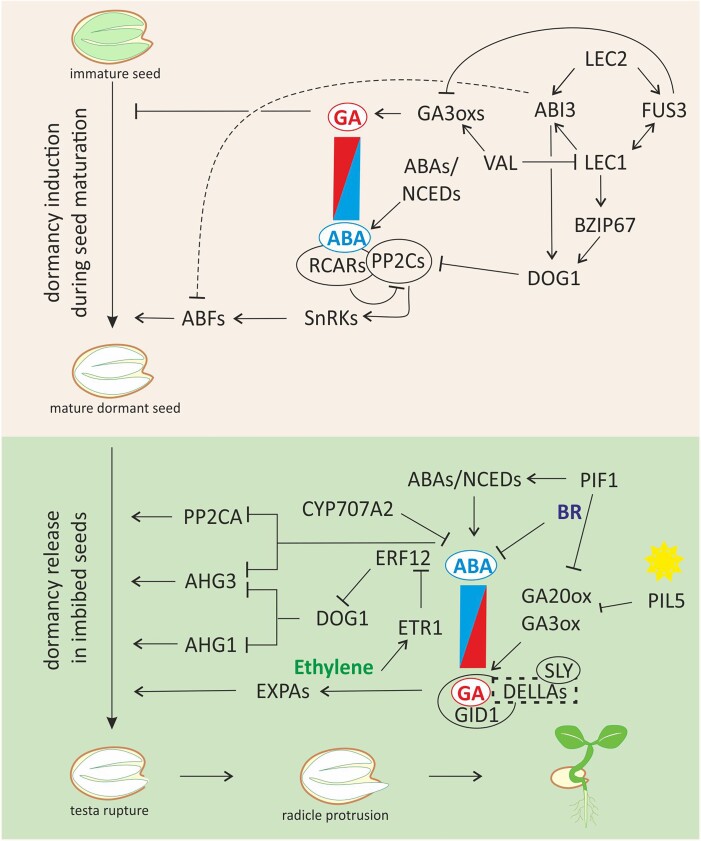
Seeds are unique time capsules that can switch between 2 complex and highly interlinked stages: seed dormancy and germination. Dormancy contributes to the survival of plants because it allows to delay germination to optimal conditions. The switch between dormancy and germination occurs in response to developmental and environmental cues. In this review we provide a comprehensive overview of studies that have helped to unravel the molecular mechanisms underlying dormancy and germination over the last decades. Genetic and physiological studies provided a strong foundation for this field of research and revealed the critical role of the plant hormones abscisic acid and gibberellins in the regulation of dormancy and germination, and later natural variation studies together with quantitative genetics identified previously unknown genetic components that control these processes. Omics technologies like transcriptome, proteome, and translatomics analysis allowed us to mechanistically dissect these processes and identify new components in the regulation of seed dormancy and germination.
种子是独特的时间胶囊,可以在 2 种复杂且高度相互关联的状态之间切换:种子休眠和萌发。休眠有助于植物的生存,因为它可以延迟到最佳条件下的萌发。休眠和萌发之间的转换是对发育和环境线索的响应。在这篇综述中,我们全面概述了过去几十年中有助于揭示休眠和萌发分子机制的研究。遗传和生理学研究为这一研究领域提供了坚实的基础,揭示了植物激素脱落酸和赤霉素在调节休眠和萌发中的关键作用,随后的自然变异研究与数量遗传学一起,确定了以前未知的控制这些过程的遗传成分。转录组、蛋白质组和转译组分析等组学技术使我们能够对这些过程进行机制上的剖析,并确定种子休眠和萌发调控中的新成分。