Yang Chien-Chung, Hsiao Li-Der, Tseng Hui-Ching, Kuo Ching-Ming, Yang Chuen-Mao
Department of Traditional Chinese Medicine, Chang Gung Memorial Hospital at Tao-Yuan, Tao-Yuan 33302, Taiwan.
School of Traditional Chinese Medicine, College of Medicine, Chang Gung University, Tao-Yuan 33302, Taiwan.
J Inflamm Res. 2020 Jul 20;13:325-341. doi: 10.2147/JIR.S252659. eCollection 2020.
Neuroinflammation plays a crucial role in neurodegenerative diseases. Matrix metalloproteinases (MMPs) are a landmark of neuroinflammation. Lipopolysaccharide (LPS) has been demonstrated to induce MMP-9 expression. The mechanisms underlying LPS-induced MMP-9 expression have not been completely elucidated in astrocytes. Nuclear factor-kappaB (NF-κB) is well known as one of the crucial transcription factors in MMP-9 induction. Moreover, reactive oxygen species (ROS) could be an important mediator of neuroinflammation. Here, we differentiated whether ROS and NF-κB contributed to LPS-mediated MMP-9 expression in rat brain astrocytes (RBA-1). Besides, pristimerin has been revealed to possess antioxidant and anti-inflammatory effects. We also evaluated the effects of pristimerin on LPS-induced inflammatory responses.
RBA-1 cells were used for analyses. Pharmacological inhibitors and siRNAs were used to evaluate the signaling pathway. Western blotting and gelatin zymography were conducted to evaluate protein and MMP-9 expression, respectively. Real-time PCR was for mRNA expression. Wound healing assay was for cell migration. 2',7'-dichlorodihydrofluorescein diacetate (HDCF-DA) and dihydroethidium (DHE) staining were for ROS generation. Immunofluorescence staining was conducted to assess NF-κB p65. Promoter-reporter gene assay and chromatin immunoprecipitation (ChIP) assay were used to detect promoter activity and the association of nuclear proteins with the promoter.
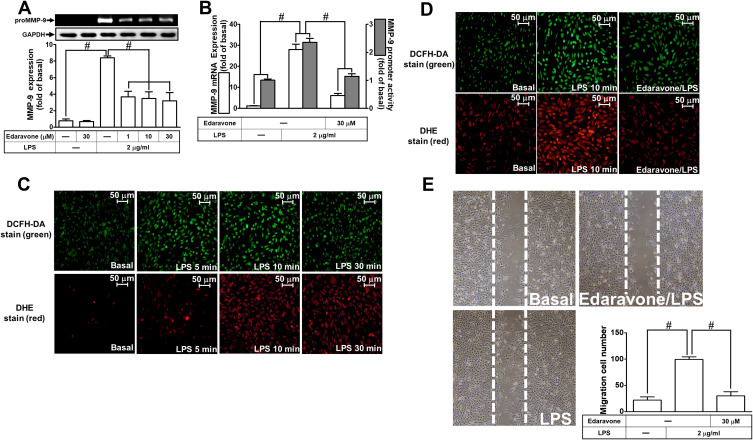
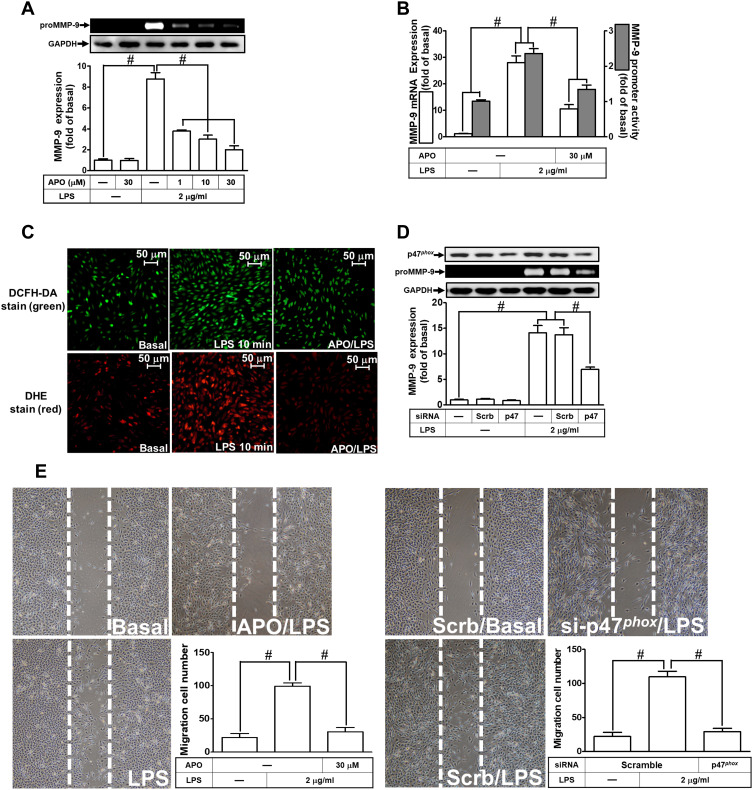
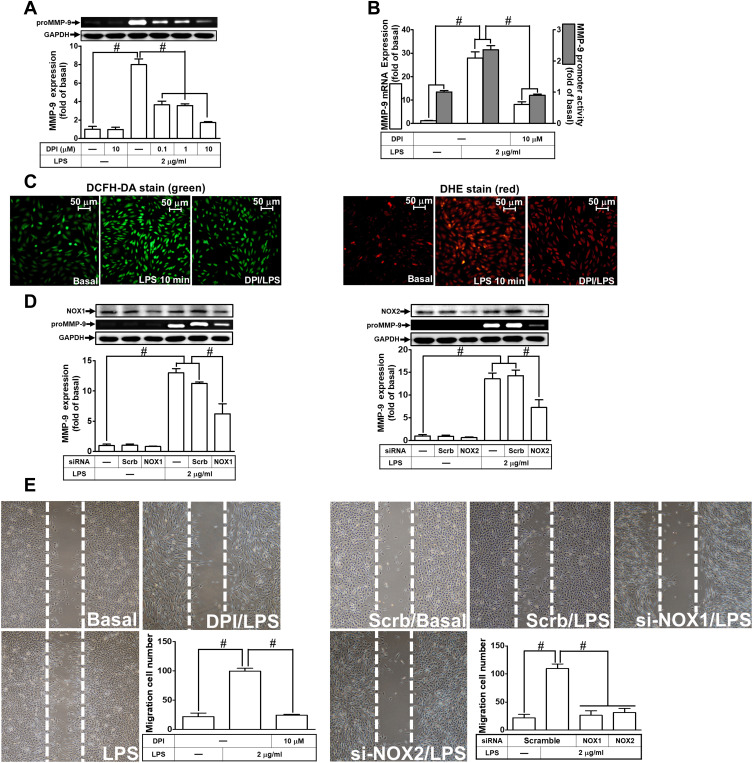
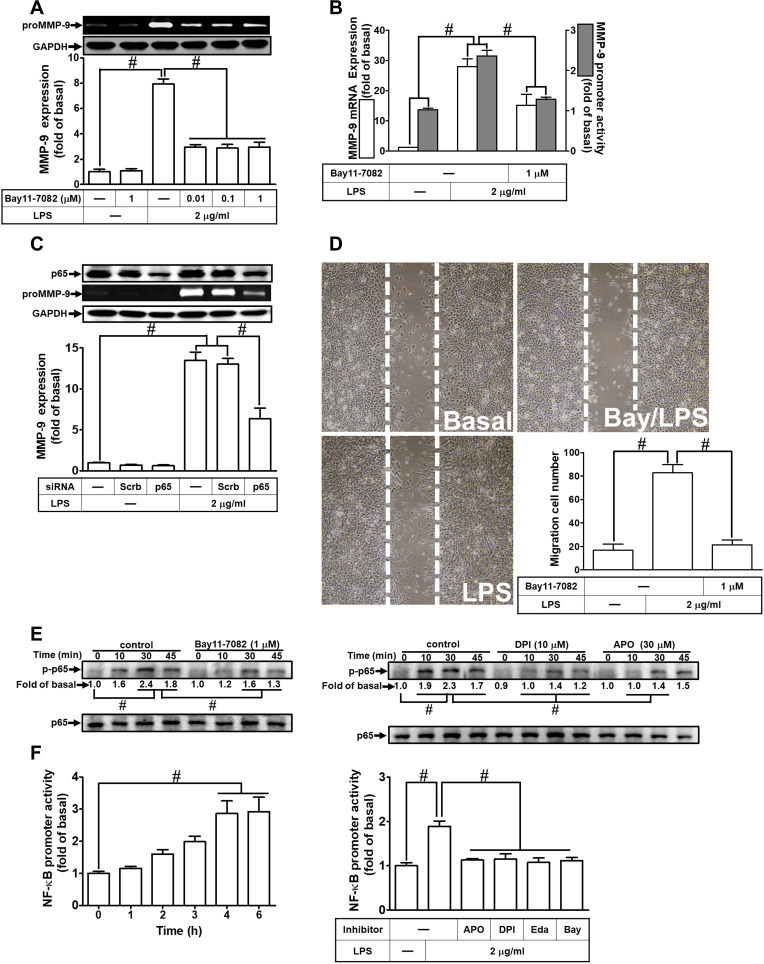
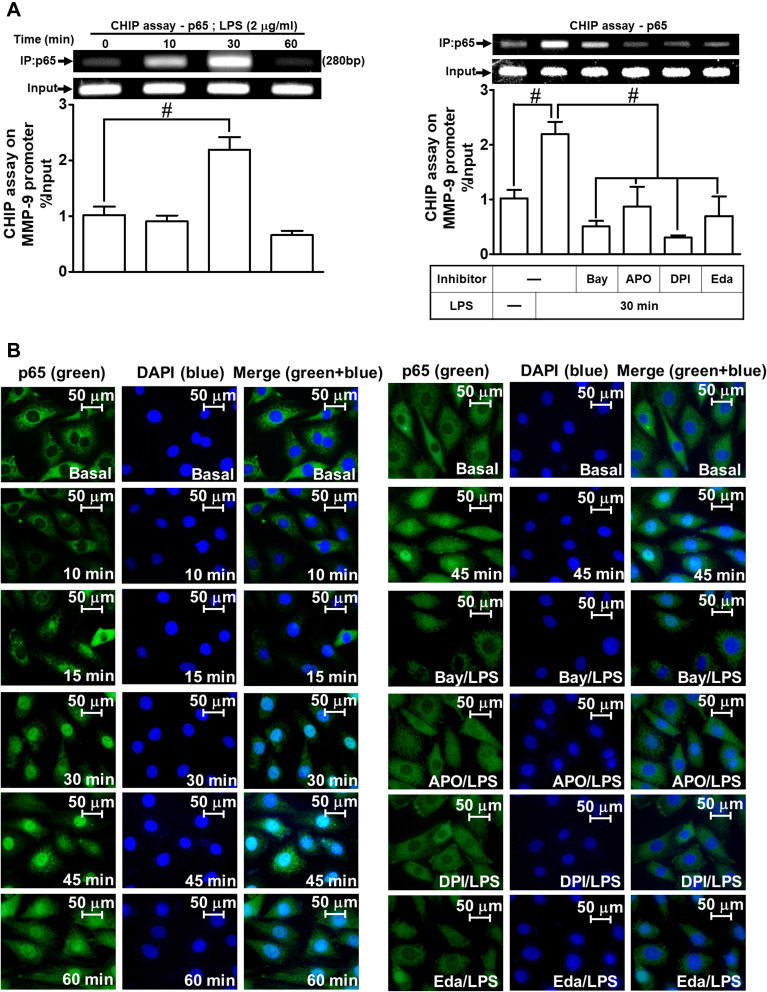
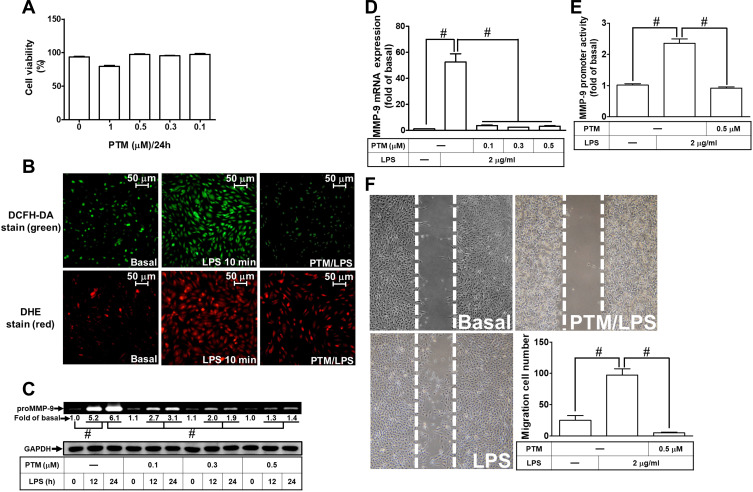
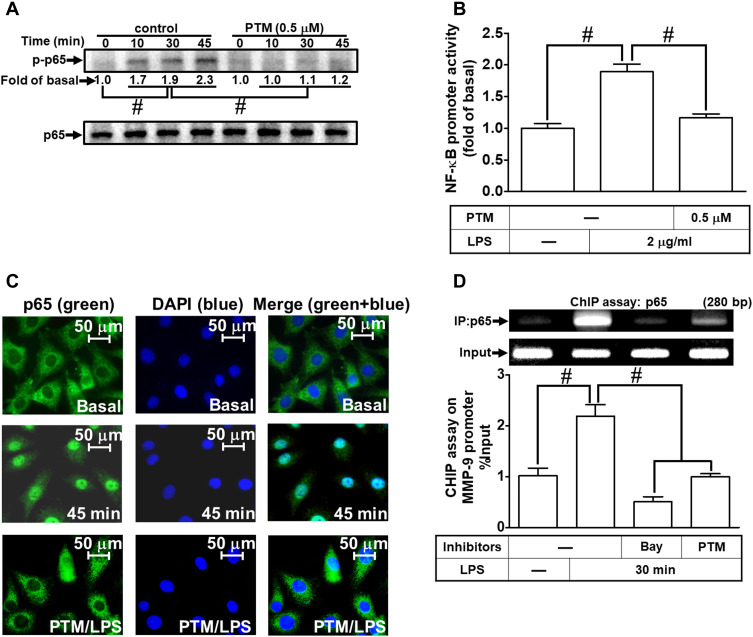
Our results showed that the increased level of ROS generation was attenuated by edaravone (a ROS scavenger), apocynin (APO; an inhibitor of p47), diphenyleneiodonium (DPI; an inhibitor of NOX), and pristimerin in RBA-1 cells exposed to LPS. Besides, pretreatment with APO, DPI, edaravone, Bay11-7082, and pristimerin also inhibited the phosphorylation, nuclear translocation, promoter binding activity of NF-κB p65 as well as upregulation of MMP-9 expression-mediated cell migration in RBA-1 cells challenged with LPS.
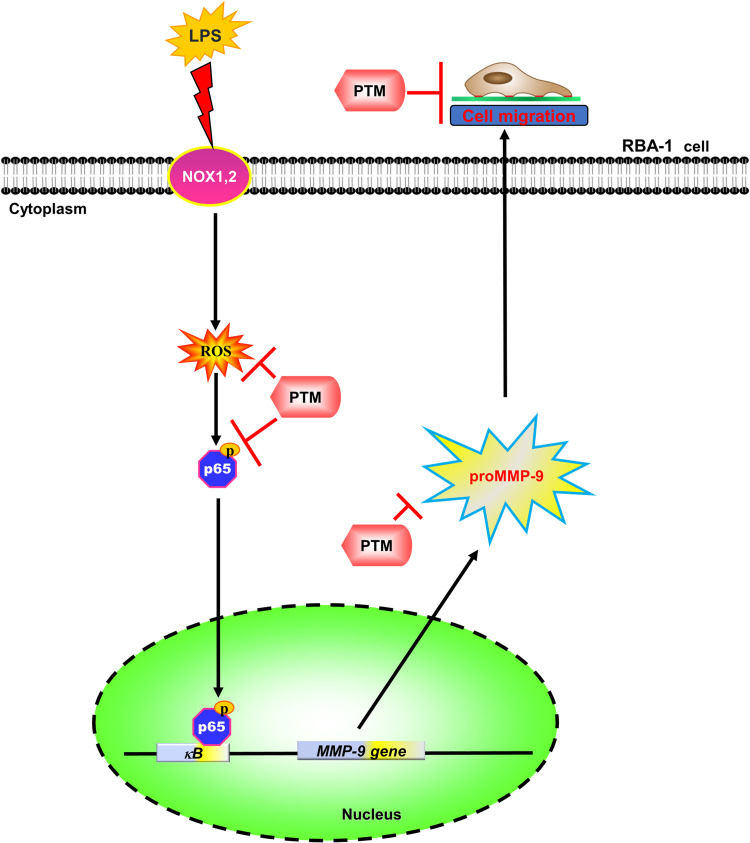
These results suggested that LPS enhances the upregulation of MMP-9 through nicotinamide adenine dinucleotide phosphate (NADPH) oxidase (NOX)/ROS-dependent NF-κB activity. These results also provide new insights into the mechanisms by which pristimerin attenuates LPS-mediated MMP-9 expression and neuroinflammatory responses.
神经炎症在神经退行性疾病中起关键作用。基质金属蛋白酶(MMPs)是神经炎症的一个标志。脂多糖(LPS)已被证明可诱导MMP-9表达。LPS诱导MMP-9表达的机制在星形胶质细胞中尚未完全阐明。核因子-κB(NF-κB)是众所周知的MMP-9诱导中的关键转录因子之一。此外,活性氧(ROS)可能是神经炎症的重要介质。在此,我们区分了ROS和NF-κB是否促成LPS介导的大鼠脑星形胶质细胞(RBA-1)中MMP-9的表达。此外,蛇葡萄素已被发现具有抗氧化和抗炎作用。我们还评估了蛇葡萄素对LPS诱导的炎症反应的影响。
使用RBA-1细胞进行分析。使用药理抑制剂和小干扰RNA(siRNAs)评估信号通路。分别进行蛋白质免疫印迹和明胶酶谱法评估蛋白质和MMP-9表达。实时聚合酶链反应(PCR)用于mRNA表达。伤口愈合试验用于细胞迁移。2',7'-二氯二氢荧光素二乙酸酯(HDCF-DA)和二氢乙锭(DHE)染色用于检测ROS生成。进行免疫荧光染色评估NF-κB p65。使用启动子报告基因测定和染色质免疫沉淀(ChIP)测定检测启动子活性以及核蛋白与启动子的结合。
我们的结果表明,在暴露于LPS的RBA-1细胞中,依达拉奉(一种ROS清除剂)、阿扑辛(APO;一种p47抑制剂)、二苯基碘鎓(DPI;一种NADPH氧化酶(NOX)抑制剂)和蛇葡萄素可减弱ROS生成水平的升高。此外,用APO、DPI、依达拉奉、Bay11-7082和蛇葡萄素预处理也可抑制NF-κB p65的磷酸化、核转位、启动子结合活性以及在受到LPS刺激的RBA-1细胞中MMP-9表达介导的细胞迁移上调。
这些结果表明,LPS通过烟酰胺腺嘌呤二核苷酸磷酸(NADPH)氧化酶(NOX)/ROS依赖性NF-κB活性增强MMP-9的上调。这些结果还为蛇葡萄素减弱LPS介导的MMP-9表达和神经炎症反应的机制提供了新的见解。