Roy Rubén, de la Vega Rocío, Jensen Mark P, Miró Jordi
Universitat Rovira i Virgili, Unit for the Study and Treatment of Pain-ALGOS, Department of Psychology, Research Center for Behavior Assessment (CRAMC), Tarragona, Spain.
Center for Child Health, Behavior and Development, Children's Research Institute, Seattle, WA, United States.
Front Neurosci. 2020 Jul 16;14:671. doi: 10.3389/fnins.2020.00671. eCollection 2020.
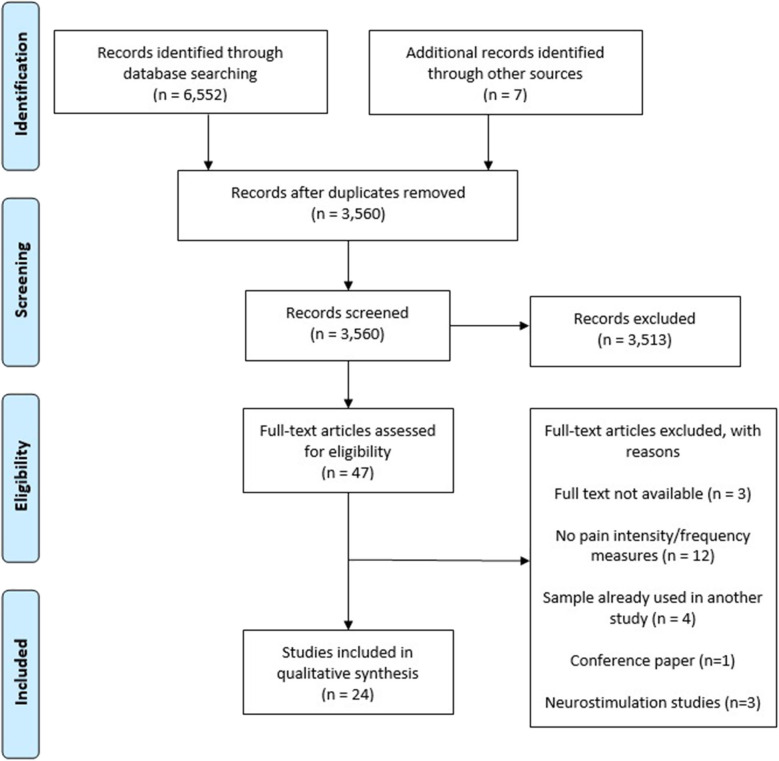
Chronic pain is a significant global health issue. For most individuals with chronic pain, biomedical treatments do not provide adequate relief. Given the evidence that neurophysiological abnormalities are associated with pain, it is reasonable to consider treatments that target these factors, such as neurofeedback (NF). The primary objectives of this review were to summarize the current state of knowledge regarding: (1) the different types of NF and NF protocols that have been evaluated for pain management; (2) the evidence supporting each NF type and protocol; (3) if targeted brain activity changes occur with NF training; and (4) if such brain activity change is associated with improvements on treatment outcomes. Inclusion criteria were intentionally broad to encompass every empirical study using NF in relation to pain. We considered all kinds of NF, including both electroencephalogram- (EEG-) and functional magnetic resonance imagining- (fMRI-) based. We searched the following databases from inception through September 2019: Pubmed, Ovid, Embase, Web of Science, PsycINFO. The search strategy consisted of a combination of key terms referring to all NF types and pain conditions (e.g., neurofeedback, rt-fMRI-NF, BOLD, pain, migraine). A total of 6,552 citations were retrieved; 24 of these that were included in the review. Most of the studies were of moderate quality, included a control condition and but did not include a follow-up. They focused on studying pain intensity (83%), pain frequency, and other variables (fatigue, sleep, depression) in samples of adults ( = 7-71) with headaches, fibromyalgia and other pain conditions. Most studies (79%) used EEG-based NF. A wide variety of NF types and protocols have been used for pain management aiming to either increase, decrease or regulate brain activity in certain areas theoretically associated with pain. Given the generally positive results in the studies reviewed, the findings indicate that NF procedures have the potential for reducing pain and improving other related outcomes in individuals with chronic pain. However, the current evidence does not provide definitive conclusions or allow for reliable recommendations on which protocols or methods of administration may be the most effective. These findings support the need for continued - but higher quality - research in this area.
慢性疼痛是一个重大的全球健康问题。对于大多数慢性疼痛患者而言,生物医学治疗无法提供充分的缓解。鉴于有证据表明神经生理异常与疼痛相关,考虑针对这些因素的治疗方法是合理的,比如神经反馈(NF)。本综述的主要目的是总结关于以下方面的当前知识状况:(1)已针对疼痛管理进行评估的不同类型的神经反馈及神经反馈方案;(2)支持每种神经反馈类型及方案的证据;(3)神经反馈训练是否会引起目标脑活动变化;(4)这种脑活动变化是否与治疗效果的改善相关。纳入标准有意放宽,以涵盖使用神经反馈治疗疼痛的每一项实证研究。我们考虑了各种神经反馈,包括基于脑电图(EEG)和基于功能磁共振成像(fMRI)的神经反馈。我们检索了从数据库建立至2019年9月的以下数据库:PubMed、Ovid、Embase、科学网、PsycINFO。检索策略由涉及所有神经反馈类型和疼痛状况的关键词组合而成(例如,神经反馈、实时功能磁共振成像神经反馈、血氧水平依赖信号、疼痛、偏头痛)。共检索到6552条引文;其中24条被纳入本综述。大多数研究质量中等,包括对照条件,但未包括随访。它们专注于研究成人(n = 7 - 71)患有头痛、纤维肌痛和其他疼痛状况的样本中的疼痛强度(83%)、疼痛频率以及其他变量(疲劳、睡眠、抑郁)。大多数研究(79%)使用基于脑电图的神经反馈。为了理论上增加、减少或调节与疼痛相关的某些区域的脑活动,已将各种各样的神经反馈类型和方案用于疼痛管理。鉴于所综述研究中的总体积极结果,研究结果表明神经反馈程序有潜力减轻慢性疼痛患者的疼痛并改善其他相关结果。然而,目前的证据并未提供明确结论,也无法就哪些方案或给药方法可能最有效给出可靠建议。这些研究结果支持在该领域继续开展更高质量研究的必要性。