Department of Chemistry and Biochemistry, University of Oklahoma, Norman, OK 73019, USA.
Laboratories of Molecular Anthropology and Microbiome Research, University of Oklahoma, Norman, OK 73019, USA.
Sci Adv. 2020 Jul 22;6(30):eaaz2015. doi: 10.1126/sciadv.aaz2015. eCollection 2020 Jul.
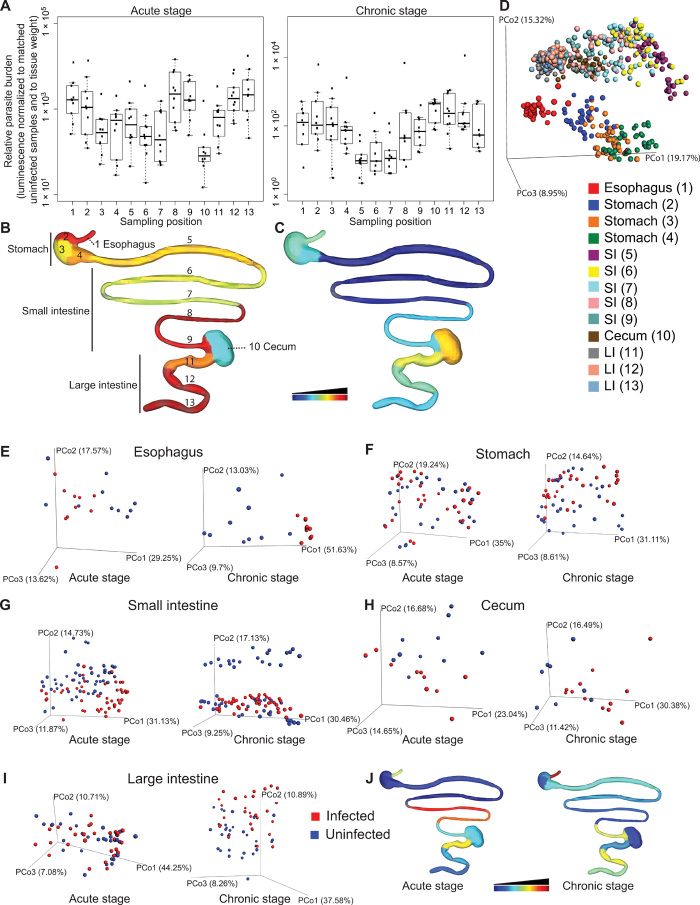
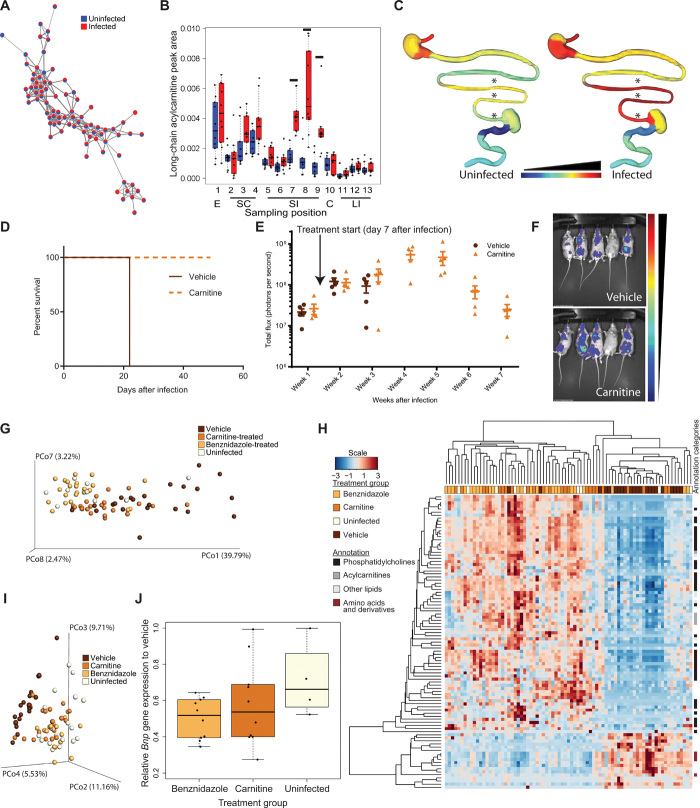
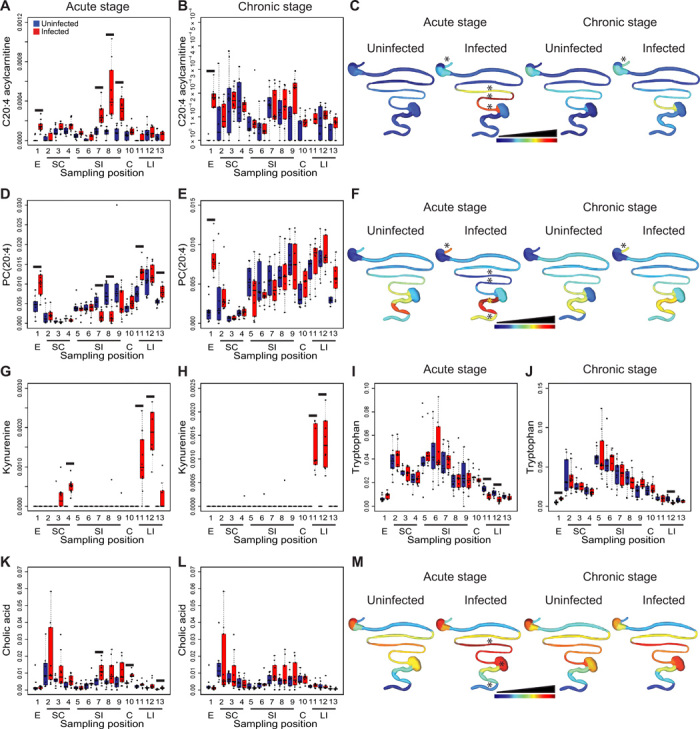
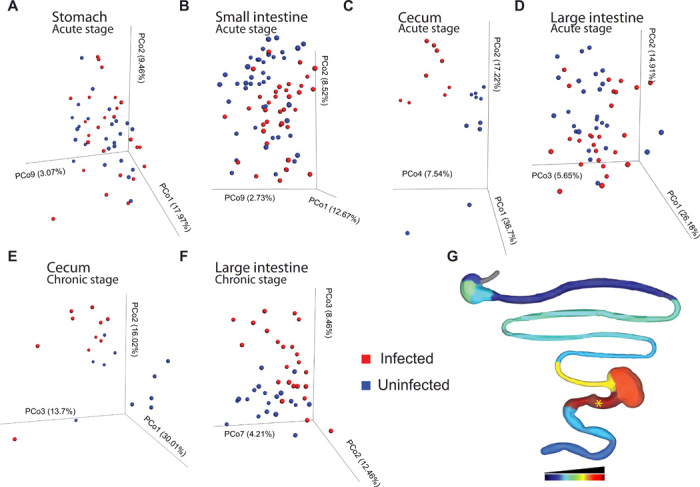
Chagas disease (CD) is a parasitic disease caused by protozoa, presenting with cardiomyopathy, megaesophagus, and/or megacolon. To determine the mechanisms of gastrointestinal (GI) CD tissue tropism, we systematically characterized the spatial localization of infection-induced metabolic and microbiome alterations, in a mouse model of CD. Notably, the impact of the transition between acute and persistent infection differed between tissue sites, with sustained large-scale effects of infection in the esophagus and large intestine, providing a potential mechanism for the tropism of CD within the GI tract. Infection affected acylcarnitine metabolism; carnitine supplementation prevented acute-stage CD mortality without affecting parasite burden by mitigating infection-induced metabolic disturbances and reducing cardiac strain. Overall, results identified a previously-unknown mechanism of disease tolerance in CD, with potential for new therapeutic regimen development. More broadly, results highlight the potential of spatially resolved metabolomics to provide insight into disease pathogenesis and infectious disease drug development.
恰加斯病(CD)是一种由原生动物引起的寄生虫病,表现为心肌病、巨食道和/或巨结肠。为了确定胃肠道(GI)CD 组织嗜性的机制,我们在 CD 的小鼠模型中系统地描述了感染诱导的代谢和微生物组改变的空间定位。值得注意的是,急性和持续性感染之间的转变对不同组织部位的影响不同,食道和大肠持续受到大规模感染的影响,为 CD 在胃肠道内的嗜性提供了潜在机制。感染影响酰基辅酶 A 代谢;肉碱补充通过减轻感染诱导的代谢紊乱和减少心脏压力来预防急性 CD 死亡率,而不影响寄生虫负担。总的来说,结果确定了 CD 中疾病耐受的一个以前未知的机制,为新的治疗方案的开发提供了潜力。更广泛地说,结果强调了空间分辨代谢组学提供疾病发病机制和传染病药物开发见解的潜力。