National Research Centre for the Working Environment, Lersø Parkallé 105, DK-2100, Copenhagen, Denmark.
Division of Ergonomics and Aerosol Technology, Lund University, Box 117, 221 00, Lund, Sweden.
Part Fibre Toxicol. 2020 Aug 8;17(1):38. doi: 10.1186/s12989-020-00369-9.
Diesel exhaust is carcinogenic and exposure to diesel particles cause health effects. We investigated the toxicity of diesel exhaust particles designed to have varying physicochemical properties in order to attribute health effects to specific particle characteristics. Particles from three fuel types were compared at 13% engine intake O concentration: MK1 ultra low sulfur diesel (DEP13) and the two renewable diesel fuels hydrotreated vegetable oil (HVO13) and rapeseed methyl ester (RME13). Additionally, diesel particles from MK1 ultra low sulfur diesel were generated at 9.7% (DEP9.7) and 17% (DEP17) intake O concentration. We evaluated physicochemical properties and histopathological, inflammatory and genotoxic responses on day 1, 28, and 90 after single intratracheal instillation in mice compared to reference diesel particles and carbon black.
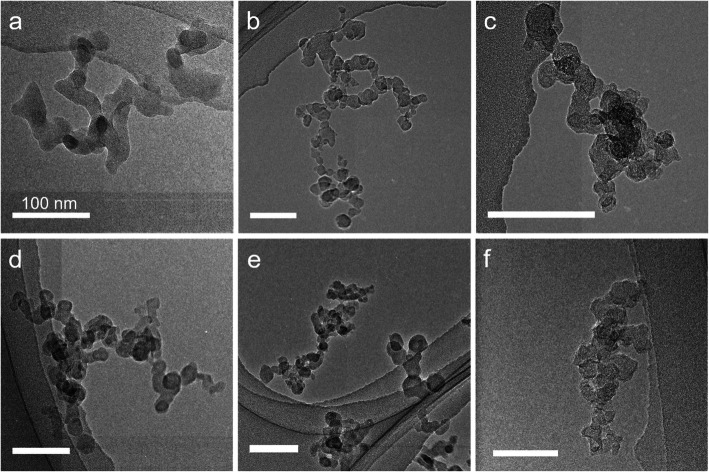
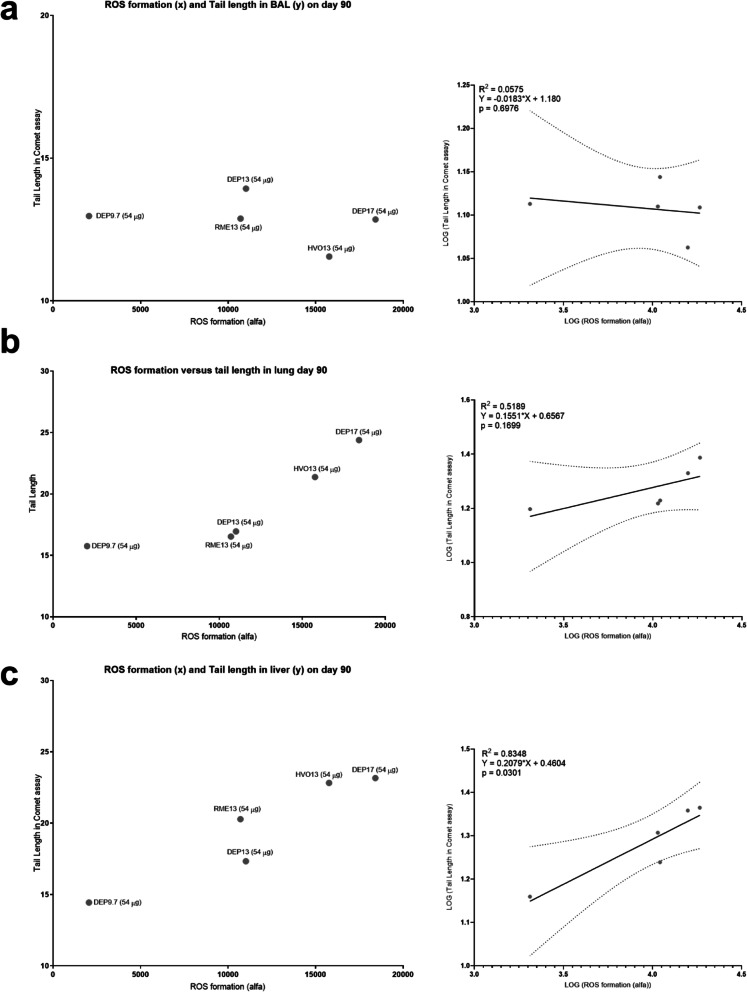
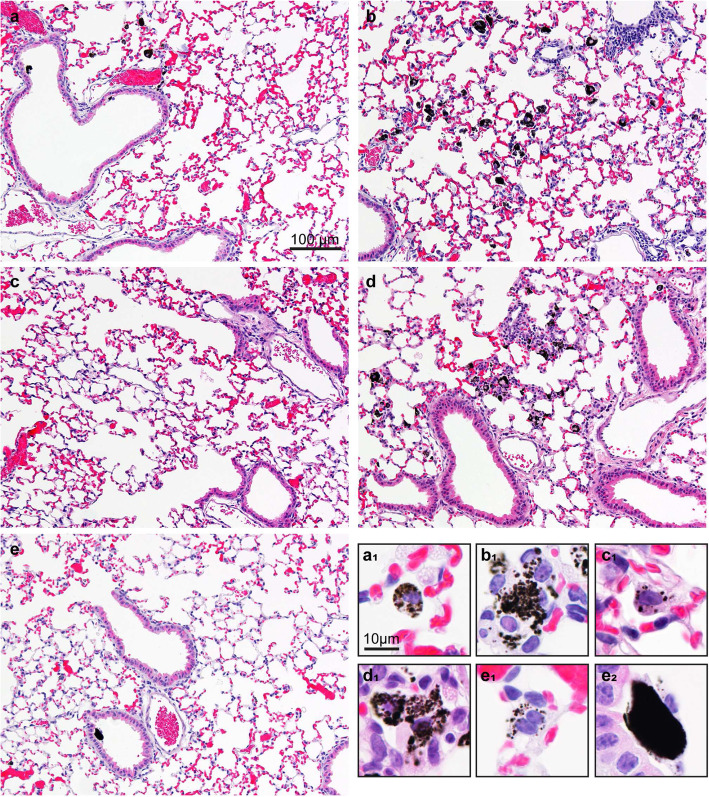
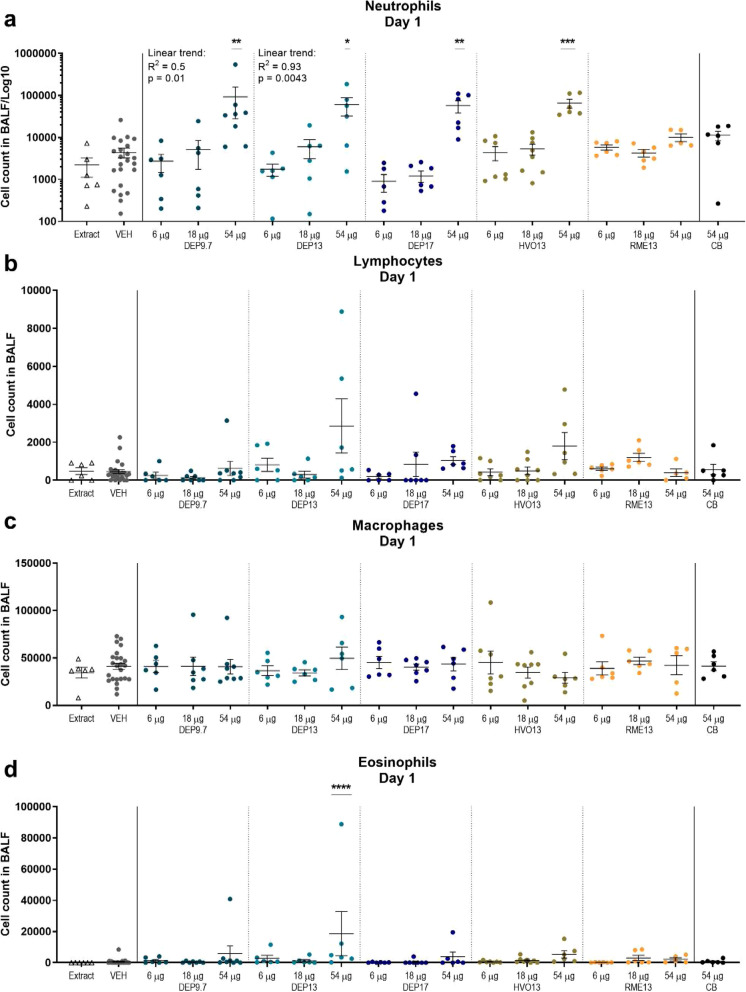
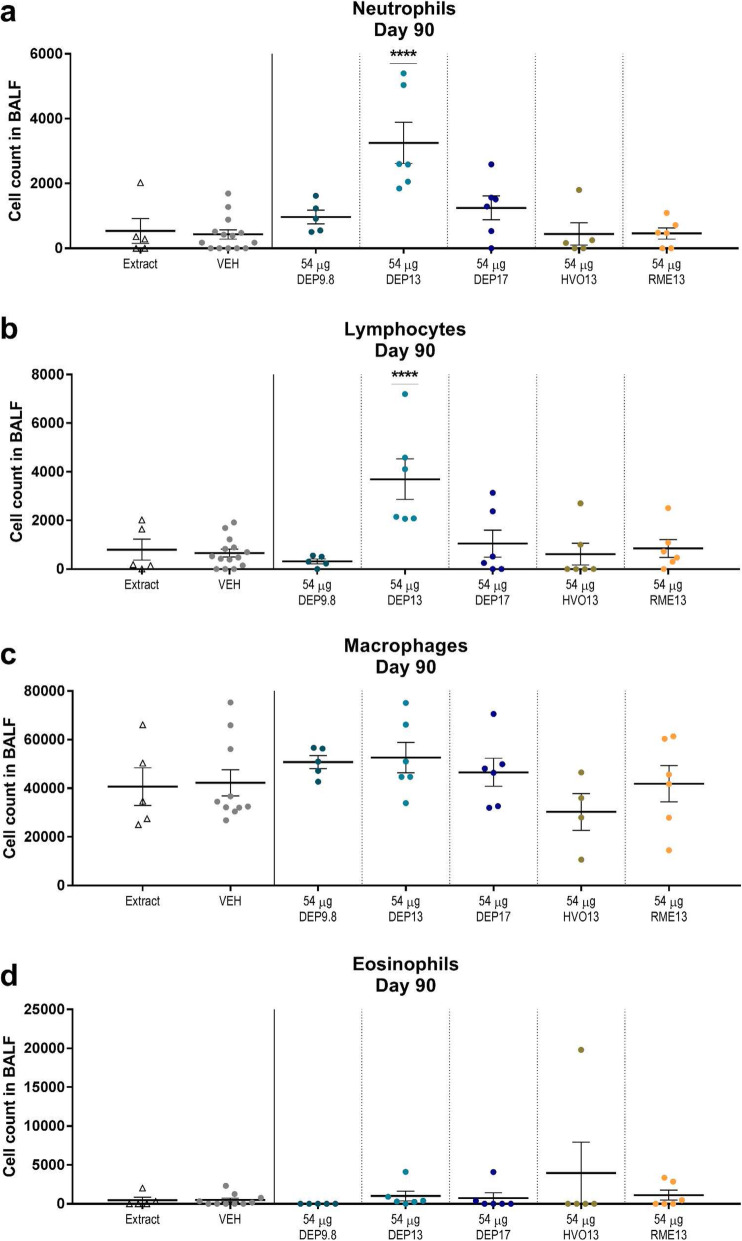
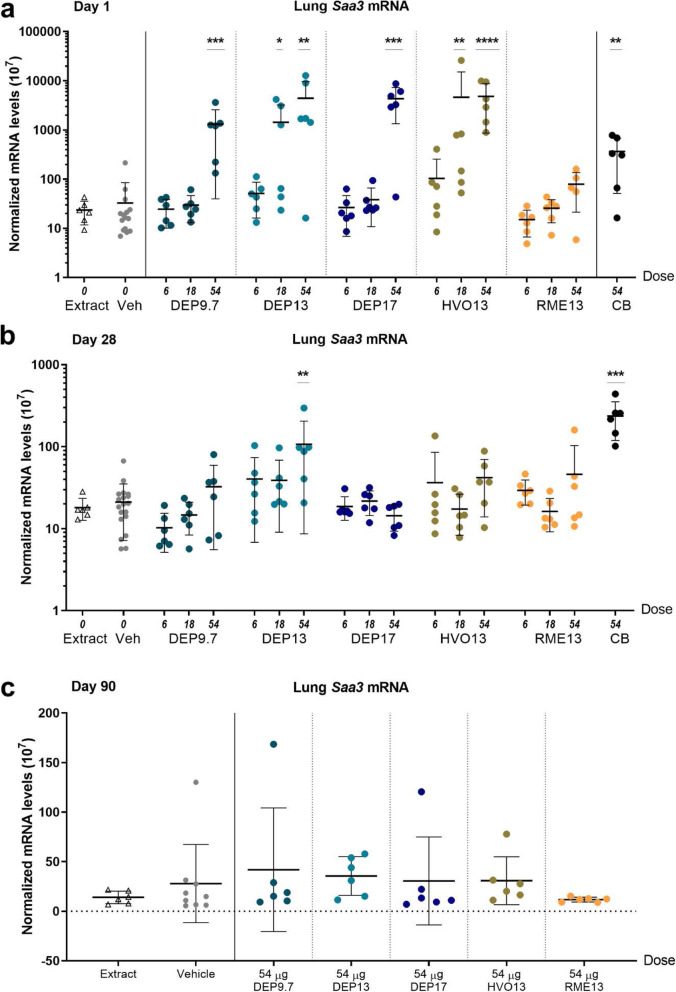
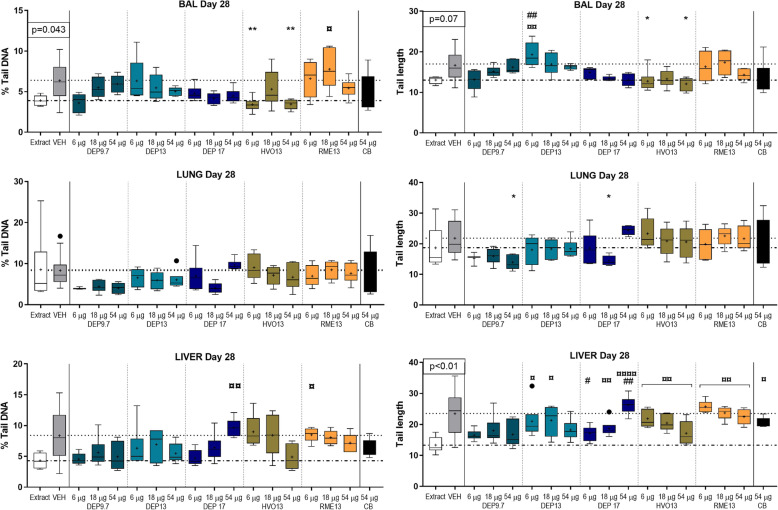
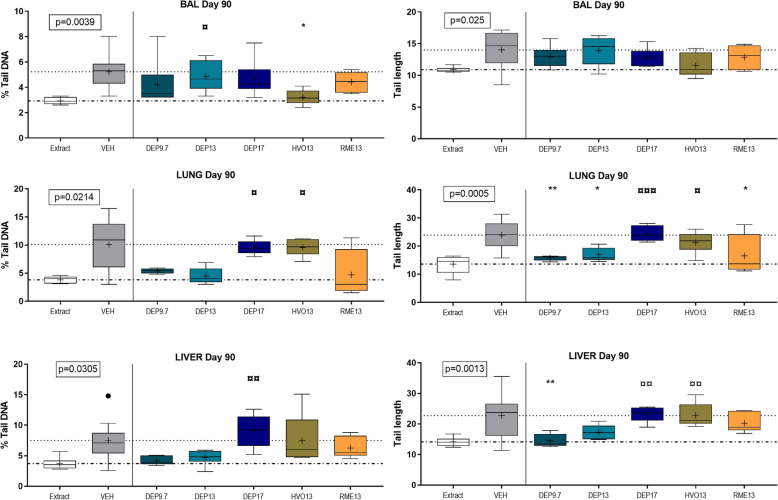
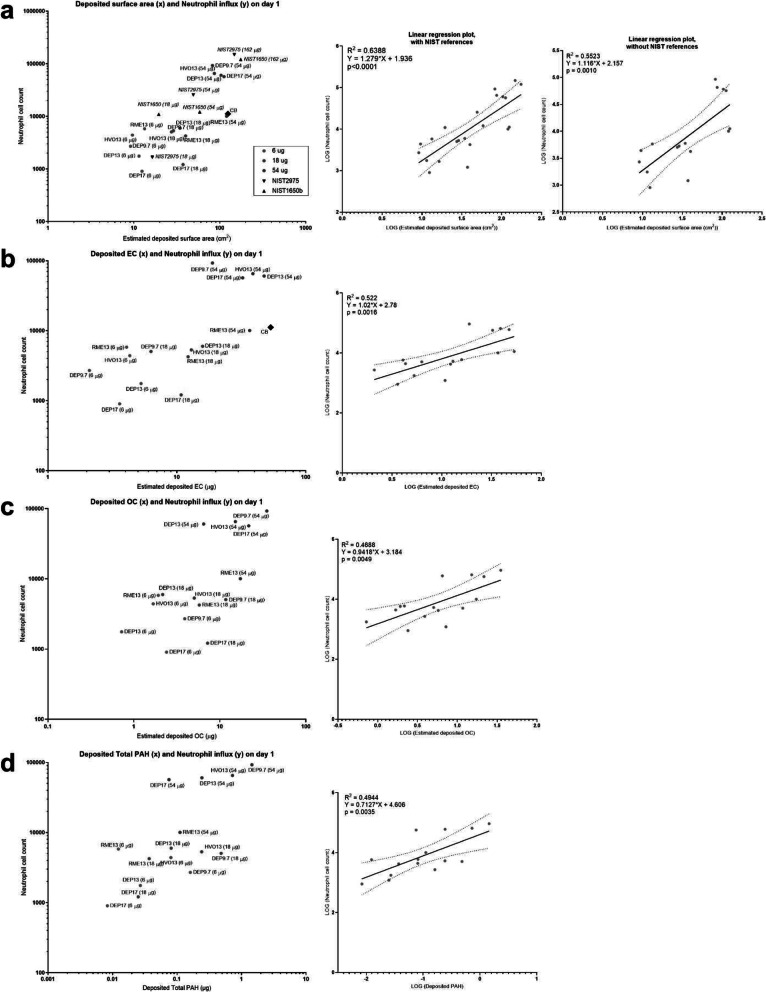
Moderate variations were seen in physical properties for the five particles: primary particle diameter: 15-22 nm, specific surface area: 152-222 m/g, and count median mobility diameter: 55-103 nm. Larger differences were found in chemical composition: organic carbon/total carbon ratio (0.12-0.60), polycyclic aromatic hydrocarbon content (1-27 μg/mg) and acid-extractable metal content (0.9-16 μg/mg). Intratracheal exposure to all five particles induced similar toxicological responses, with different potency. Lung particle retention was observed in DEP13 and HVO13 exposed mice on day 28 post-exposure, with less retention for the other fuel types. RME exposure induced limited response whereas the remaining particles induced dose-dependent inflammation and acute phase response on day 1. DEP13 induced acute phase response on day 28 and inflammation on day 90. DNA strand break levels were not increased as compared to vehicle, but were increased in lung and liver compared to blank filter extraction control. Neutrophil influx on day 1 correlated best with estimated deposited surface area, but also with elemental carbon, organic carbon and PAHs. DNA strand break levels in lung on day 28 and in liver on day 90 correlated with acellular particle-induced ROS.
We studied diesel exhaust particles designed to differ in physicochemical properties. Our study highlights specific surface area, elemental carbon content, PAHs and ROS-generating potential as physicochemical predictors of diesel particle toxicity.
柴油机尾气具有致癌性,接触柴油机颗粒物会对健康造成影响。为了将健康影响归因于特定的颗粒物特性,我们研究了设计成具有不同物理化学特性的柴油机排气颗粒物的毒性。在 13%的发动机进气 O 浓度下比较了三种燃料类型的颗粒物:MK1 超低硫柴油(DEP13)和两种可再生柴油燃料加氢处理植物油(HVO13)和油菜籽甲酯(RME13)。此外,MK1 超低硫柴油生成的柴油机颗粒物在 9.7%(DEP9.7)和 17%(DEP17)进气 O 浓度下生成。与参考柴油机颗粒物和炭黑相比,我们评估了单次气管内滴注后第 1、28 和 90 天的物理化学特性以及组织病理学、炎症和遗传毒性反应。
五种颗粒的物理性质存在适度变化:初级颗粒直径:15-22nm,比表面积:152-222m/g,计数中值迁移直径:55-103nm。化学成分差异较大:有机碳/总碳比(0.12-0.60)、多环芳烃含量(1-27μg/mg)和酸可提取金属含量(0.9-16μg/mg)。气管内暴露于所有五种颗粒均诱导了类似的毒性反应,但效力不同。暴露于 DEP13 和 HVO13 的小鼠在暴露后第 28 天观察到肺内颗粒保留,而其他燃料类型的保留较少。RME 暴露诱导的反应有限,而其余颗粒在第 1 天诱导剂量依赖性炎症和急性期反应。DEP13 在第 28 天诱导急性期反应,在第 90 天诱导炎症。与载体相比,DNA 链断裂水平没有增加,但与空白滤器提取对照相比,在肺和肝脏中增加。第 1 天的中性粒细胞流入与估计的沉积表面积最相关,但也与元素碳、有机碳和多环芳烃相关。第 28 天肺和第 90 天肝的 DNA 链断裂水平与无细胞颗粒诱导的 ROS 相关。
我们研究了设计成具有不同物理化学特性的柴油机排气颗粒物。我们的研究强调了比表面积、元素碳含量、多环芳烃和产生 ROS 的潜力作为柴油机颗粒物毒性的物理化学预测因子。