Department of Gastroenterology, The First Affiliated Hospital, School of Medicine, Zhejiang University, Hangzhou 310003, Zhejiang Province, China.
Department of Colorectal Surgery, The First Affiliated Hospital, School of Medicine, Zhejiang University, Hangzhou 310003, Zhejiang Province, China.
World J Gastroenterol. 2020 Jul 14;26(26):3750-3766. doi: 10.3748/wjg.v26.i26.3750.
Conventional Crohn's disease (CD) treatments are supportive rather than curative and have serious side effects. Adipose-derived mesenchymal stem cells (ADSCs) have been gradually applied to treat various diseases. The therapeutic effect and underlying mechanism of ADSCs on CD are still not clear.
To investigate the effect of ADSC administration on CD and explore the potential mechanisms.
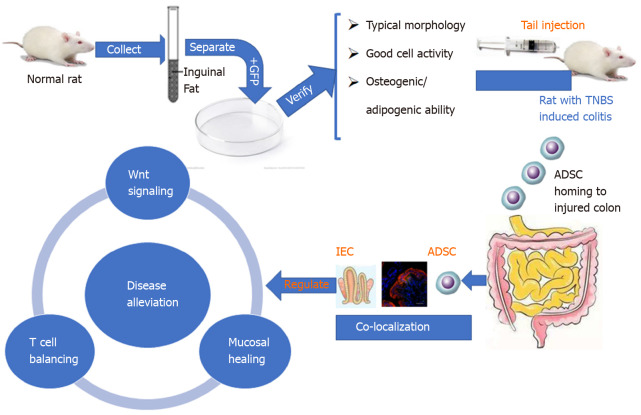
Wistar rats were administered with 2,4,6-trinitrobenzene sulfonic acid (TNBS) to establish a rat model of CD, followed by tail injections of green fluorescent protein (GFP)-modified ADSCs. Flow cytometry, qRT-PCR, and Western blot were used to detect changes in the Wnt signaling pathway, T cell subtypes, and their related cytokines.
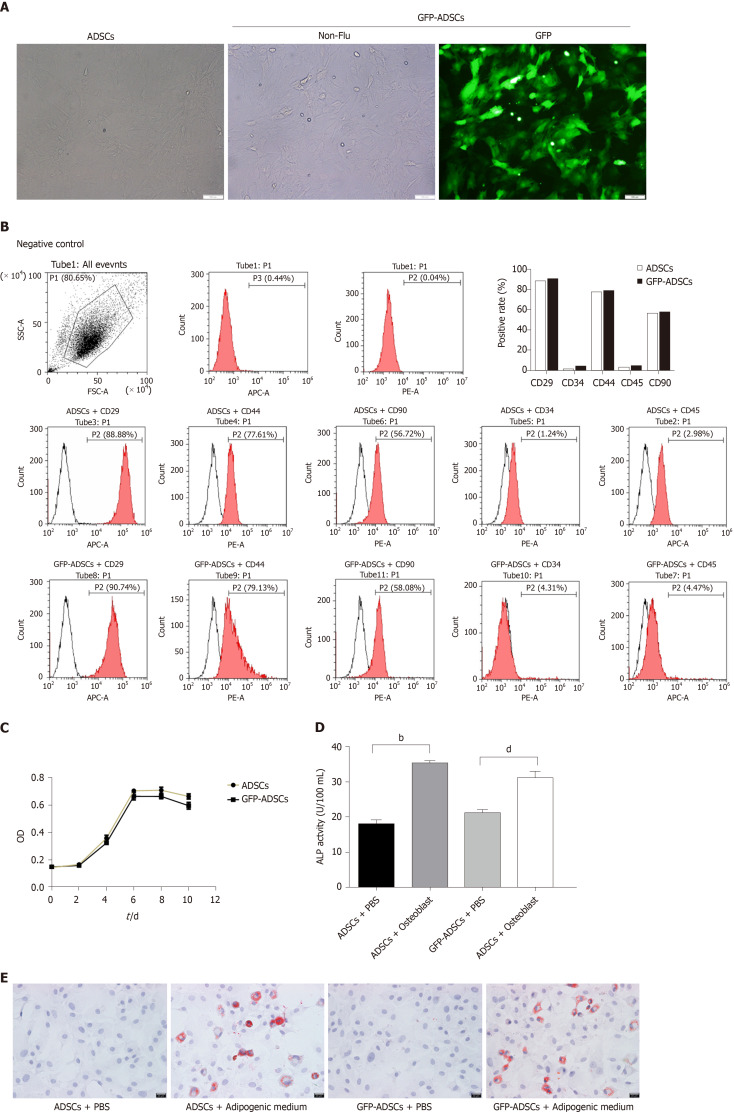
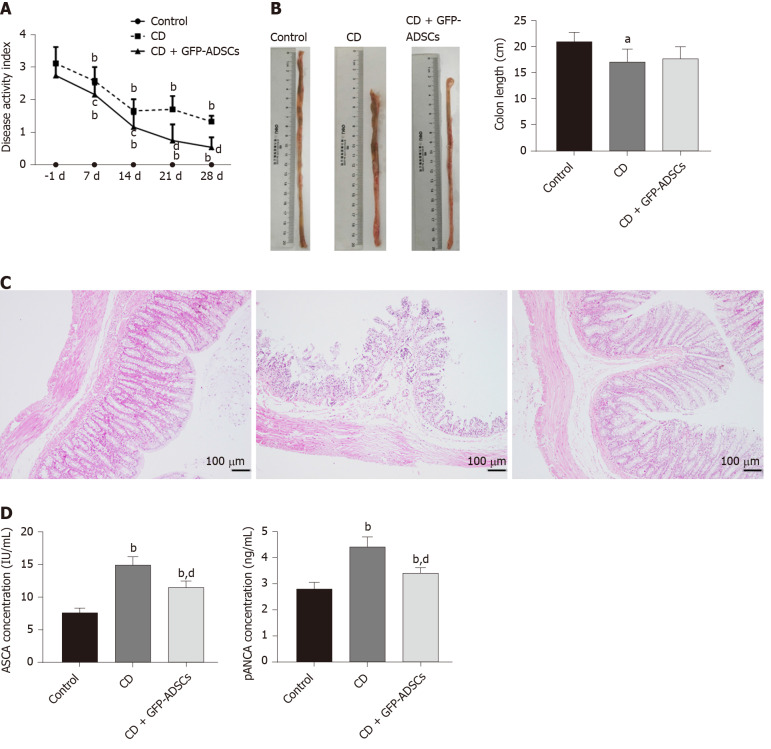
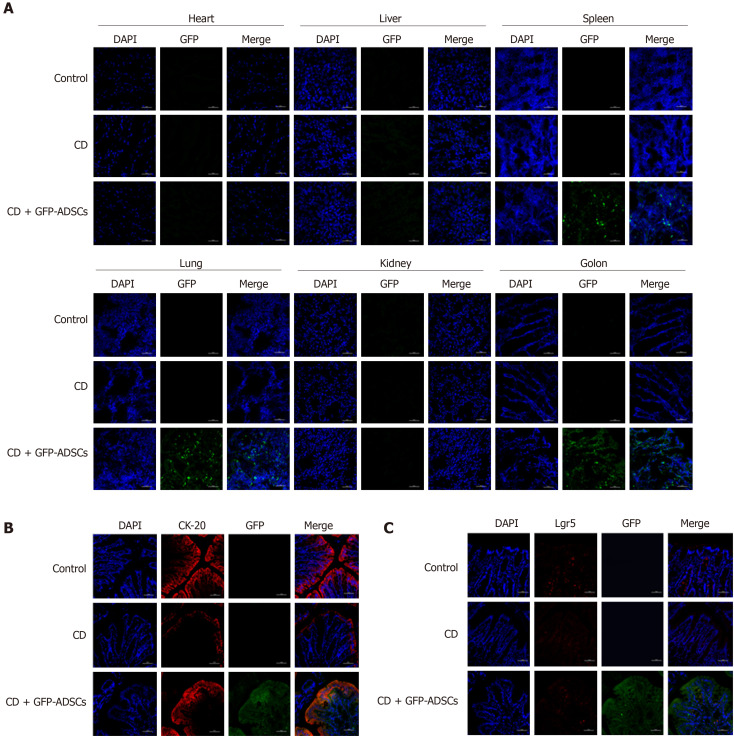
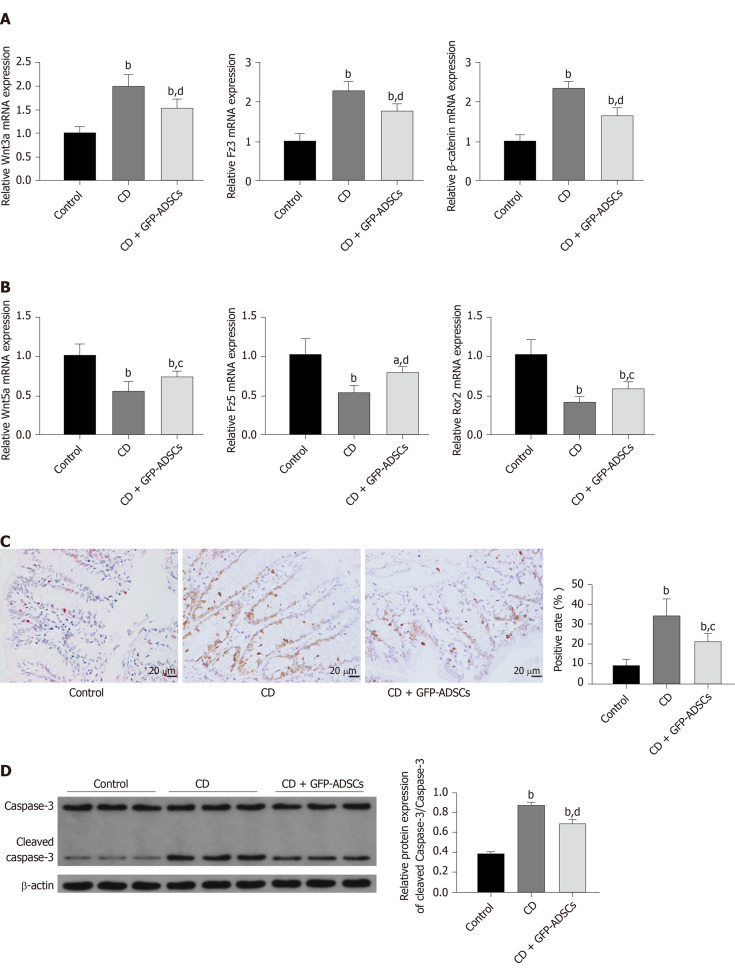
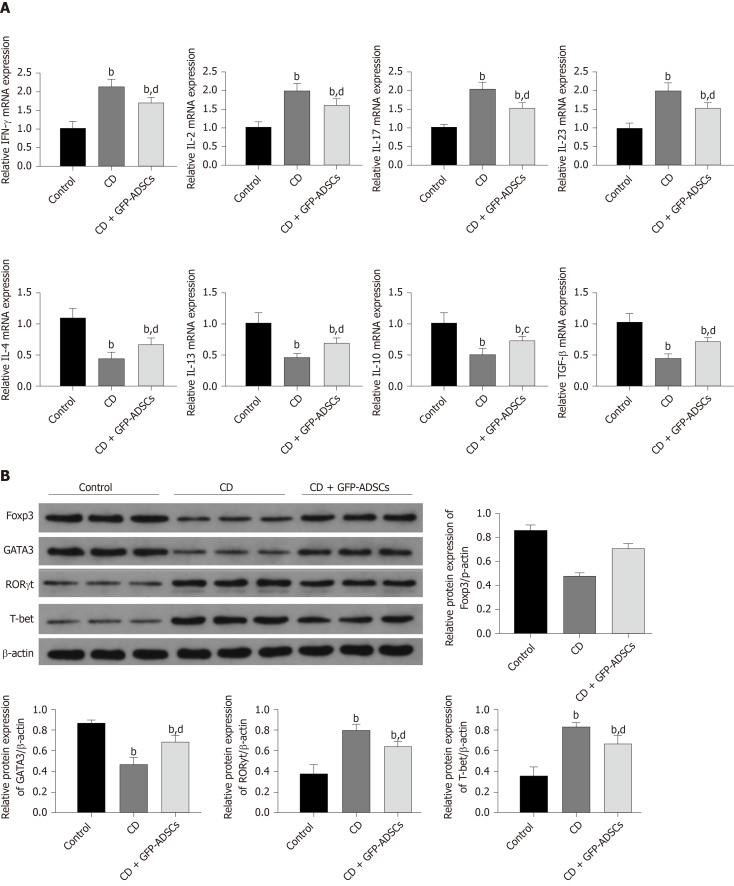
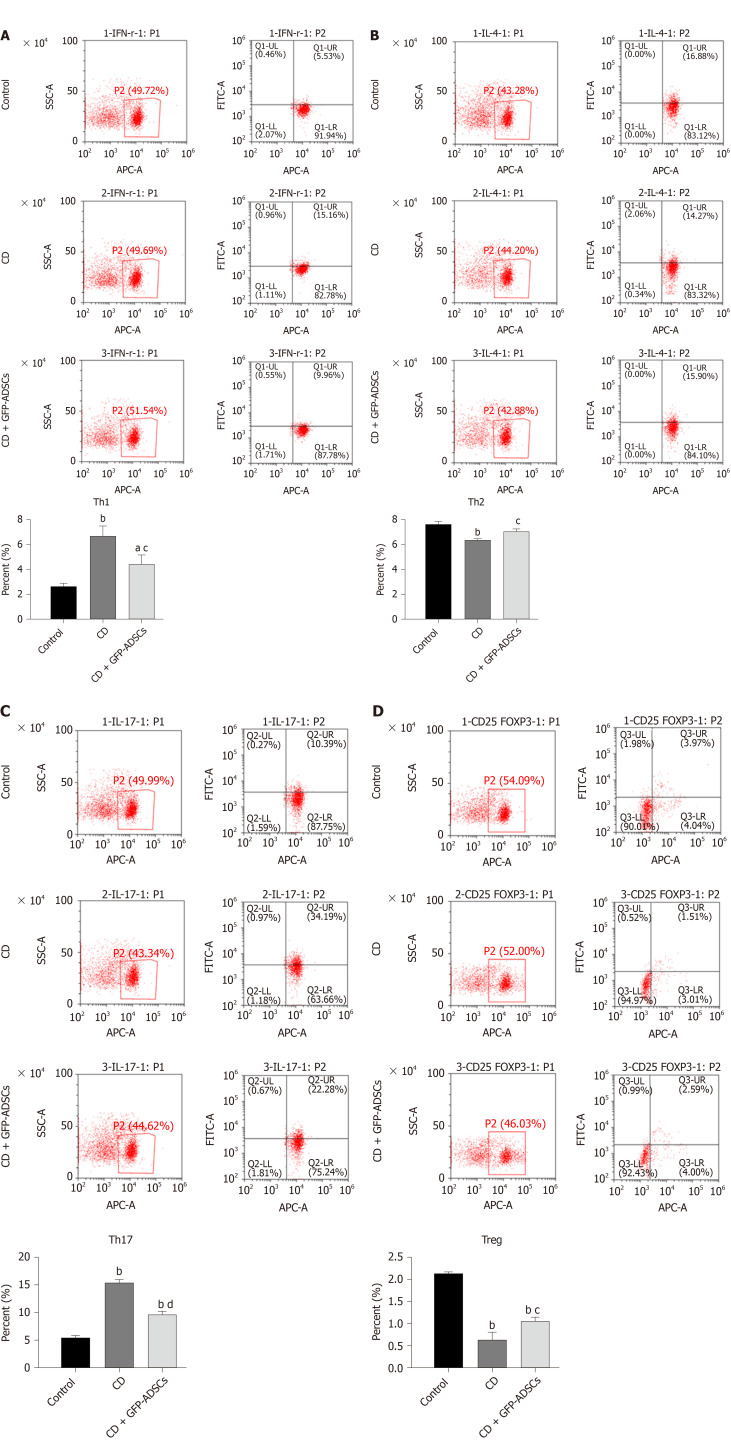
The isolated cells showed the characteristics of ADSCs, including spindle-shaped morphology, high expression of CD29, CD44, and CD90, low expression of CD34 and CD45, and osteogenic/adipogenic ability. ADSC therapy markedly reduced disease activity index and ameliorated colitis severity in the TNBS-induced rat model of CD. Furthermore, serum anti-sacchromyces cerevisiae antibody and p-anti-neutrophil cytoplasmic antibody levels were significantly reduced in ADSC-treated rats. Mechanistically, the GFP-ADSCs were colocalized with intestinal epithelial cells (IECs) in the CD rat model. GFP-ADSC delivery significantly antagonized TNBS-induced increased canonical Wnt pathway expression, decreased noncanonical Wnt signaling pathway expression, and increased apoptosis rates and protein level of cleaved caspase-3 in rats. In addition, ADSCs attenuated TNBS-induced abnormal inflammatory cytokine production, disturbed T cell subtypes, and their related markers in rats.
Successfully isolated ADSCs show therapeutic effects in CD by regulating IEC proliferation, the Wnt signaling pathway, and T cell immunity.
传统的克罗恩病(CD)治疗方法是支持性的,而不是治愈性的,并且有严重的副作用。脂肪间充质干细胞(ADSCs)已逐渐应用于治疗各种疾病。ADSCs 治疗 CD 的疗效及其潜在机制尚不清楚。
探讨 ADSC 给药对 CD 的影响,并探讨其潜在机制。
采用 2,4,6-三硝基苯磺酸(TNBS)建立大鼠 CD 模型,尾静脉注射 GFP 标记的 ADSCs。流式细胞术、qRT-PCR 和 Western blot 用于检测 Wnt 信号通路、T 细胞亚群及其相关细胞因子的变化。
分离的细胞表现出 ADSC 的特征,包括梭形形态、高表达 CD29、CD44 和 CD90、低表达 CD34 和 CD45,以及成骨/成脂能力。ADSC 治疗可显著降低疾病活动指数,并改善 TNBS 诱导的 CD 大鼠模型的结肠炎严重程度。此外,ADSC 治疗组大鼠血清抗酿酒酵母抗体和 p-抗中性粒细胞胞质抗体水平明显降低。在机制上,GFP-ADSCs 在 CD 大鼠模型中与肠上皮细胞(IECs)共定位。GFP-ADSC 传递可显著拮抗 TNBS 诱导的经典 Wnt 通路表达增加、非经典 Wnt 信号通路表达减少以及大鼠凋亡率和 cleaved caspase-3 蛋白水平升高。此外,ADSCs 可减轻 TNBS 诱导的大鼠异常炎症细胞因子产生、T 细胞亚群及其相关标志物紊乱。
成功分离的 ADSC 通过调节 IEC 增殖、Wnt 信号通路和 T 细胞免疫,对 CD 具有治疗作用。