State Key Laboratory of Biotherapy and Cancer Center/Collaborative Innovation Center of Biotherapy, West China Hospital, Sichuan University, Ke-yuan Road 4, No. 1, Gao-peng Street, Chengdu, 610041, Sichuan, People's Republic of China.
Stem Cell Res Ther. 2022 Sep 8;13(1):465. doi: 10.1186/s13287-022-03157-8.
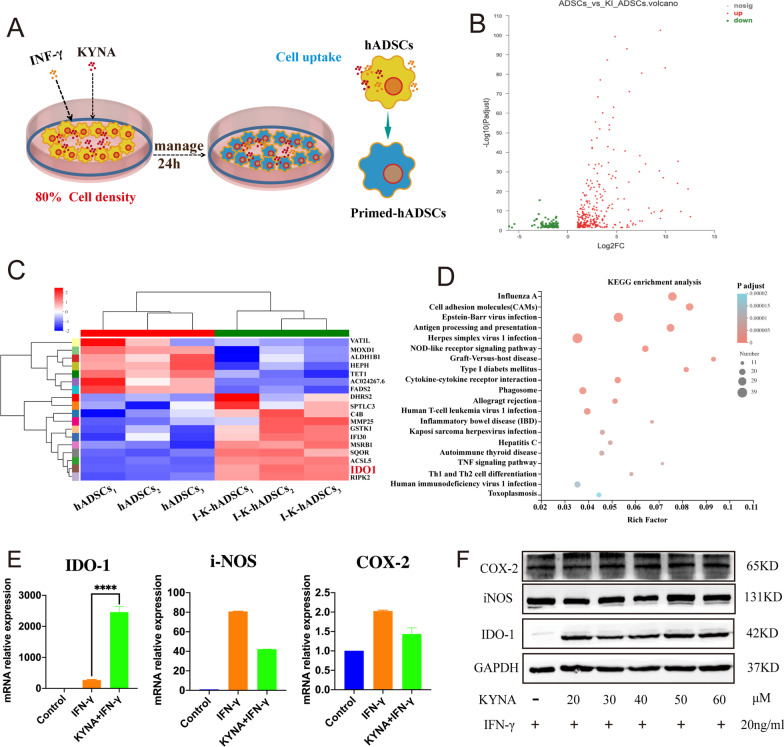
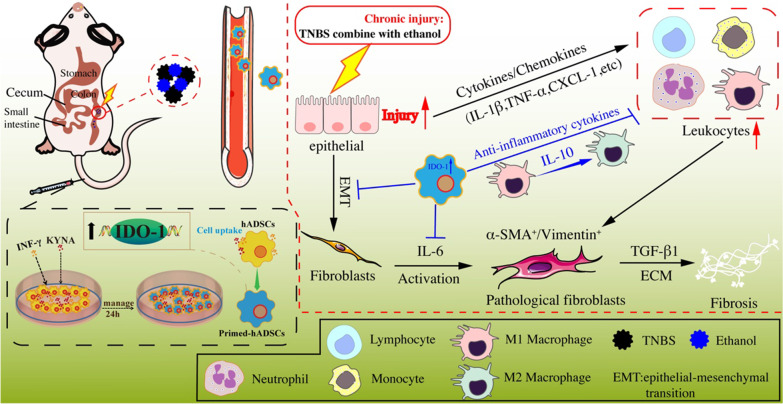
Inflammatory bowel diseases (IBD) are chronic relapsing-remitting inflammatory diseases of the gastrointestinal tract that are typically categorized into two subtypes: Crohn's disease (CD) and ulcerative colitis (UC). Although MSCs therapy has achieved encouraging outcomes in IBD therapy, objective responses are limited in colon fibrosis stenosis owing to the complicated microenvironment of CD and MSCs heterogeneity of quality. Here, we chose IFN-γ and kynurenic acid (KYNA) to overcome the low response and heterogeneity of human adipose-derived MSCs (hADSCs) to treat IBD and expand the therapeutic effects based on the excellent ability of IFN-γ and KYNA to promote indoleamine 2,3-dioxygenase-1 (IDO-1) signaling, providing a potential protocol to treat IBD and fibrosis disease.
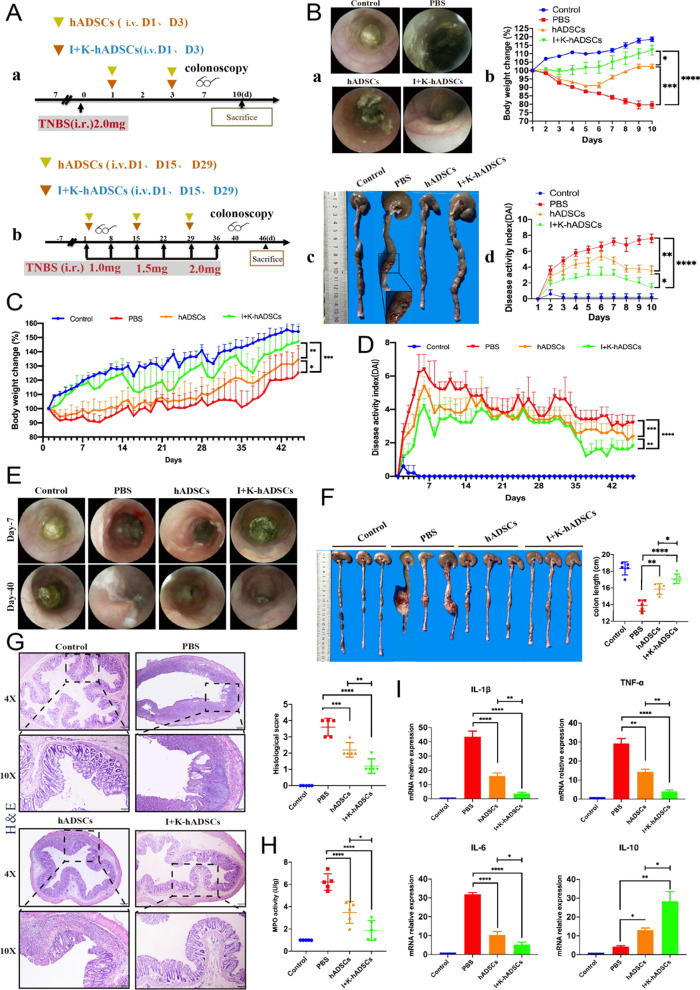
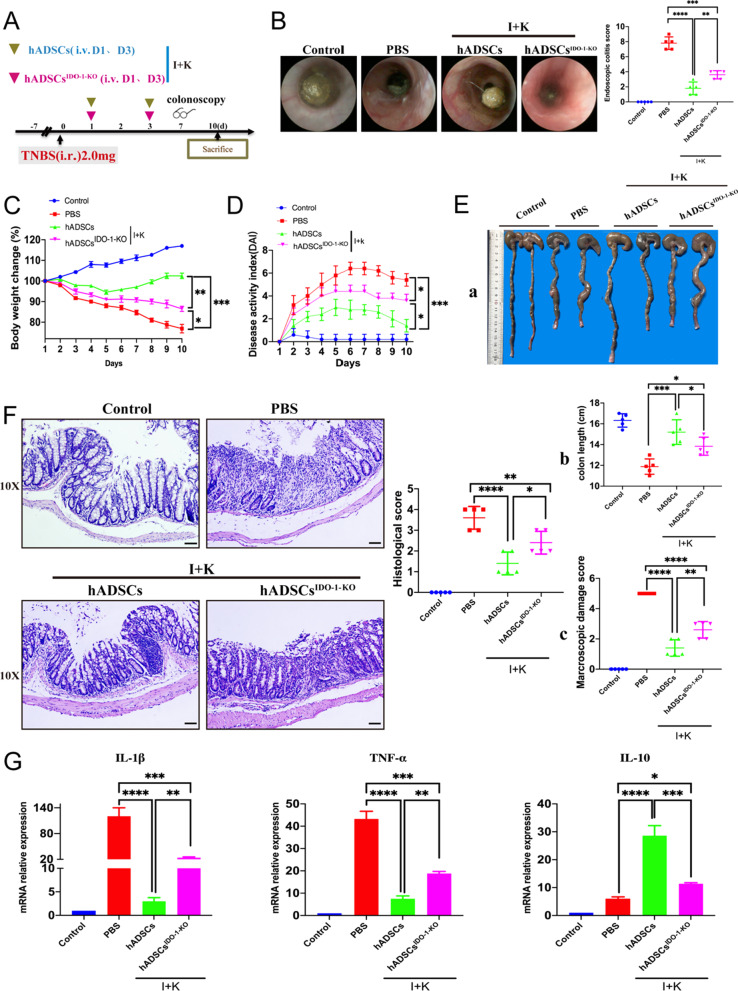
hADSCs were isolated, cultured, and identified from human abdominal adipose tissue. The CD pathology-like acute colitis and chronic colon fibrosis rat model was induced by 2,4,6-trinitrobenzen sulfonic acid (TNBS). hADSCs were pretreated in vitro with IFN-γ and KYNA and then were transplanted intravenously at day 1 and 3 of TNBS administration in colitis along with at day 1, 15, and 29 of TNBS administration in chronic colonic fibrosis. Therapeutic efficacy was evaluated by body weights, disease activity index, pathological staining, real-time PCR, Western blot, and flow cytometry. For knockout of IDO-1, hADSCs were transfected with IDO-1-targeting small gRNA carried on a CRISPR-Cas9-lentivirus vector.
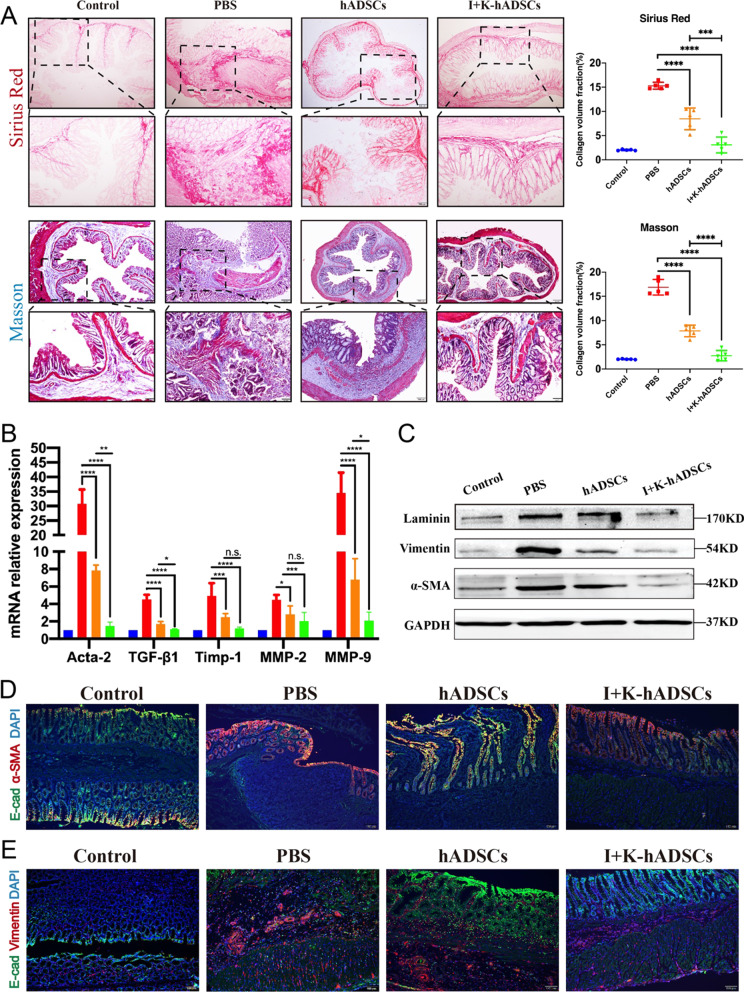
hADSCs treated with IFN-γ and KYNA significantly upregulated the expression and secretion of IDO-1, which has effectively ameliorated CD pathology-like colitis injury and fibrosis. Notably, the ability of hADSCs with IDO-1 knockout to treat colitis was significantly impaired and diminished the protective effects of the primed hADSCs with IFN-γ and KYNA.
Inflammatory cytokines IFN-γ- and KYNA-treated hADSCs more effectively alleviate TNBS-induced colitis and colonic fibrosis through an IDO-1-dependent manner. Primed hADSCs are a promising new strategy to improve the therapeutic efficacy of MSCs and worth further research.
炎症性肠病(IBD)是一种慢性复发缓解性胃肠道炎症性疾病,通常分为两种亚型:克罗恩病(CD)和溃疡性结肠炎(UC)。虽然间充质干细胞(MSC)治疗在 IBD 治疗中取得了令人鼓舞的结果,但由于 CD 的复杂微环境和 MSC 质量的异质性,在结肠纤维化狭窄方面的客观反应有限。在这里,我们选择 IFN-γ 和犬尿氨酸(KYNA)来克服人脂肪来源间充质干细胞(hADSCs)治疗 IBD 的低反应和异质性,并基于 IFN-γ 和 KYNA 促进吲哚胺 2,3-双加氧酶-1(IDO-1)信号的优异能力来扩大治疗效果,为治疗 IBD 和纤维化疾病提供了一种潜在的方案。
从人腹部脂肪组织中分离、培养和鉴定 hADSCs。通过 2,4,6-三硝基苯磺酸(TNBS)诱导 CD 样急性结肠炎和慢性结肠纤维化大鼠模型。用 IFN-γ 和 KYNA 预处理 hADSCs,然后在 TNBS 给药后第 1 天和第 3 天在结肠炎中静脉移植,并在 TNBS 给药后第 1 天、第 15 天和第 29 天在慢性结肠纤维化中移植。通过体重、疾病活动指数、病理染色、实时 PCR、Western blot 和流式细胞术评估治疗效果。为了敲除 IDO-1,hADSCs 被转染了携带 CRISPR-Cas9-慢病毒载体的 IDO-1 靶向小 gRNA。
IFN-γ 和 KYNA 处理的 hADSCs 显著上调 IDO-1 的表达和分泌,有效改善了 CD 样结肠炎损伤和纤维化。值得注意的是,IDO-1 敲除的 hADSCs 治疗结肠炎的能力显著受损,并降低了 IFN-γ 和 KYNA 预处理的 hADSCs 的保护作用。
IFN-γ 和 KYNA 处理的炎性细胞因子 hADSCs 通过 IDO-1 依赖性途径更有效地缓解 TNBS 诱导的结肠炎和结肠纤维化。预处理的 hADSCs 是提高 MSC 治疗效果的一种很有前途的新策略,值得进一步研究。