Wang Tengyue, Wei Lijuan, Wang Jia, Xie Ling, Li Yang Yang, Ran Shuyao, Ren Lanyang, Lu Kun, Li Jiana, Timko Michael P, Liu Liezhao
Chongqing Engineering Research Center for Rapeseed, College of Agronomy and Biotechnology, Southwest University, Chongqing, 400715 China.
Academy of Agricultural Sciences, Southwest University, Beibei, Chongqing, 400715 China.
Biotechnol Biofuels. 2020 Aug 3;13:134. doi: 10.1186/s13068-020-01774-0. eCollection 2020.
is one of the most important oilseed crops, and also an important biofuel plant due to its low air pollution and renewability. Growth period are important traits that affect yield and are crucial for its adaptation to different environments in .
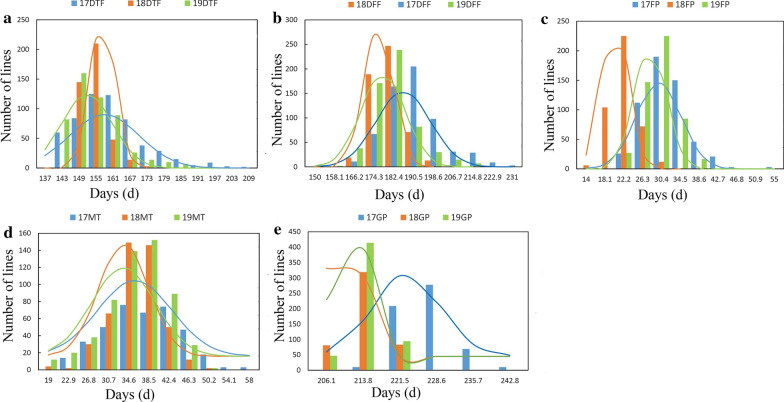
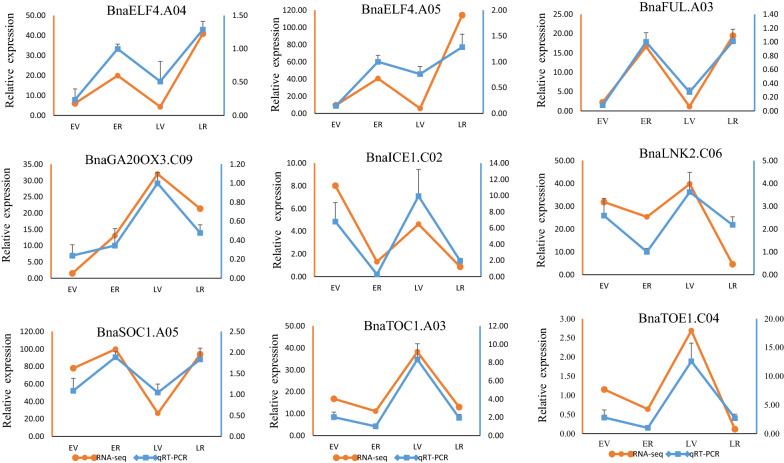
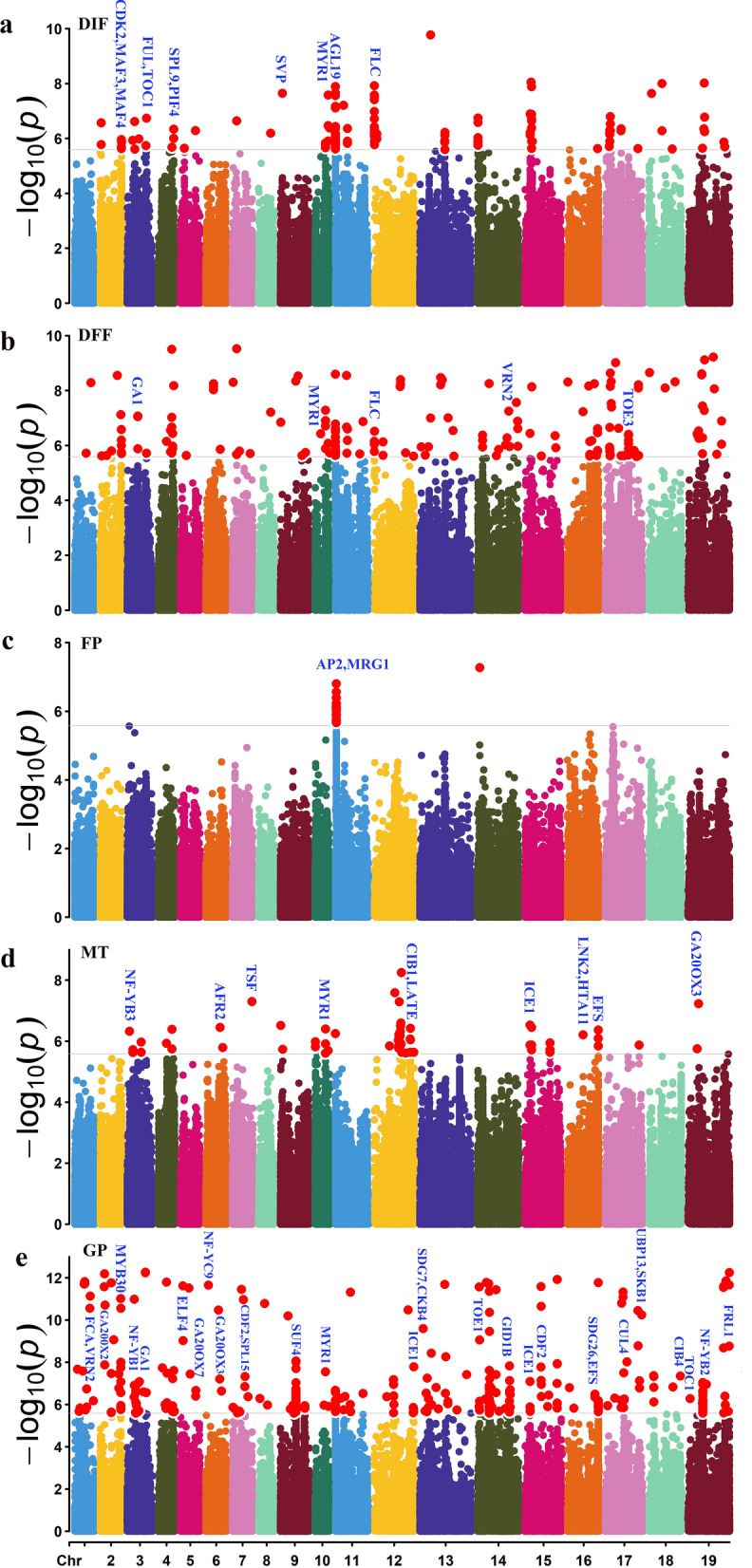
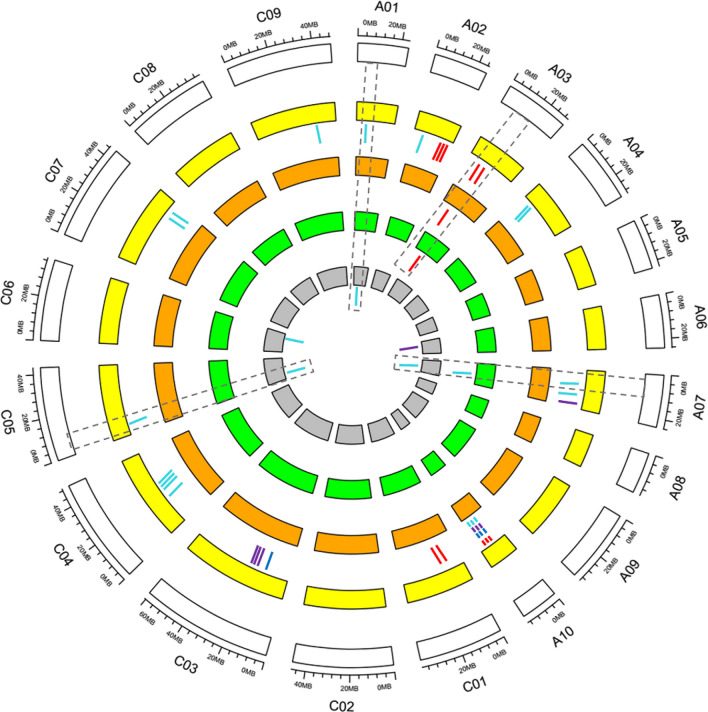
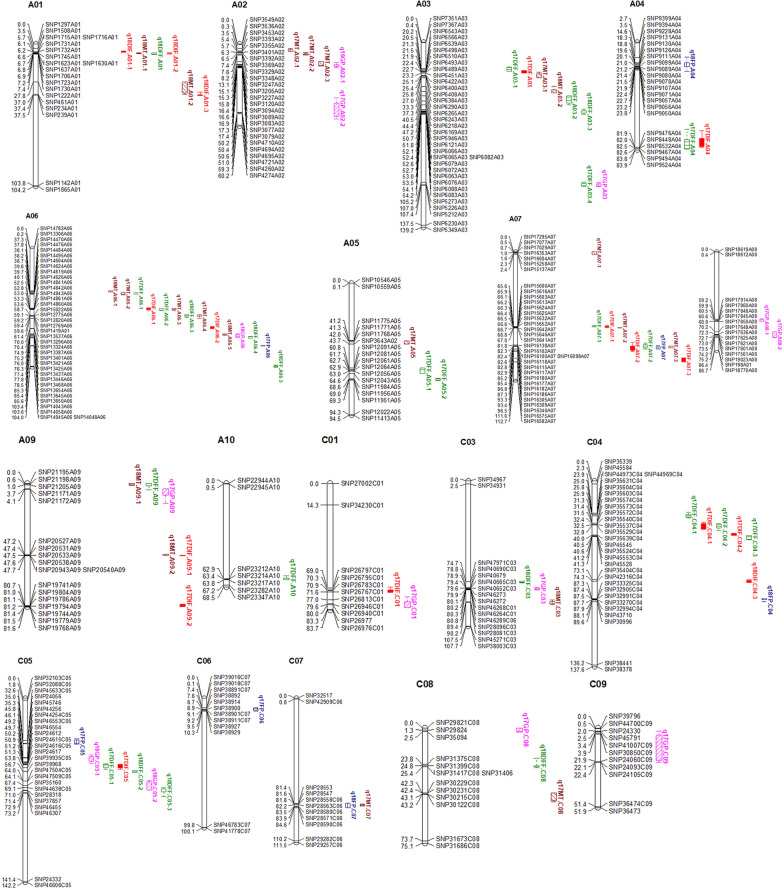
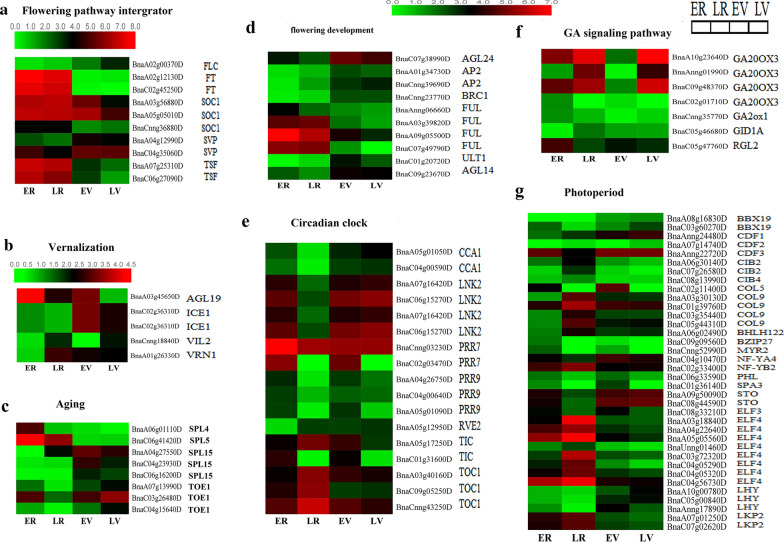
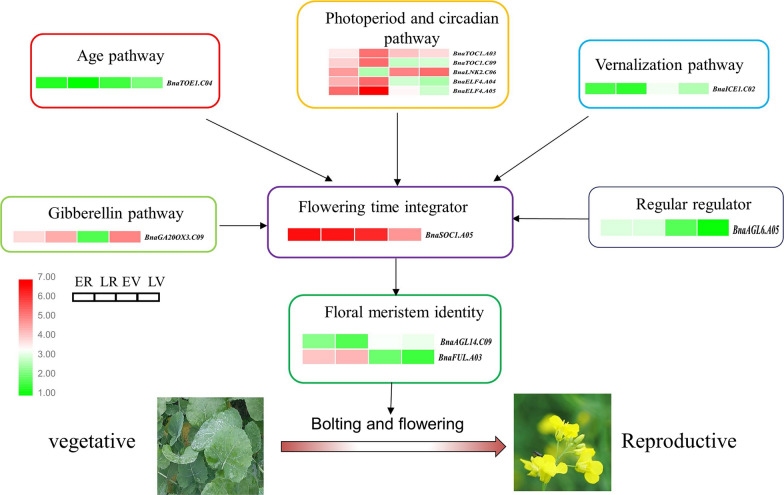
To elucidate the genetic basis of growth period traits, genome-wide association analysis (GWAS) and linkage mapping were employed to detect the quantitative trait loci (QTL) for days to initial flowering (DIF), days to final flowering (DFF), flowering period (FP), maturity time (MT), and whole growth period (GP). A total of 146 SNPs were identified by association mapping, and 83 QTLs were identified by linkage mapping using the RIL population. Among these QTLs, 19 were pleiotropic SNPs related to multiple traits, and six (q18DFF.A03-2, q18MT.A03-2, q17DFF.A05-1, q18FP.C04, q17DIF.C05 and q17GP.C09) were consistently detected using both mapping methods. Additionally, we performed RNA sequencing to analyze the differential expression of gene (DEG) transcripts between early- and late-flowering lines selected from the RIL population, and the DEGs were integrated with association mapping and linkage analysis to confirm their roles in the growth period. Consequently, 12 candidate genes associated with growth period traits were identified in . Among these genes, seven have polymorphic sites in the coding sequence and the upstream 2-kb sequence based on the resequencing data. The haplotype BnaSOC1.A05-Haplb and BnaLNK2.C06-Hapla showed more favorable phenotypic traits.
The candidate genes identified in this study will contribute to our genetic understanding of growth period traits and can be used as targets for target mutations or marker-assisted breeding for rapeseed adapted to different environments.
油菜是最重要的油料作物之一,因其低空气污染性和可再生性,也是一种重要的生物燃料植物。生育期是影响产量的重要性状,对其在不同环境中的适应性至关重要。
为阐明生育期性状的遗传基础,采用全基因组关联分析(GWAS)和连锁图谱分析来检测初花天数(DIF)、终花天数(DFF)、花期(FP)、成熟时间(MT)和全生育期(GP)的数量性状位点(QTL)。通过关联作图鉴定出146个单核苷酸多态性(SNP),利用重组自交系(RIL)群体通过连锁图谱分析鉴定出83个QTL。在这些QTL中,19个是与多个性状相关的多效性SNP,两种作图方法均一致检测到6个(q18DFF.A03 - 2、q18MT.A03 - 2、q17DFF.A05 - 1、q18FP.C04、q17DIF.C05和q17GP.C09)。此外,我们进行了RNA测序,以分析从RIL群体中选择的早花和晚花品系之间基因(DEG)转录本的差异表达,并将DEG与关联作图和连锁分析整合,以确认它们在生育期的作用。因此,在油菜中鉴定出12个与生育期性状相关的候选基因。在这些基因中,基于重测序数据,7个在编码序列和上游2 kb序列中具有多态性位点。单倍型BnaSOC1.A05 - Haplb和BnaLNK2.C06 - Hapla表现出更有利的表型性状。
本研究中鉴定出的候选基因将有助于我们对生育期性状的遗传理解,并可作为目标突变或标记辅助育种的靶点,用于培育适应不同环境的油菜。