Yuan Zhenli, Du Weiwei, He Xiangdong, Zhang Donglei, He Wei
The School of Pharmacy, He University, Shenyang 110163, China.
Shenyang Industrial Technology Institute of Ophthalmology, Shenyang 110163, China.
Oxid Med Cell Longev. 2020 Jul 28;2020:7962393. doi: 10.1155/2020/7962393. eCollection 2020.
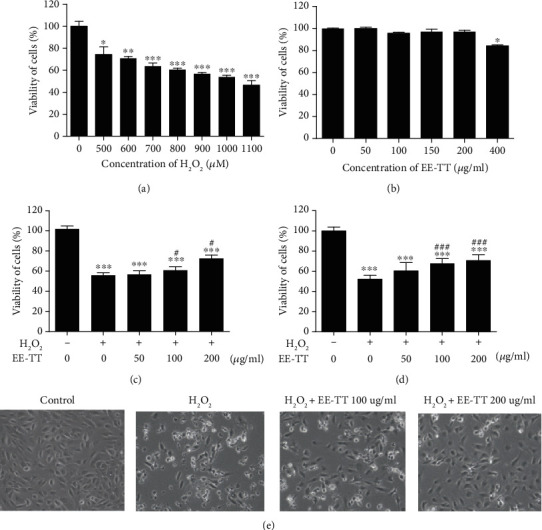
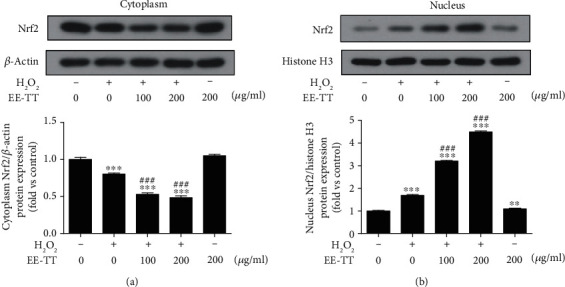
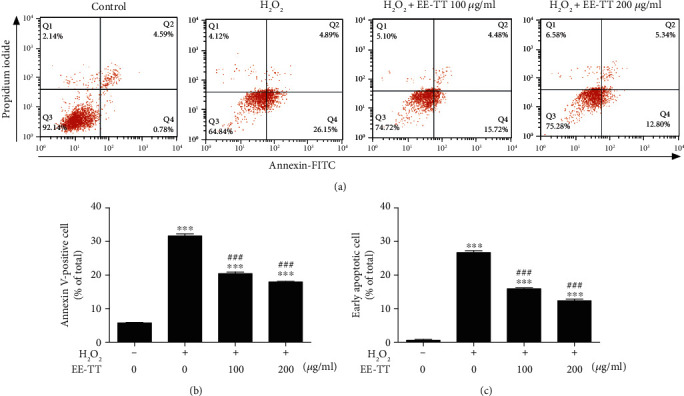
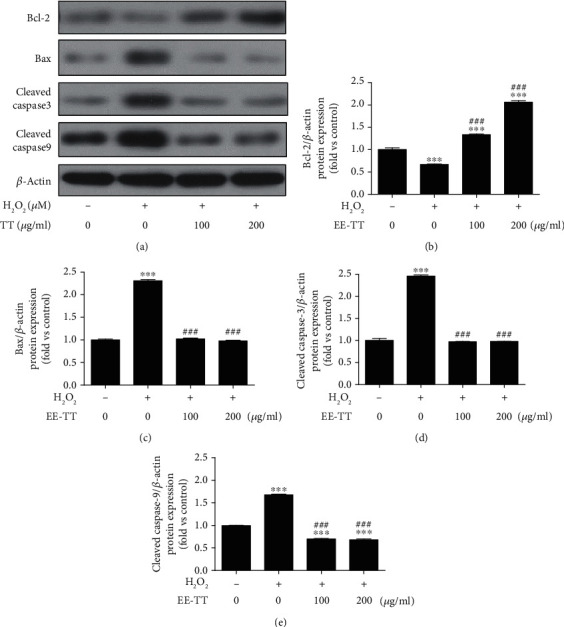
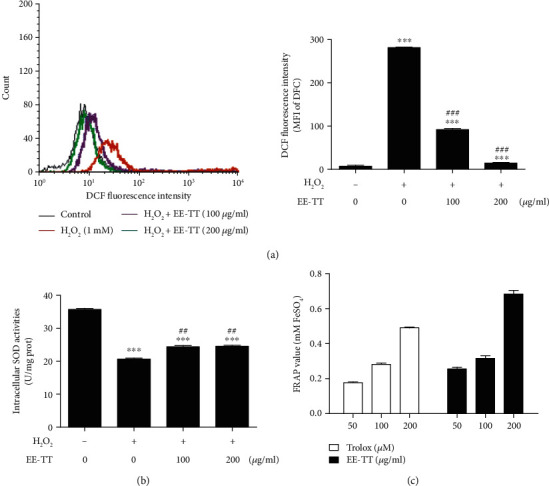
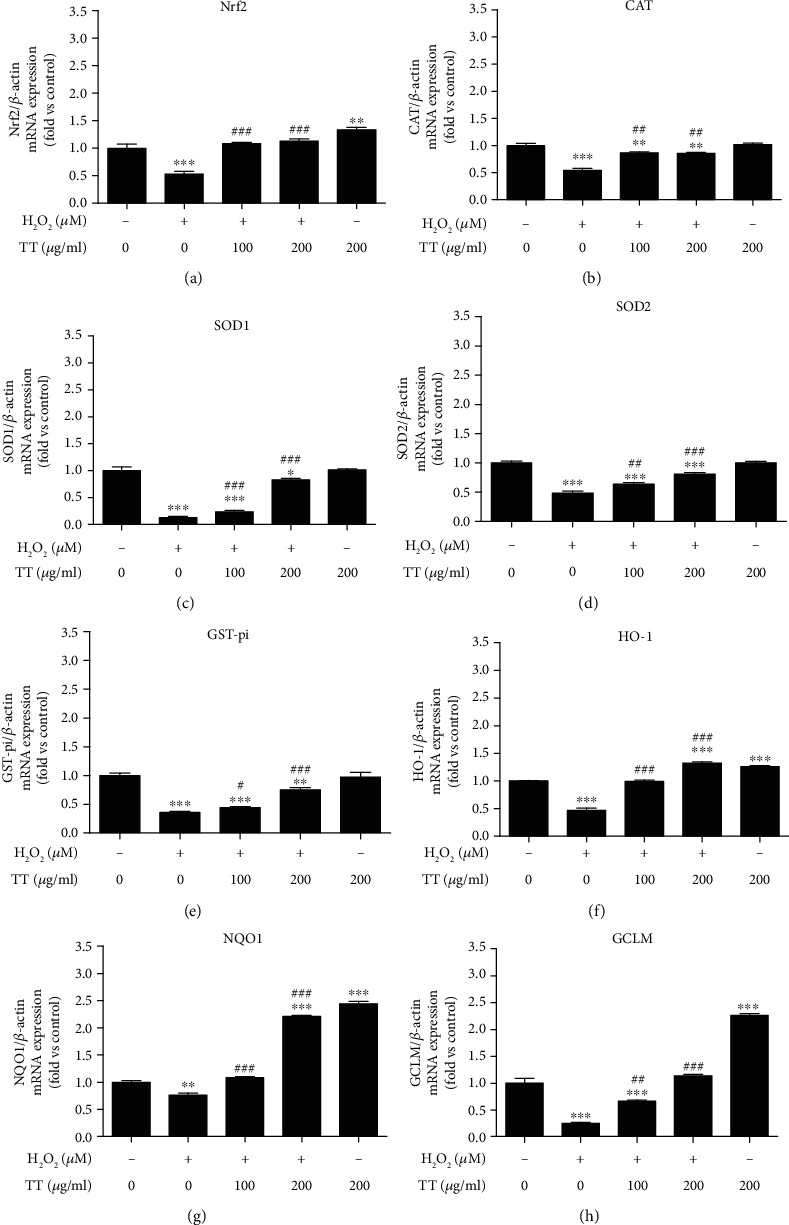
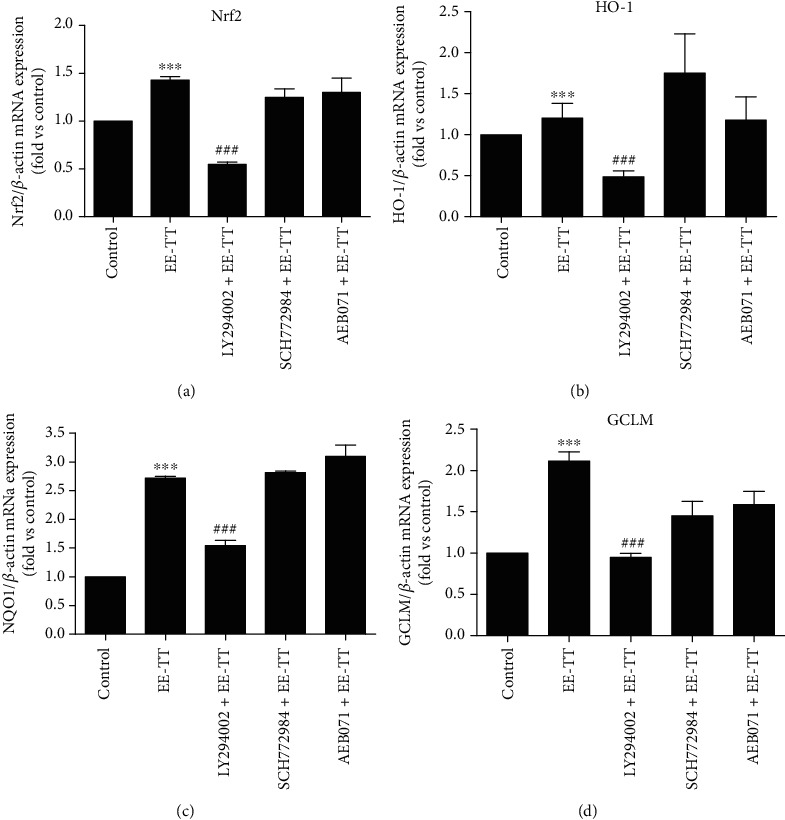
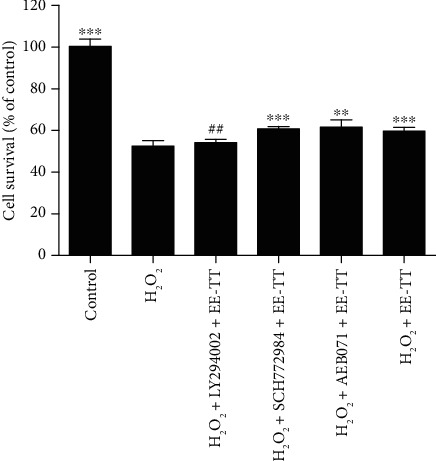
Oxidative stress on retinal pigment epithelial (RPE) cells has been confirmed to play a crucial role in the development and progression of age-related macular degeneration (AMD) or other retinal degenerative diseases. Tribulus terrestris (TT) is a Chinese traditional herb medicine, which has been used for the treatment of ocular diseases for many centuries. In this study, we investigated the underlying mechanisms of TT and examined its ability to protect and restore the human retinal pigment epithelial cells (ARPE-19) against HO-induced oxidative stress. Our data show that 200 g/mL of ethanol extract of Tribulus terrestris (EE-TT) significantly increased the cell viability and prevented the apoptosis of HO-treated ARPE-19 cells through the regulation of Bcl2, Bax, cleaved caspase-3, and caspase-9. Treatment with EE-TT also significantly decreased the upregulated reactive oxygen species (ROS) activities and increased the downregulated superoxide dismutase (SOD) activities induced by HO in ARPE-19 cells. Additionally, HO at 1 mM significantly decreased the mRNA expression levels of Nrf2, CAT, SOD1, SOD2, HO-1, GST-pi, NQO1, and GLCM in ARPE-19 cells; however, treatment with EE-TT reversed the downregulated mRNA expression levels of all these genes induced by HO. Furthermore, treatment with 200 g/mL EE-TT alone for 24 h significantly increased Nrf2, HO-1, NQO1, and GCLM mRNA expressions in ARPE-19 cells when compared with untreated control cells. Pretreatment with the inhibitor of PI3K/Akt signaling (LY294002) completely blocked these EE-TT-upregulated mRNA expressions and abolished the improvement of cell viability in HO-treated ARPE-19 cells. These findings all suggest that Tribulus terrestris has significant antioxidant effects on oxidative stressed ARPE-19 cells through regulating PI3K/Akt-Nrf2 signaling pathway.
视网膜色素上皮(RPE)细胞的氧化应激已被证实与年龄相关性黄斑变性(AMD)或其他视网膜退行性疾病的发生和发展密切相关。刺蒺藜是一种传统的中草药,数世纪以来一直用于治疗眼部疾病。在本研究中,我们探究了刺蒺藜的潜在作用机制,并检测了其保护和恢复人视网膜色素上皮细胞(ARPE-19)免受过氧化氢(HO)诱导的氧化应激的能力。我们的数据表明,200μg/mL的刺蒺藜乙醇提取物(EE-TT)显著提高了细胞活力,并通过调节Bcl2、Bax、裂解的半胱天冬酶-3和半胱天冬酶-9来防止HO处理的ARPE-19细胞凋亡。EE-TT处理还显著降低了HO诱导的ARPE-19细胞中上调的活性氧(ROS)活性,并增加了下调的超氧化物歧化酶(SOD)活性。此外,1mM的HO显著降低了ARPE-19细胞中Nrf2、CAT、SOD1、SOD2、HO-1、GST-pi、NQO1和GLCM的mRNA表达水平;然而,EE-TT处理逆转了HO诱导的所有这些基因的mRNA表达下调。此外,与未处理的对照细胞相比,用20μg/mL EE-TT单独处理24小时显著增加了ARPE-19细胞中Nrf2、HO-1、NQO1和GCLM的mRNA表达。用PI3K/Akt信号通路抑制剂(LY29400)预处理完全阻断了这些EE-TT上调的mRNA表达,并消除了HO处理的ARPE-19细胞中细胞活力的改善。这些发现均表明,刺蒺藜通过调节PI3K/Akt-Nrf2信号通路对氧化应激的ARPE-19细胞具有显著的抗氧化作用。