Luo Candice, Sanger Nitika, Singhal Nikhita, Pattrick Kaitlin, Shams Ieta, Shahid Hamnah, Hoang Peter, Schmidt Joel, Lee Janice, Haber Sean, Puckering Megan, Buchanan Nicole, Lee Patsy, Ng Kim, Sun Sunny, Kheyson Sasha, Chung Douglas Cho-Yan, Sanger Stephanie, Thabane Lehana, Samaan Zainab
Michael G. DeGroote School of Medicine, McMaster University, 1280 Main St. West, Hamilton, ON, Canada.
Medical Sciences Graduate Program, McMaster University, 1280 Main St. West, Hamilton, ON, Canada.
EClinicalMedicine. 2020 Jun 27;24:100442. doi: 10.1016/j.eclinm.2020.100442. eCollection 2020 Jul.
Cognitive behavioural therapy (CBT) is a widely used treatment for depression. However, limited resource availability poses several barriers to patients seeking access to care, including lengthy wait times and geographical limitations. This has prompted health care services to introduce electronically delivered CBT (eCBT) to facilitate access. Although previous reviews have compared the effects of eCBT to face-to-face CBT, there is an overall lack of adequately powered and up-to-date evidence in the literature to provide a reliable comparison between the two modes of administration. The purpose of this study is to evaluate the effects of eCBT compared to face-to-face CBT through a systematic review of the literature.
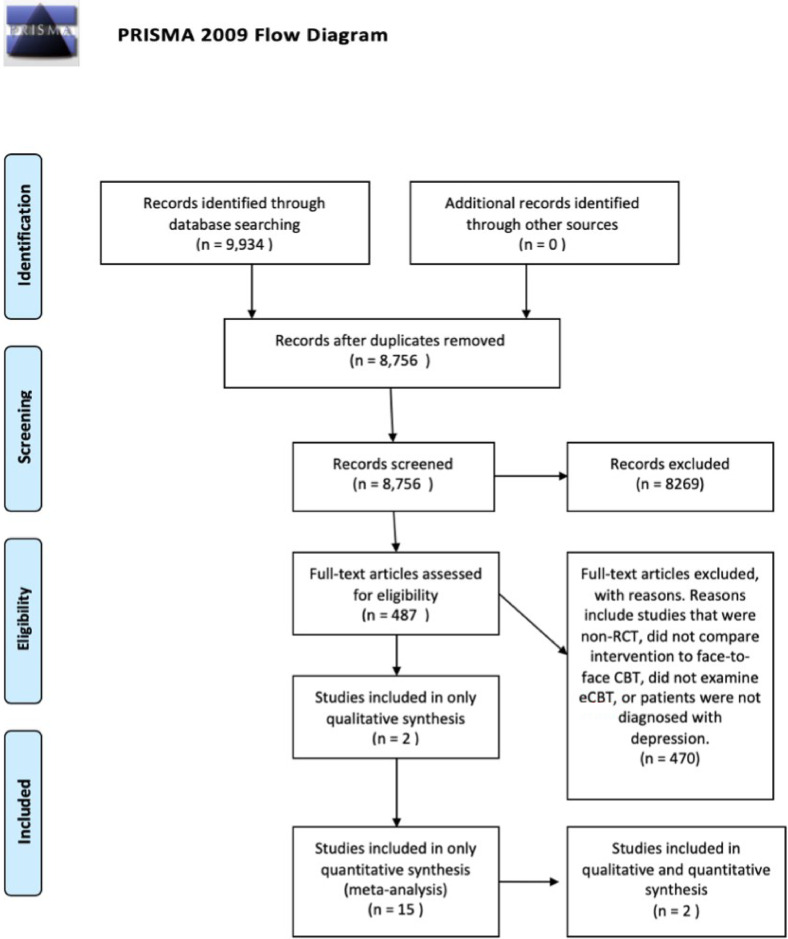
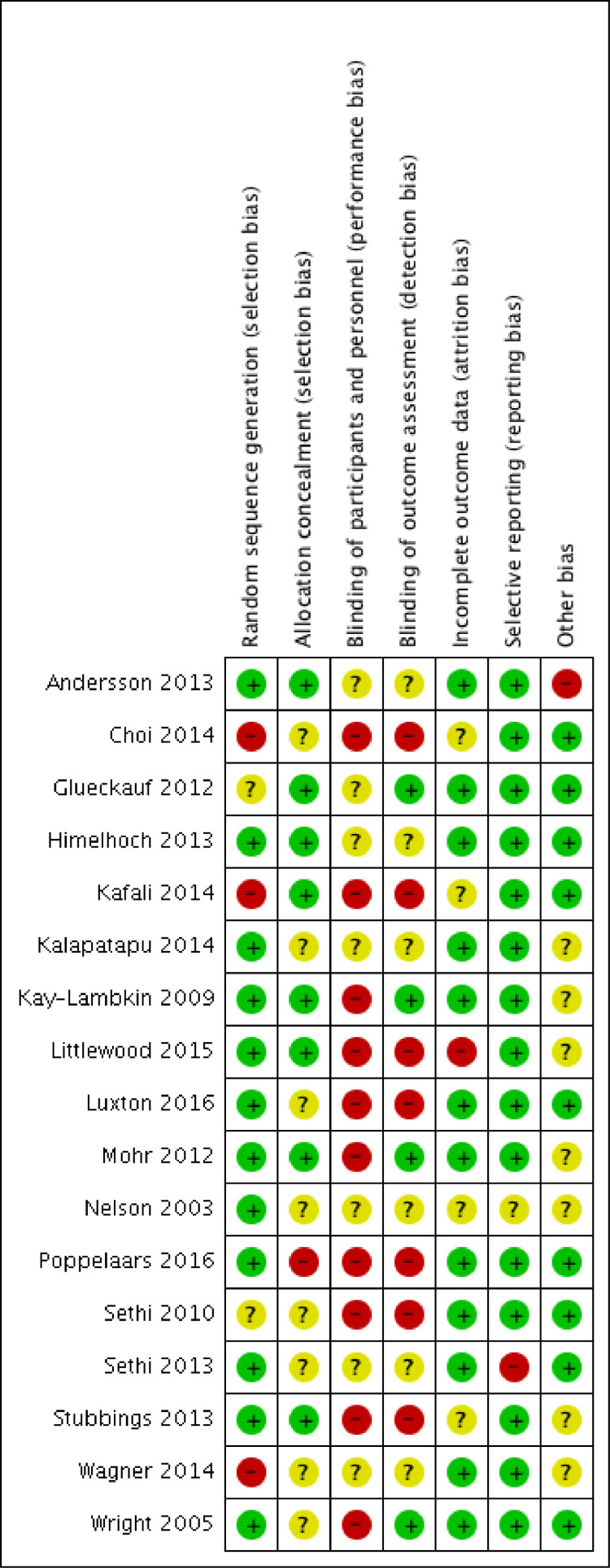
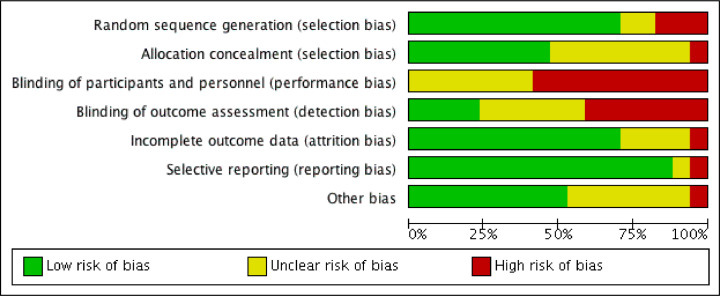
To be eligible for this review, studies needed to be randomized controlled trials evaluating the clinical effectiveness of any form of eCBT compared to face-to-face CBT. These encompassed studies evaluating a wide range of outcomes including severity of symptoms, adverse outcomes, clinically relevant outcomes, global functionality, participant satisfaction, quality of life, and affordability. There were no restrictions on participant age or sex.We searched MEDLINE, EMBASE, Psych Info, Cochrane CENTRAL and CINAHL databases from inception to February 20th, 2020 using a comprehensive search strategy. All stages of literature screening and data extraction were completed independently in duplicate. Data extraction and risk of bias analyses, including GRADE ratings, were conducted on studies meeting inclusion criteria. Qualitative measures are reported in a narrative summary. We pooled quantitative data in meta-analyses to provide an estimated summary effect. This review adheres to PRISMA reporting guidelines.
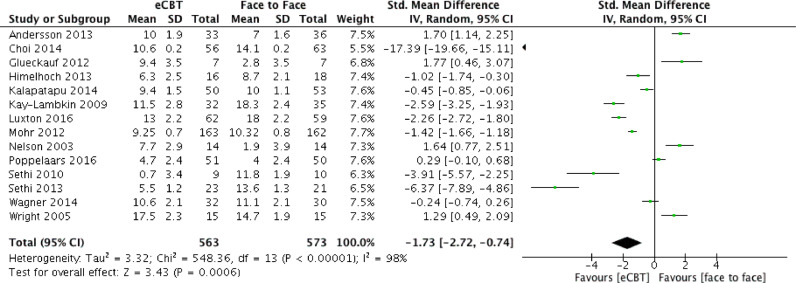
In total, we included 17 studies in our analyses. Our results demonstrated that eCBT was more effective than face-to-face CBT at reducing depression symptom severity (Standardized mean difference [SMD]: -1.73; 95% confidence interval [CI]: -2.72, -0.74; GRADE: moderate quality of evidence). There were no significant differences between the two interventions on participant satisfaction (SMD 0.13 95%; CI -0.32, 0.59; GRADE: low quality of evidence). One RCT reported eCBT to be less costly than face-to-face CBT (GRADE: low quality of evidence). Results did not differ when stratified by subgroups such as participant age and study location.
Although we found eCBT to have moderate evidence of effectiveness in reducing symptoms of depression, high heterogeneity among studies precludes definitive conclusions for all outcomes. With the current reliance and accessibility of technology to increasing number of people worldwide, serious consideration in utilizing technology should be given to maximize accessibility for depression treatments. Our results found eCBT is at least as effective as face to face CBT, thus eCBT should be offered if preferred by patients and therapists.
This research received no specific grant from any funding agency in the public, commercial or not-for-profit sectors.
认知行为疗法(CBT)是一种广泛应用于抑郁症治疗的方法。然而,资源有限给寻求治疗的患者带来了诸多障碍,包括漫长的等待时间和地理限制。这促使医疗服务机构引入电子认知行为疗法(eCBT)以方便患者获得治疗。尽管此前的综述比较了eCBT与面对面CBT的效果,但文献中总体缺乏足够有力且最新的证据来对这两种治疗方式进行可靠比较。本研究的目的是通过对文献的系统综述来评估eCBT与面对面CBT相比的效果。
要符合本综述的条件,研究需为随机对照试验,评估任何形式的eCBT与面对面CBT相比的临床效果。这些研究涵盖了评估广泛结果的研究,包括症状严重程度、不良后果、临床相关结果、整体功能、参与者满意度、生活质量和可承受性。对参与者的年龄或性别没有限制。我们使用全面的搜索策略,检索了MEDLINE、EMBASE、Psych Info、Cochrane CENTRAL和CINAHL数据库,检索时间从数据库建立至2020年2月20日。文献筛选和数据提取的所有阶段均由两人独立重复完成。对符合纳入标准的研究进行数据提取和偏倚风险分析,包括GRADE评级。定性测量结果以叙述性总结形式报告。我们在荟萃分析中汇总定量数据以提供估计的汇总效应。本综述遵循PRISMA报告指南。
我们总共纳入了17项研究进行分析。我们的结果表明,在减轻抑郁症状严重程度方面,eCBT比面对面CBT更有效(标准化均值差[SMD]:-1.73;95%置信区间[CI]:-2.72,-0.74;GRADE:中等质量证据)。两种干预措施在参与者满意度方面无显著差异(SMD 0.13;95%CI -0.32,0.59;GRADE:低质量证据)。一项随机对照试验报告称eCBT的成本低于面对面CBT(GRADE:低质量证据)。按参与者年龄和研究地点等亚组分层时,结果没有差异。
尽管我们发现eCBT在减轻抑郁症状方面有中等程度的有效性证据,但研究之间的高度异质性妨碍了对所有结果得出确定性结论。鉴于目前全球越来越多的人对技术的依赖和可及性,应认真考虑利用技术来最大限度地提高抑郁症治疗的可及性。我们的结果发现eCBT至少与面对面CBT一样有效,因此,如果患者和治疗师愿意,应提供eCBT。
本研究未获得公共、商业或非营利部门任何资助机构的特定资助。