General Surgery and Trauma Team, ASST Niguarda, University of Milano, Piazza Ospedale Maggiore 3, 20162, Milano, Milan, Italy.
General Surgery and Trauma Team, ASST Niguarda, Piazza Ospedale Maggiore 3, 20162, Milano, Milan, Italy.
Updates Surg. 2021 Feb;73(1):331-337. doi: 10.1007/s13304-020-00856-w. Epub 2020 Aug 10.
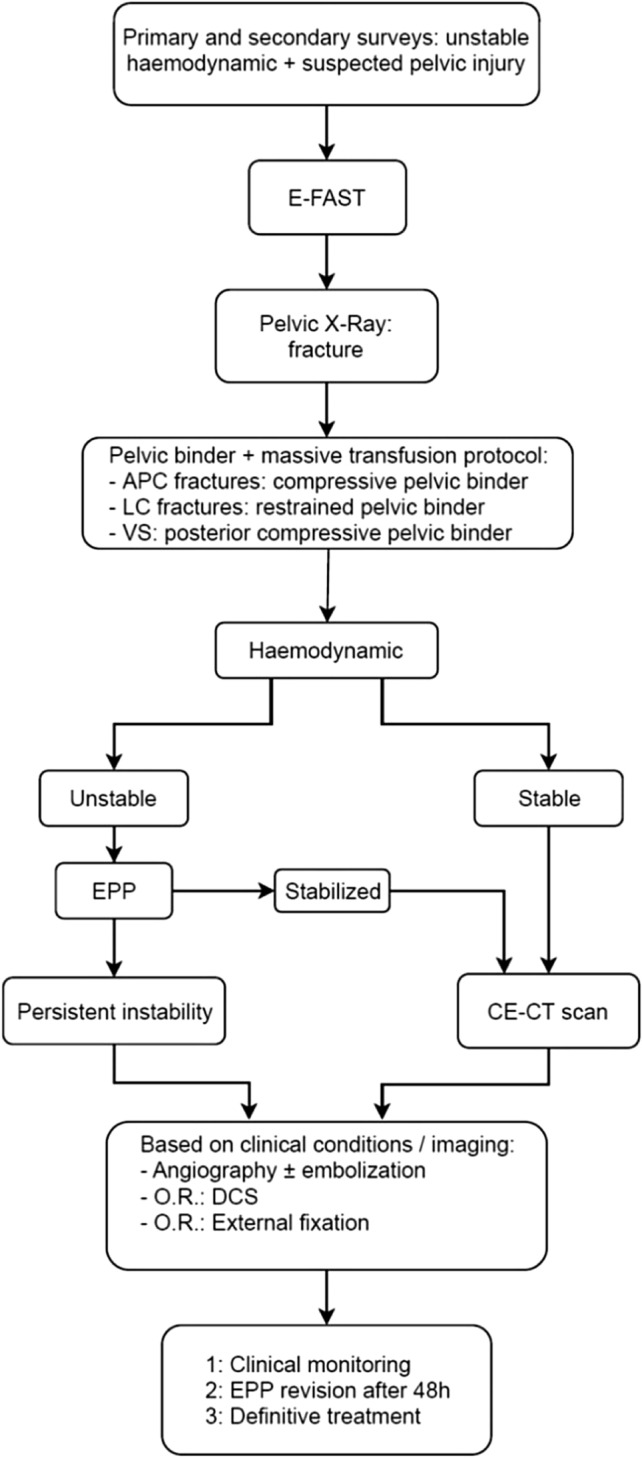
The Extra-Peritoneal Pelvic Packing (EPP) is a procedure used in emergency conditions to control pelvic hemorrhage. This procedure can be performed in Emergency Room (ER) if the patient is too unstable to be transported into the operating room (OR), with a possible increased risk of infections linked to a less sterile environment.
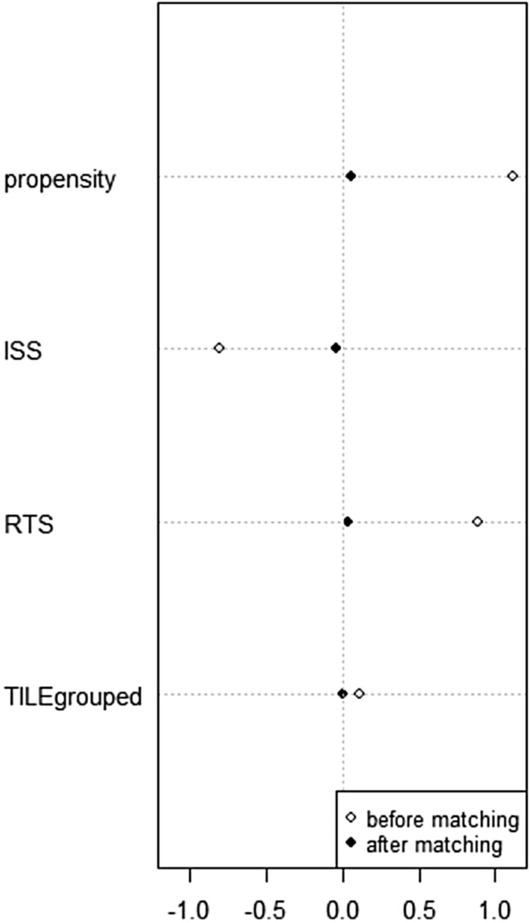
All patients who underwent EPP from 2009 to 2018 were selected from the trauma registry. The patients were divided into two groups according to where EPP was performed (ER or OR). A Propensity Score Matching was realized. EPP was removed in all patients in the OR after obtaining hemodynamic stabilization within 24-48 h and surgical pads were sent to the laboratory for microbiological analysis.
Eighty-four patients underwent EPP during the period of the study. After PSM, 26 couples of patients were selected. No differences were observed between the two groups in the development of pelvic infection. Patients managed in OR showed a higher rate of associated abdominal injuries (p = 0.027) and an increasing need for external fixation (p = 0,005) as well as an increased proportion of laparotomies (p = 0.023), orthopedic interventions (p = 0.005) and a higher systolic blood pressure on admission (p = 0.003).
The EPP is a safe procedure, even when performed out of OR. The EPP in ER allows an earlier control of bleeding in patients in extremis. To minimize the risk of infection, EPP should be removed early, as soon as hemodynamics have been stabilized.
经腹腔外骨盆填塞术(EPP)是一种用于控制骨盆出血的紧急情况下的手术。如果患者因不稳定而无法转运到手术室(OR),则可以在急诊室(ER)进行此操作,由于环境不太无菌,可能会增加感染的风险。
从创伤登记处选择了 2009 年至 2018 年期间接受 EPP 的所有患者。根据 EPP 实施的地点(ER 或 OR)将患者分为两组。进行了倾向评分匹配。在所有患者中,当在 24-48 小时内获得血流动力学稳定后,在 OR 中移除 EPP,并将手术垫送到实验室进行微生物分析。
在研究期间,有 84 名患者接受了 EPP。经过 PSM 后,选择了 26 对患者。两组患者在骨盆感染的发展方面均无差异。在 OR 中接受治疗的患者表现出更高的腹部损伤率(p = 0.027),需要外部固定的比例更高(p = 0,005),以及剖腹手术的比例更高(p = 0.023),骨科干预(p = 0.005)和入院时的收缩压更高(p = 0.003)。
即使在不在 OR 的情况下,EPP 也是一种安全的手术。在 ER 中进行 EPP 可以更早地控制处于危急状态的患者的出血。为了最大程度地降低感染风险,应在血流动力学稳定后尽早移除 EPP。