Department of Child and Adolescent Psychiatry, Erasmus MC, Rotterdam, The Netherlands.
Department of Epidemiology, Erasmus MC, Rotterdam, The Netherlands.
Paediatr Perinat Epidemiol. 2021 Jan;35(1):130-142. doi: 10.1111/ppe.12691. Epub 2020 Aug 11.
Mendelian randomisation (MR) designs apply instrumental variable techniques using genetic variants to study causal effects. MR is increasingly used to evaluate the role of maternal exposures during pregnancy on offspring health.
We review the application of MR to prenatal exposures and describe reporting of methodologic challenges in this area.
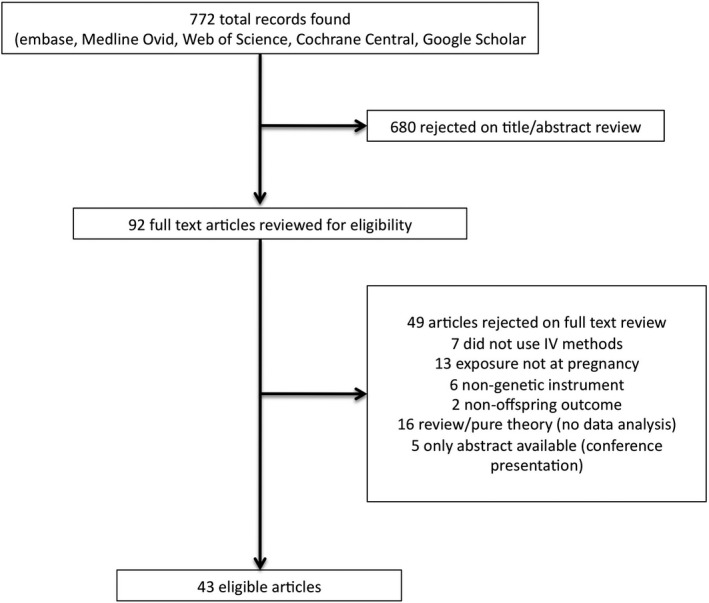
We searched PubMed, EMBASE, Medline Ovid, Cochrane Central, Web of Science, and Google Scholar.
Eligible studies met the following criteria: (a) a maternal pregnancy exposure; (b) an outcome assessed in offspring of the pregnancy; and (c) a genetic variant or score proposed as an instrument or proxy for an exposure.
We quantified the frequency of reporting of MR conditions stated, techniques used to examine assumption plausibility, and reported limitations.
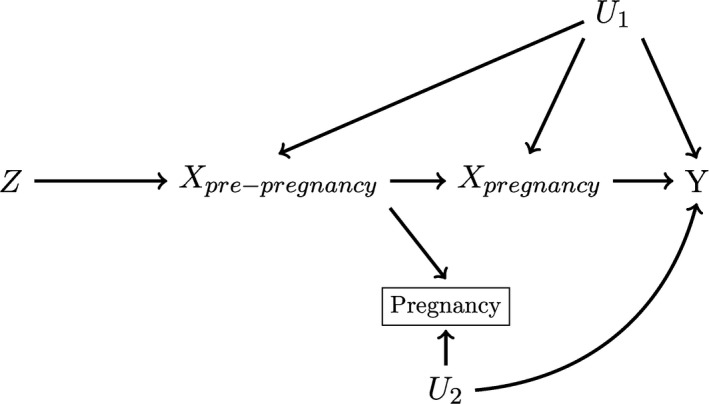
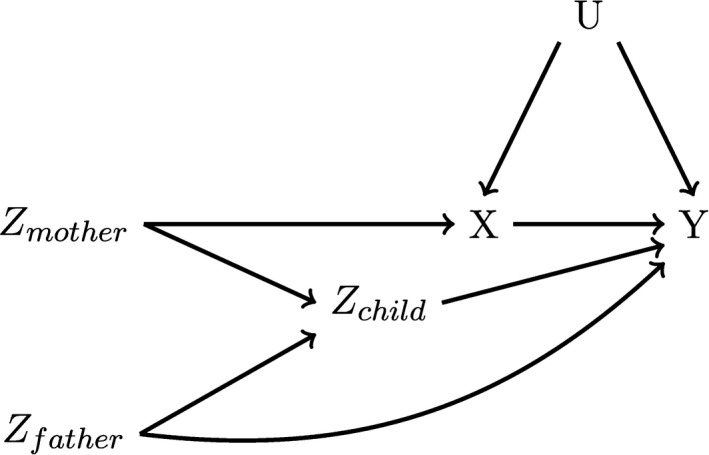
Forty-three eligible studies were identified. When discussing challenges or limitations, the most common issues described were known potential biases in the broader MR literature, including population stratification (n = 29), weak instrument bias (n = 18), and certain types of pleiotropy (n = 30). Of 22 studies presenting point estimates for the effect of exposure, four defined their causal estimand. Twenty-four studies discussed issues unique to prenatal MR, including selection on pregnancy (n = 1) and pleiotropy via postnatal exposure (n = 10) or offspring genotype (n = 20).
Prenatal MR studies frequently discuss issues that affect all MR studies, but rarely discuss problems specific to the prenatal context, including selection on pregnancy and effects of postnatal exposure. Future prenatal MR studies should report and attempt to falsify their assumptions, with particular attention to issues specific to prenatal MR. Further research is needed to evaluate the impacts of biases unique to prenatal MR in practice.
孟德尔随机化(MR)设计使用遗传变异作为工具变量来研究因果效应,这是一种常用于评估孕期母体暴露对后代健康影响的方法。
我们综述了 MR 方法在产前暴露研究中的应用,并描述了该领域方法学挑战的报告情况。
我们检索了 PubMed、EMBASE、Ovid Medline、Cochrane 中心、Web of Science 和 Google Scholar。
符合条件的研究必须符合以下标准:(a)母体妊娠暴露;(b)妊娠后代评估的结局;(c)提出的遗传变异或评分作为暴露的工具或替代物。
我们量化了报告的 MR 条件陈述、用于检验假设合理性的技术以及报告的局限性的频率。
确定了 43 项符合条件的研究。在讨论挑战或局限性时,最常描述的问题是广泛的 MR 文献中已知的潜在偏倚,包括群体分层(n=29)、弱工具偏倚(n=18)和某些类型的混杂(n=30)。在 22 项报告暴露效应点估计值的研究中,有 4 项定义了他们的因果估计量。24 项研究讨论了产前 MR 特有的问题,包括妊娠选择(n=1)和通过产后暴露(n=10)或后代基因型(n=20)产生的混杂。
产前 MR 研究经常讨论影响所有 MR 研究的问题,但很少讨论特定于产前背景的问题,包括妊娠选择和产后暴露的影响。未来的产前 MR 研究应报告并尝试验证其假设,特别注意特定于产前 MR 的问题。需要进一步研究来评估特定于产前 MR 的偏倚在实践中的影响。