Department of Electronics, Information and Bioengineering (DEIB), Politecnico di Milano, Piazza Leonardo da Vinci 32, 20133, Milan, Italy.
Department of Molecular Biology, Radboud Institute for Molecular Life Sciences, Faculty of Science, Radboud University, PO box 9101, 6500 HG, Nijmegen, The Netherlands.
Genome Biol. 2020 Aug 12;21(1):197. doi: 10.1186/s13059-020-02108-x.
Topologically associating domains (TADs) are genomic regions of self-interaction. Additionally, it is known that TAD boundaries are enriched in CTCF binding sites. In turn, CTCF sites are known to be asymmetric, whereby the convergent configuration of a pair of CTCF sites leads to the formation of a chromatin loop in vivo. However, to date, it has been unclear how to reconcile TAD structure with CTCF-based chromatin loops.
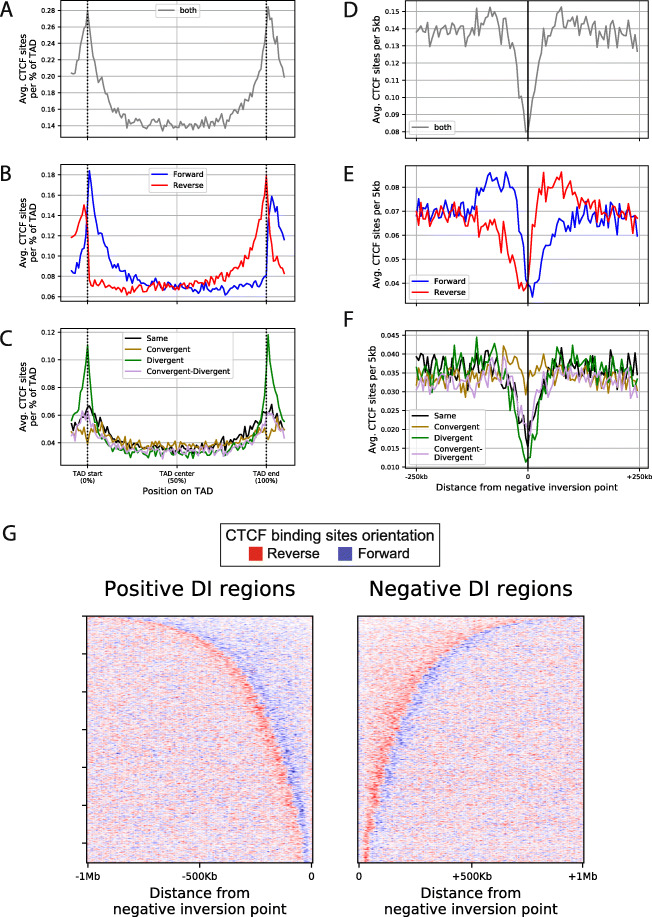
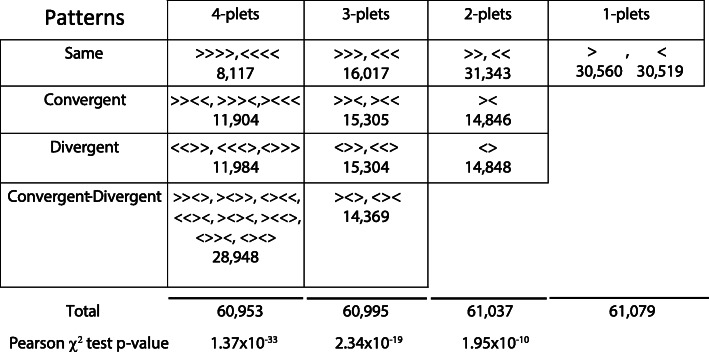
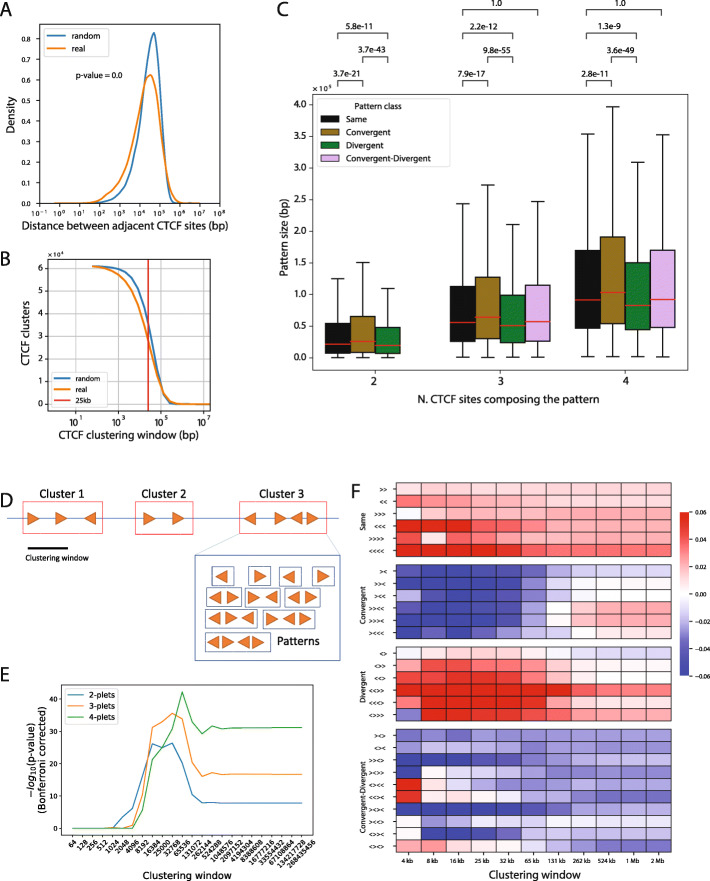
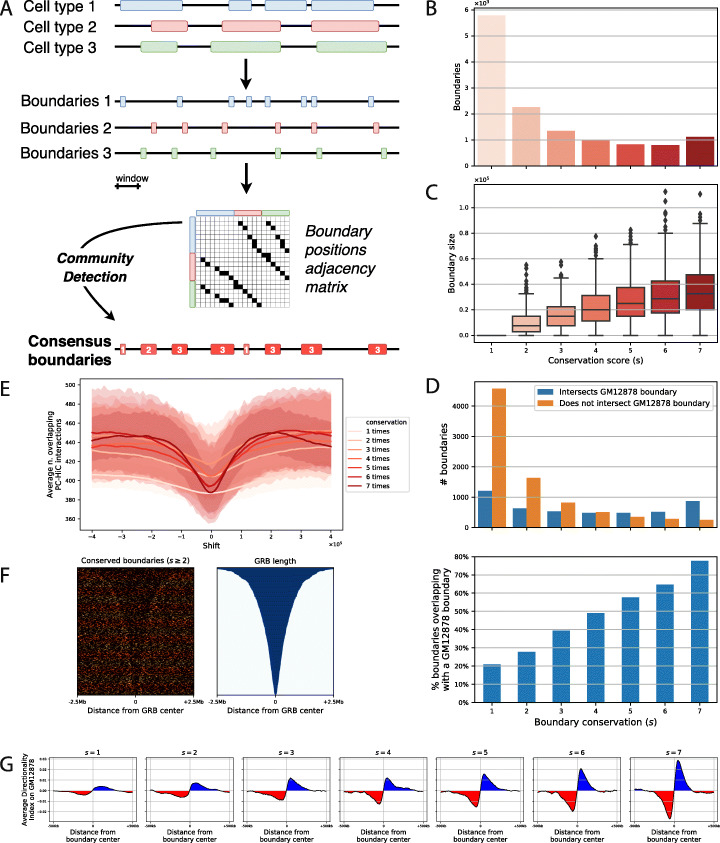
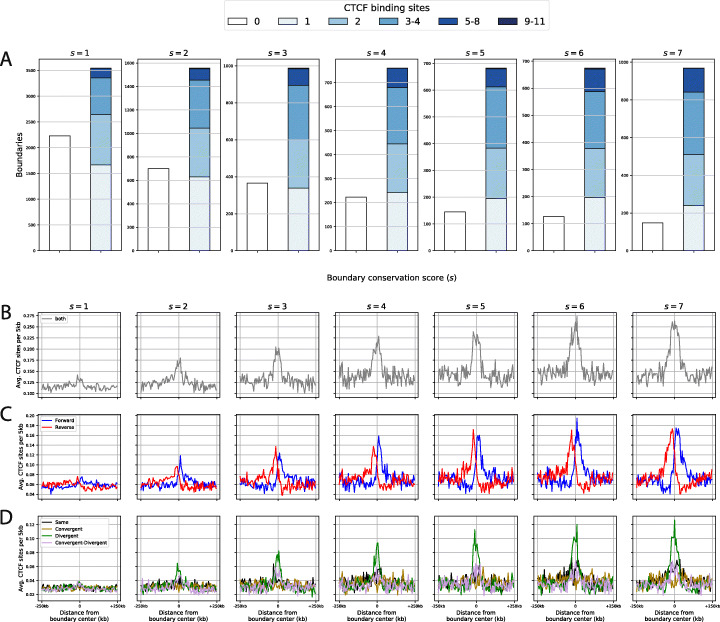
We approach this problem by analysing CTCF binding site strengths and classifying clusters of CTCF sites along the genome on the basis of their relative orientation. Analysis of CTCF site orientation classes as a function of their spatial distribution along the human genome reveals that convergent CTCF site clusters are depleted while divergent CTCF clusters are enriched in the 5- to 100-kb range. We then analyse the distribution of CTCF binding sites as a function of TAD boundary conservation across seven primary human blood cell types. This reveals divergent CTCF site enrichment at TAD boundaries. Furthermore, convergent arrays of CTCF sites separate the left and right sections of TADs that harbour internal CTCF sites, resulting in unequal TAD 'halves'.
The orientation-based CTCF binding site cluster classification that we present reconciles TAD boundaries and CTCF site clusters in a mechanistically elegant fashion. This model suggests that the emergent structure of nuclear chromatin in the form of TADs relies on the obligate alternation of divergent and convergent CTCF site clusters that occur at different length scales along the genome.
拓扑关联域(TADs)是自我相互作用的基因组区域。此外,已知 TAD 边界富含 CTCF 结合位点。反过来,CTCF 位点已知是不对称的,即一对 CTCF 位点的会聚构型导致体内染色质环的形成。然而,迄今为止,如何协调 TAD 结构与基于 CTCF 的染色质环仍然不清楚。
我们通过分析 CTCF 结合位点的强度,并根据它们的相对方向对基因组上的 CTCF 位点簇进行分类,来解决这个问题。分析 CTCF 位点取向类别的函数,作为它们在人类基因组上的空间分布,揭示了会聚 CTCF 位点簇被耗尽,而发散 CTCF 簇在 5-100kb 范围内富集。然后,我们分析了 CTCF 结合位点在七种主要人类血细胞类型中作为 TAD 边界保守性的函数的分布。这揭示了 TAD 边界处发散的 CTCF 位点富集。此外,会聚的 CTCF 位点阵列将包含内部 CTCF 位点的 TAD 的左右部分分开,导致 TAD 的“两半”不等。
我们提出的基于取向的 CTCF 结合位点簇分类以一种机械优雅的方式协调了 TAD 边界和 CTCF 位点簇。该模型表明,以 TAD 形式出现的核染色质的新兴结构依赖于在基因组上不同长度尺度上发生的发散和会聚 CTCF 位点簇的强制性交替。