National Institute of Advanced Industrial Science and Technology (AIST), 2-4-7 Aomi, Koto-ku, Tokyo, Japan.
Japan Biological Informatics Consortium (JBIC), 2-4-32 Aomi, Koto-ku, Tokyo, Japan.
Nat Commun. 2020 Aug 11;11(1):4022. doi: 10.1038/s41467-020-17769-2.
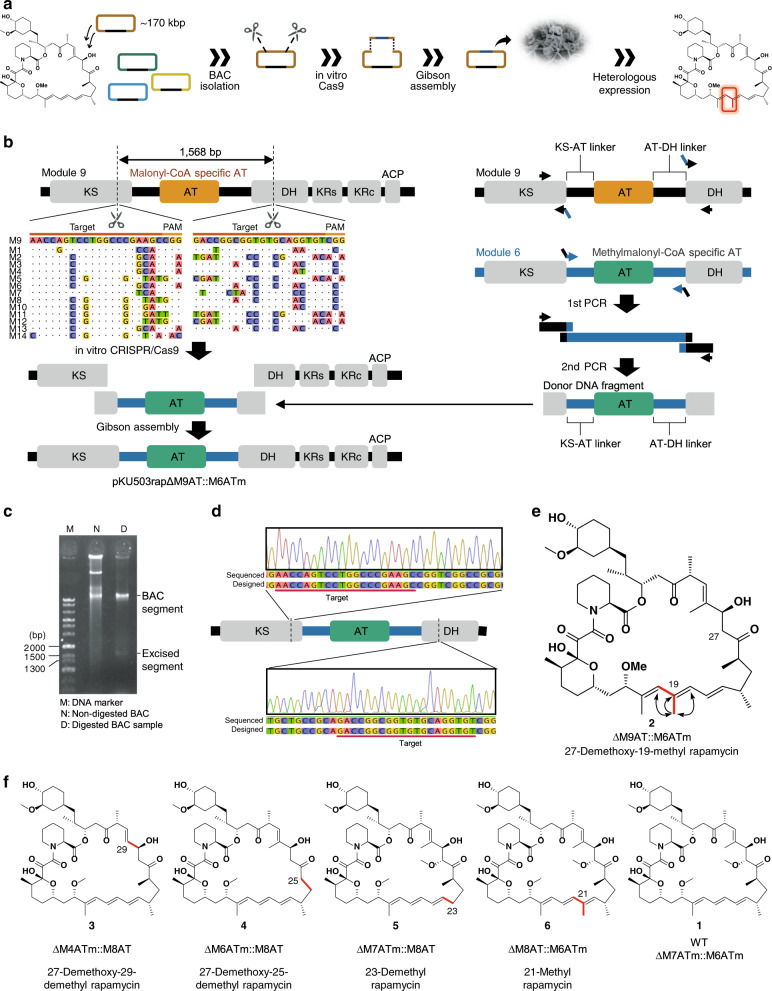
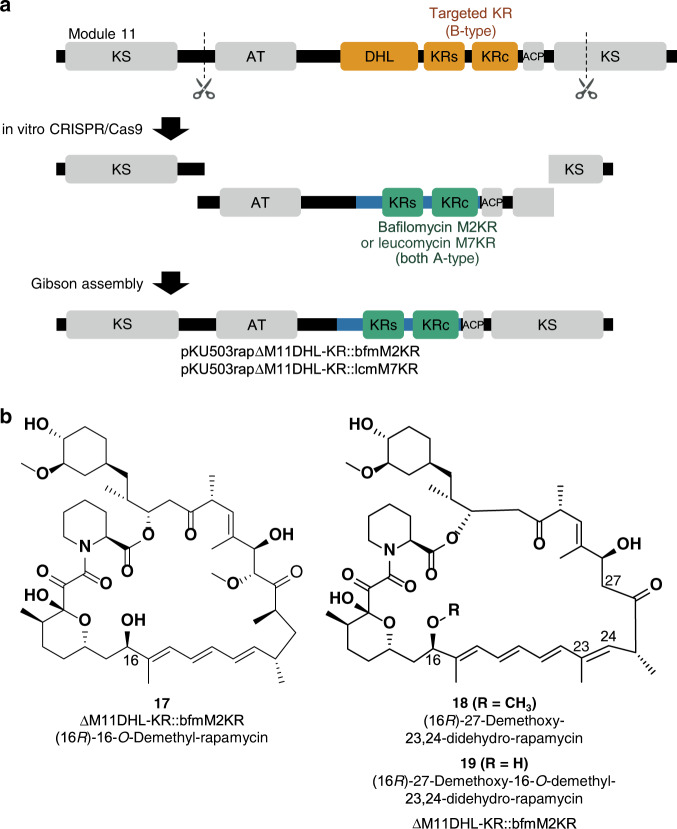
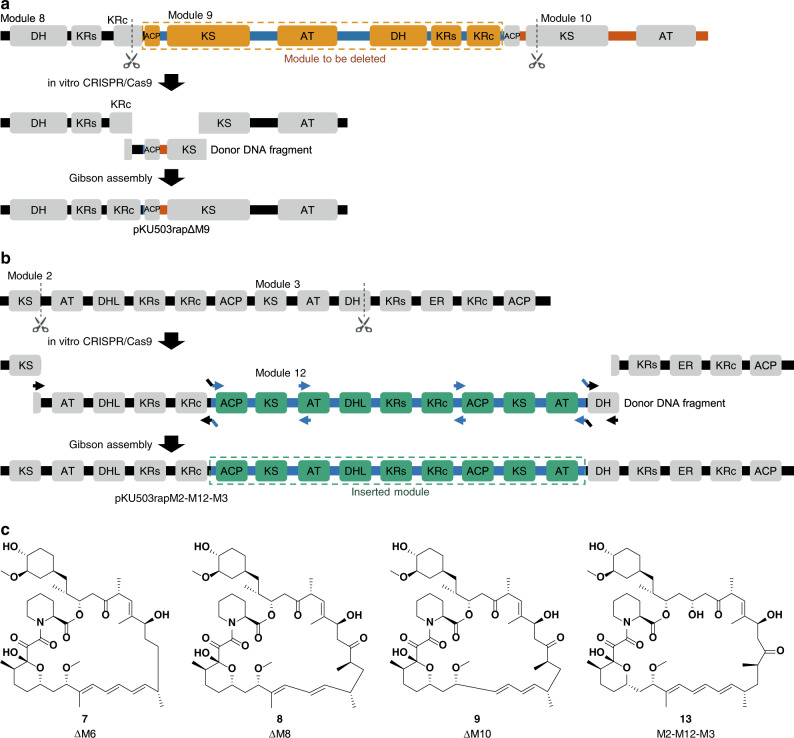
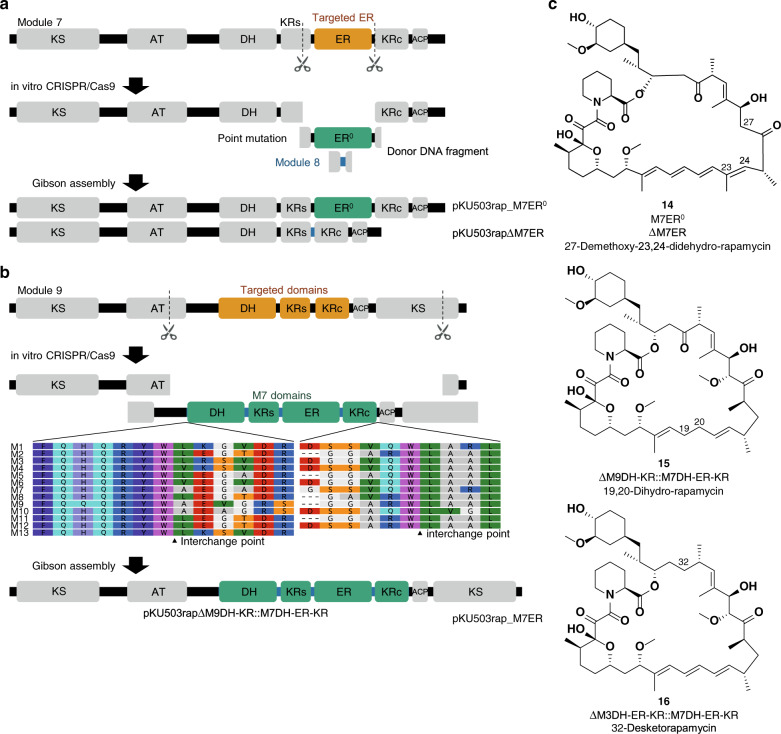
One major bottleneck in natural product drug development is derivatization, which is pivotal for fine tuning lead compounds. A promising solution is modifying the biosynthetic machineries of middle molecules such as macrolides. Although intense studies have established various methodologies for protein engineering of type I modular polyketide synthase(s) (PKSs), the accurate targeting of desired regions in the PKS gene is still challenging due to the high sequence similarity between its modules. Here, we report an innovative technique that adapts in vitro Cas9 reaction and Gibson assembly to edit a target region of the type I modular PKS gene. Proof-of-concept experiments using rapamycin PKS as a template show that heterologous expression of edited biosynthetic gene clusters produced almost all the desired derivatives. Our results are consistent with the promiscuity of modular PKS and thus, our technique will provide a platform to generate rationally designed natural product derivatives for future drug development.
天然产物药物开发的一个主要瓶颈是衍生化,这对于精细调整先导化合物至关重要。一种有前途的解决方案是修饰大环内酯等中间分子的生物合成机制。尽管已经进行了大量研究,建立了各种用于 I 型模块化聚酮合酶(PKS)的蛋白质工程方法,但由于其模块之间的高度序列相似性,仍然难以准确靶向 PKS 基因中的所需区域。在这里,我们报告了一种创新技术,该技术将体外 Cas9 反应和 Gibson 组装适用于编辑 I 型模块化 PKS 基因的目标区域。以雷帕霉素 PKS 为模板的概念验证实验表明,编辑后的生物合成基因簇的异源表达几乎产生了所有所需的衍生物。我们的结果与模块化 PKS 的混杂性一致,因此,我们的技术将为未来的药物开发提供一个平台,用于生成合理设计的天然产物衍生物。