Yamaguchi Satoshi, Takasaki Yumi, Yamahira Shinya, Nagamune Teruyuki
Research Center for Advanced Science and Technology, The University of Tokyo, 4-6-1 Komaba, Meguro-ku, Tokyo 153-8904, Japan.
Precursory Research for Embryonic Science and Technology (PRESTO), Japan Science and Technology Agency (JST), 4-1-8 Hon-cho, Kawaguchi, Saitama 351-0198, Japan.
Micromachines (Basel). 2020 Aug 8;11(8):762. doi: 10.3390/mi11080762.
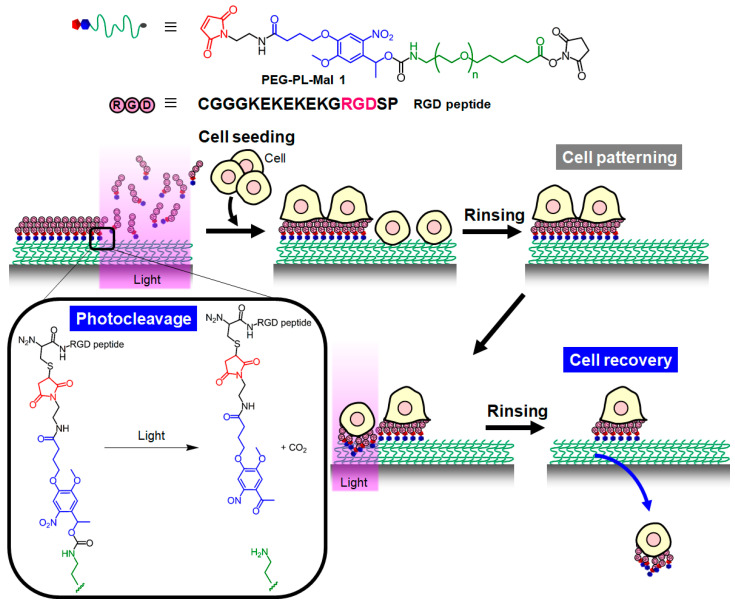
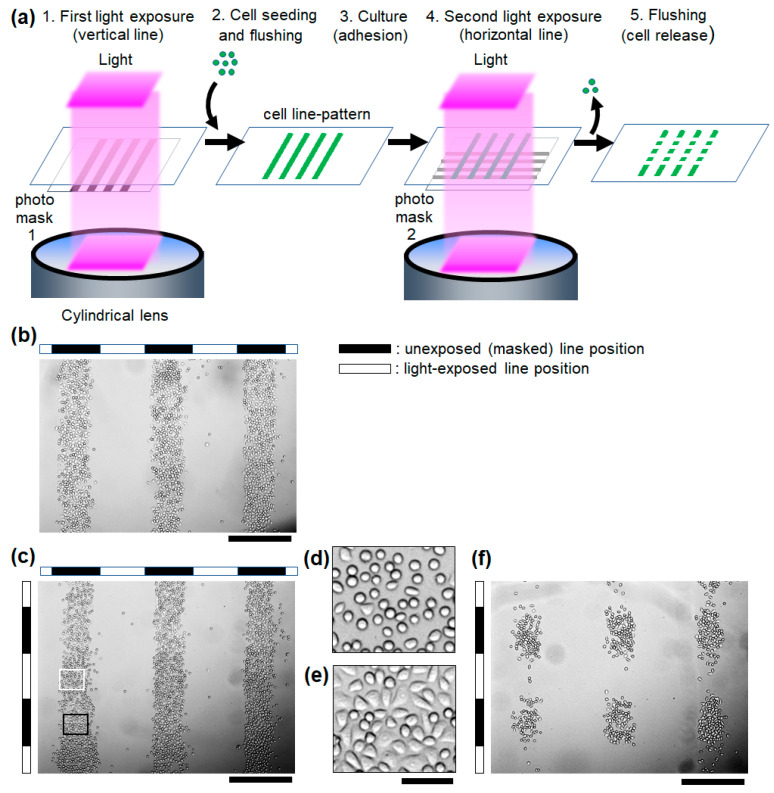
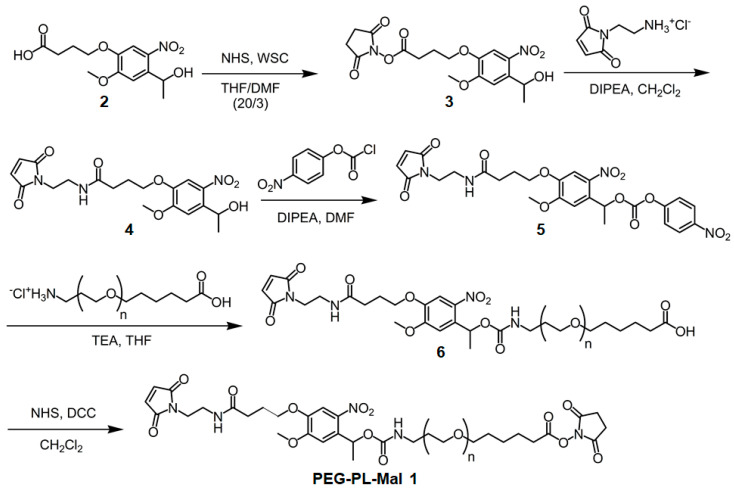
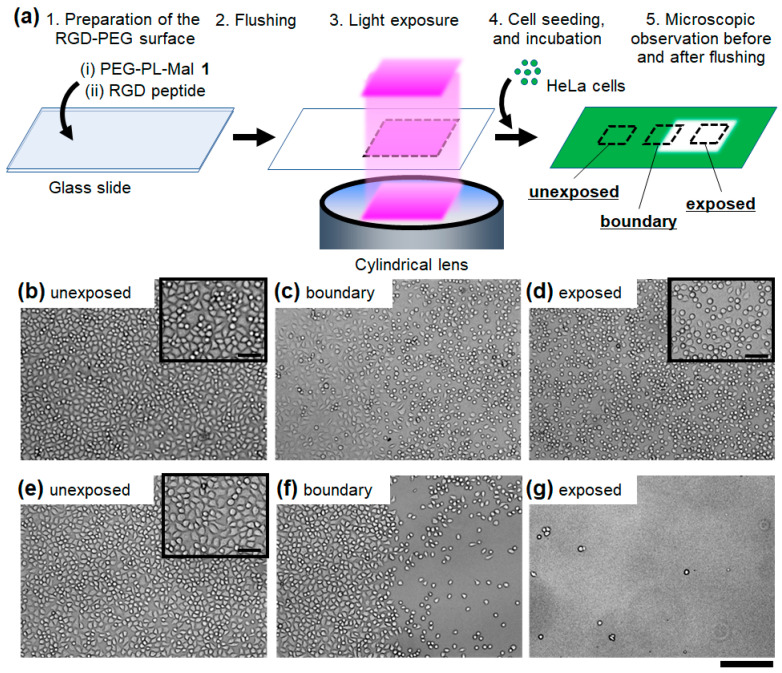
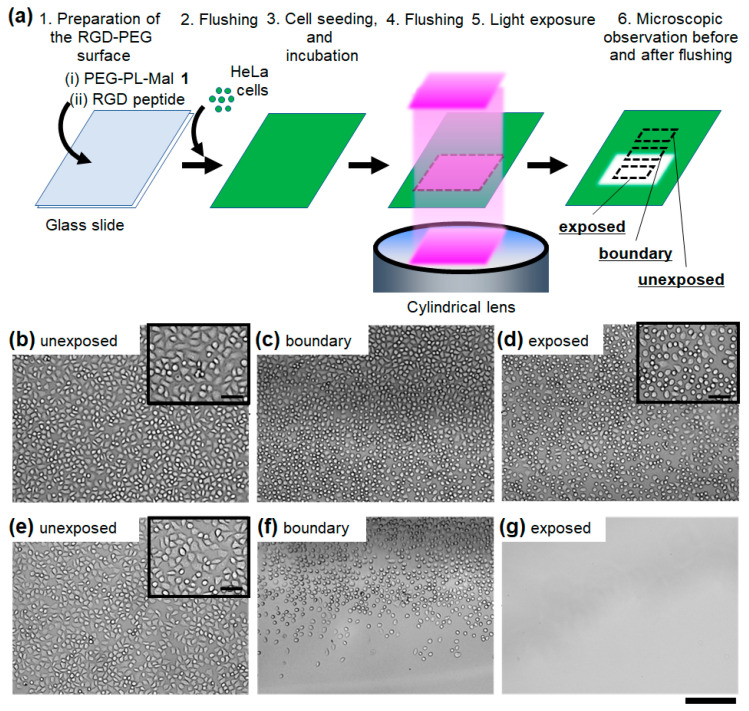
Photo-responsive cell attachment surfaces can simplify patterning and recovery of cells in microdevices for medicinal and pharmaceutical research. We developed a photo-responsive surface for controlling the attachment and release of adherent cells on a substrate under light-guidance. The surface comprises a poly(ethylene glycol) (PEG)-based photocleavable material that can conjugate with cell-adhesive peptides. Surface-bound peptides were released by photocleavage in the light-exposed region, where the cell attachment was subsequently suppressed by the exposed PEG. Simultaneously, cells selectively adhered to the peptide surface at the unexposed microscale region. After culture, the adhered and spread cells were released by exposure to a light with nontoxic dose level. Thus, the present surface can easily create both cell-adhesive and non-cell-adhesive regions on the substrate by single irradiation of the light pattern, and the adhered cells were selectively released from the light-exposed region on the cell micropattern without damage. This study shows that the photo-responsive surface can serve as a facile platform for the remote-control of patterning and recovery of adherent cells in microdevices.
光响应性细胞附着表面可简化用于医学和药学研究的微器件中细胞的图案化和回收。我们开发了一种光响应性表面,用于在光引导下控制底物上贴壁细胞的附着和释放。该表面包含一种基于聚乙二醇(PEG)的可光裂解材料,其可与细胞黏附肽共轭。表面结合的肽通过在光照区域的光裂解而释放,随后暴露的PEG抑制该区域的细胞附着。同时,细胞在未暴露的微尺度区域选择性地附着于肽表面。培养后,通过暴露于无毒剂量水平的光来释放贴壁并铺展的细胞。因此,本表面可通过单次照射光图案轻松在底物上创建细胞黏附区域和非细胞黏附区域,并且贴壁细胞可从细胞微图案的光照区域选择性释放而不受损伤。本研究表明,光响应性表面可作为一个便捷平台,用于远程控制微器件中贴壁细胞的图案化和回收。