Centro de Química de Coimbra CQC, Department of Chemistry, University of Coimbra, 3004-535 Coimbra, Portugal.
Molecules. 2020 Aug 10;25(16):3639. doi: 10.3390/molecules25163639.
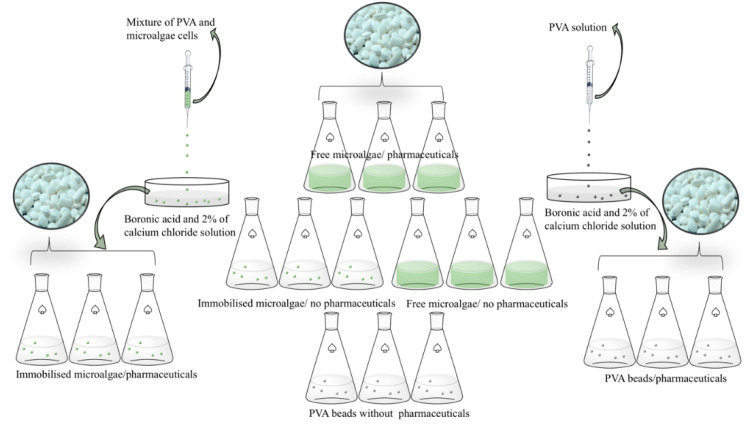
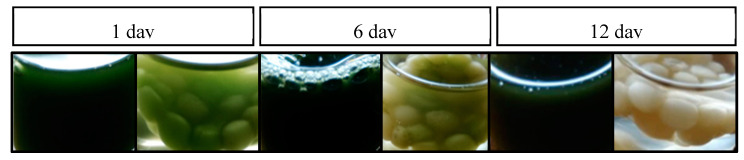
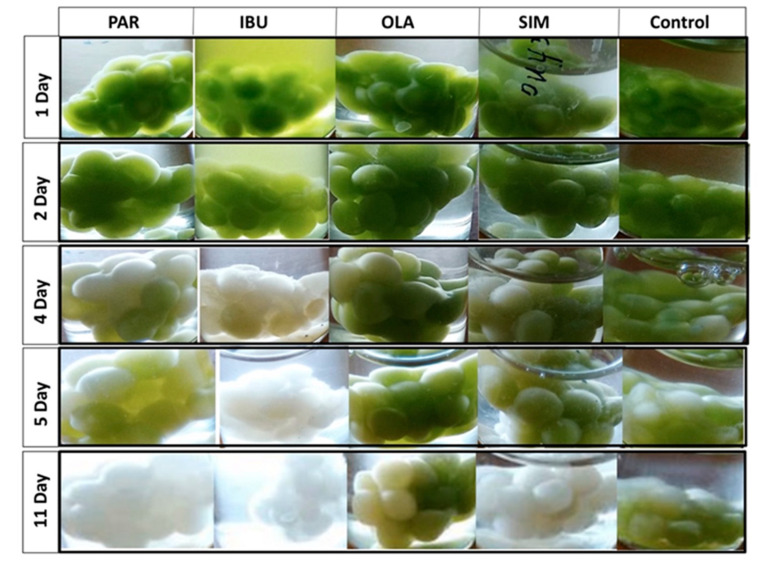
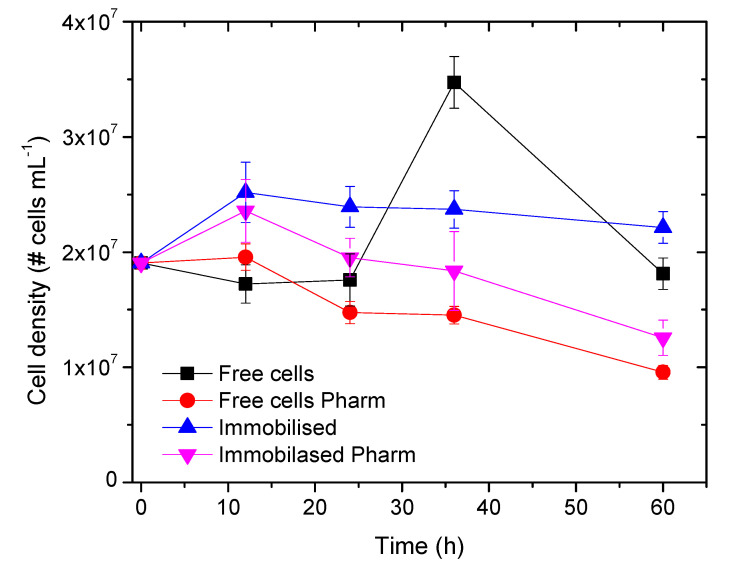
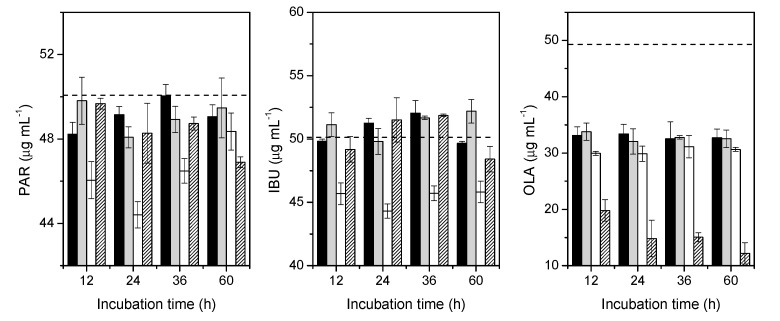
Pharmaceuticals and their metabolites are released into the environment by domestic, hospital, and pharmaceutical industry wastewaters. Conventional wastewater treatment technology does not guarantee effluents of high quality, and apparently clean water may be loaded with pollutants. In this study, we assess the performance and efficiency of free and immobilised cells of microalgae sp. in removing four pharmaceuticals, chosen for their occurrence or persistence in the environment. These are paracetamol, ibuprofen, olanzapine and simvastatin. The results showed that free microalgae cells remain alive for a longer time than the immobilised ones, suggesting the inhibition of cell proliferation by the polymeric matrix polyvinyl alcohol. Both cells, free and immobilised, respond differently to each pharmaceutical. The removal of paracetamol and ibuprofen by sp., after 24 h of culture, was significantly higher in immobilised cells. Free cells removed a significantly higher concentration of olanzapine than immobilised ones, suggesting a higher affinity to this molecule than to paracetamol and ibuprofen. The results demonstrate the effectiveness of sp. free cells for removing olanzapine and sp. immobilised cells for removing paracetamol and ibuprofen.
药品及其代谢物通过家庭、医院和制药工业废水排放到环境中。传统的废水处理技术不能保证高质量的出水,显然清洁的水可能含有污染物。在这项研究中,我们评估了微藻 sp. 的游离细胞和固定化细胞去除四种药品的性能和效率,这四种药品因其在环境中的存在或持久性而被选择。这些药品是对乙酰氨基酚、布洛芬、奥氮平和辛伐他汀。结果表明,游离微藻细胞比固定化细胞存活时间更长,这表明聚合基质聚乙烯醇抑制了细胞增殖。游离细胞和固定化细胞对每种药物的反应都不同。经过 24 小时的培养,固定化细胞对乙酰氨基酚和布洛芬的去除率明显更高。游离细胞去除奥氮平的浓度明显高于固定化细胞,这表明游离细胞对奥氮平的亲和力高于对乙酰氨基酚和布洛芬。结果表明,游离 sp. 细胞对奥氮平的去除效果较好,固定化 sp. 细胞对乙酰氨基酚和布洛芬的去除效果较好。