BeCHANGE Research Group, Institute for Public Communication, Università della Svizzera italiana, Lugano, Switzerland.
Division of Tropical and Humanitarian Medicine, University of Geneva and Geneva University Hospitals, Geneva, Switzerland.
PLoS Negl Trop Dis. 2020 Aug 12;14(8):e0008498. doi: 10.1371/journal.pntd.0008498. eCollection 2020 Aug.
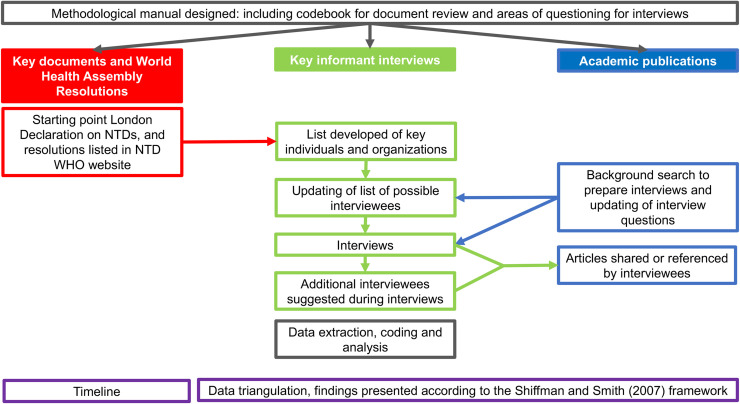
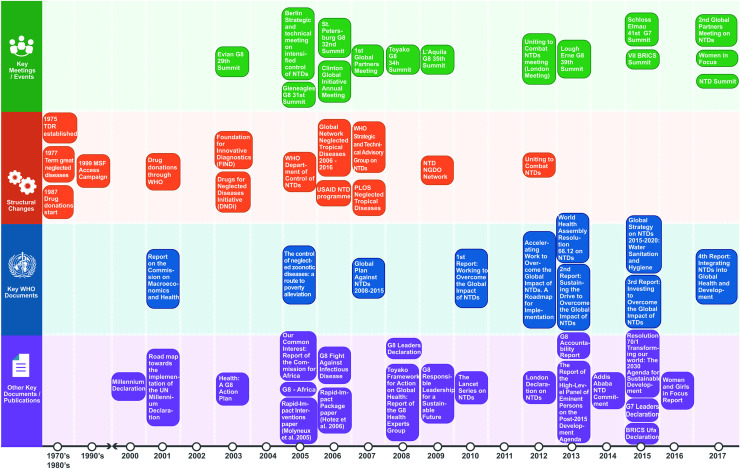
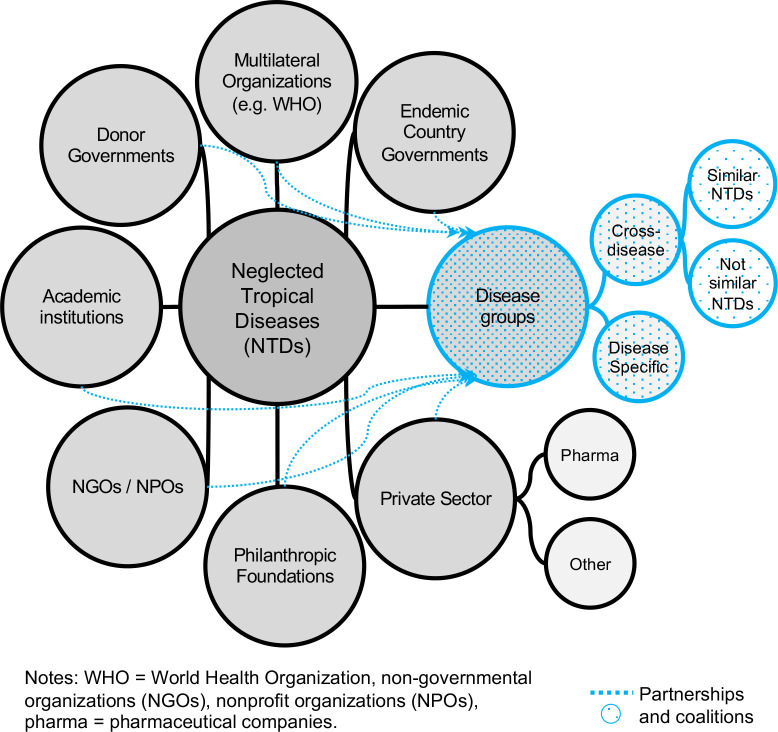
The global burden attributed to Neglected Tropical Diseases (NTDs) is 47.9 million Disability-Adjusted Life Years (DALYs). These diseases predominantly affect disadvantaged populations. Priority for NTDs has grown in recent years, which is observed by their inclusion in the sustainable development goals (SDGs). This study analyzed the process that allowed these diseases to be included on the global health policy agenda. This global policy analysis used the Shiffman and Smith framework to understand the determinants of global health political priority for NTDs. The framework comprises four categories: actor power, ideas, political contexts, and issue characteristics. Global documents and World Health Assembly (WHA) resolutions were examined, key-informant interviews were conducted, and academic publications were reviewed to understand the four categories that comprise the framework. A total of 37 global policy documents, 15 WHA resolutions, and 38 academic publications were examined. Twelve semi-structured interviews were conducted with individuals representing different sectors within the NTD community who have been involved in raising the priority of these diseases. This study found that several factors helped better position NTDs in the global health agenda. These include the leadership of actors that mobilized the global health community, the creation of a label combining these diseases as a group to represent a larger disease burden, the presence of mechanisms aligning the NTD community, and the agreement on ways to present the NTD burden and potential solutions. The process of building the priority of NTDs in the global health agenda shows that several determinants led to positive outcomes, but these diseases continue to have low priority at the global level which requires the implementation of actions to increase their global priority. These include sustaining the commitment of current actors and engaging new ones; increasing the attention given to diseases formerly categorized as "tool-deficient", including zoonotic NTDs; continue leveraging on policy windows and creating favorable policy moments to sustain commitment, as well as setting realistic targets. Findings from this study can help develop strategies to build the momentum and drive actions to implement the goals of the new Roadmap for NTDs in the pathway to universal health coverage (UHC) and sustainable development.
被忽视的热带病(NTDs)在全球造成 4790 万残疾调整生命年(DALYs)的负担。这些疾病主要影响弱势群体。近年来,NTD 受到了越来越多的重视,这一点可以从它们被纳入可持续发展目标(SDGs)中看出来。本研究分析了使这些疾病被纳入全球卫生政策议程的过程。这项全球政策分析采用 Shiffman 和 Smith 框架来理解 NTDs 作为全球卫生政治重点的决定因素。该框架包括四个类别:行为体的权力、理念、政治背景和问题特征。研究人员审查了全球文件和世界卫生大会(WHA)决议,进行了关键知情者访谈,并审查了学术出版物,以了解构成框架的四个类别。共审查了 37 份全球政策文件、15 份 WHA 决议和 38 篇学术出版物。对来自 NTD 社区不同部门的 12 名半结构化访谈者进行了访谈,他们参与了提高这些疾病优先级的工作。本研究发现,有几个因素有助于更好地将 NTDs 纳入全球卫生议程。这些因素包括动员全球卫生界的行为者的领导、将这些疾病组合成一个标签以代表更大的疾病负担、建立使 NTD 社区保持一致的机制以及就呈现 NTD 负担和潜在解决方案的方式达成一致。在全球卫生议程中建立 NTD 优先事项的过程表明,有几个决定因素带来了积极的结果,但这些疾病在全球层面上的优先级仍然很低,这需要采取行动来提高它们的全球优先级。这些措施包括维持现有行为者的承诺并吸引新的行为者;增加对以前被归类为“工具不足”的疾病的关注,包括人畜共患 NTDs;继续利用政策窗口和创造有利的政策时刻来维持承诺,并设定现实的目标。本研究的结果可以帮助制定战略,以保持势头并推动行动,实现新的 NTD 路线图在实现全民健康覆盖(UHC)和可持续发展方面的目标。