Department of Radiology, Zhejiang Provincial People's Hospital, Affiliated People's Hospital of Hangzhou Medical College, Hangzhou, 310013, China.
The Second Clinical Medical College, Zhejiang Chinese Medical University, Hangzhou, 310053, China.
Sci Rep. 2020 Aug 12;10(1):13657. doi: 10.1038/s41598-020-70629-3.
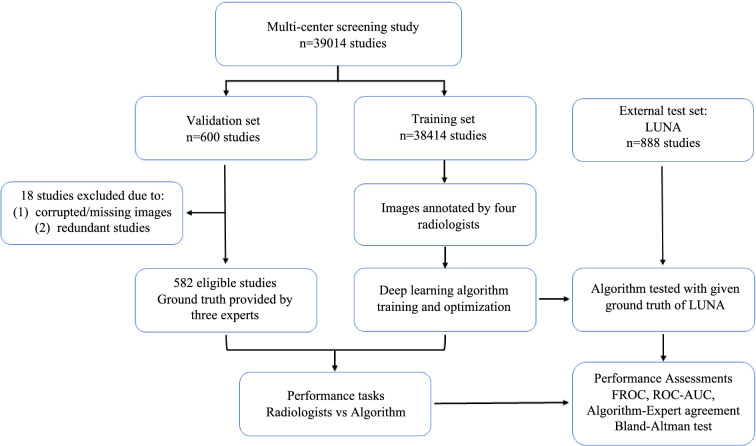
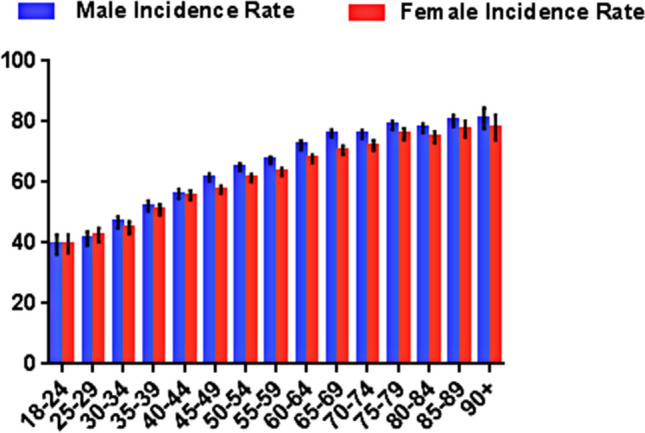
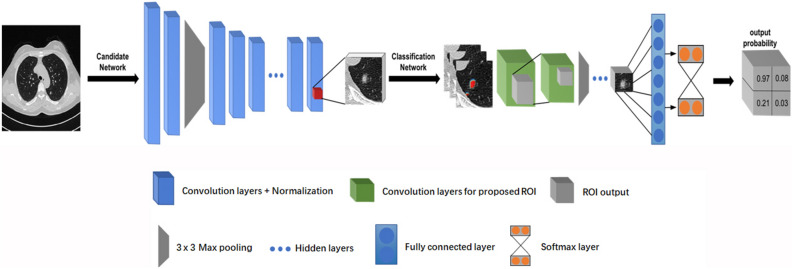
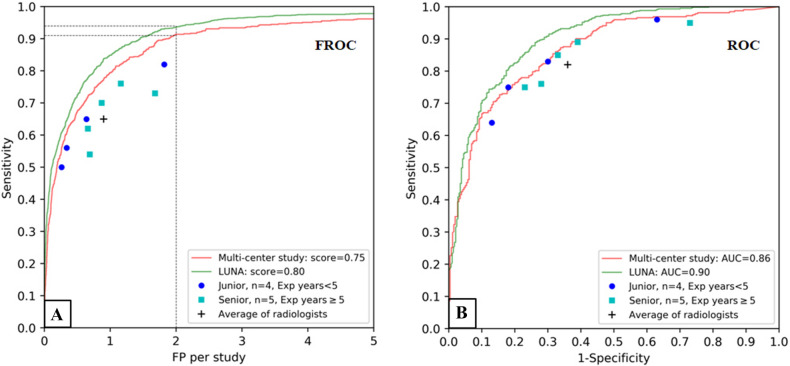
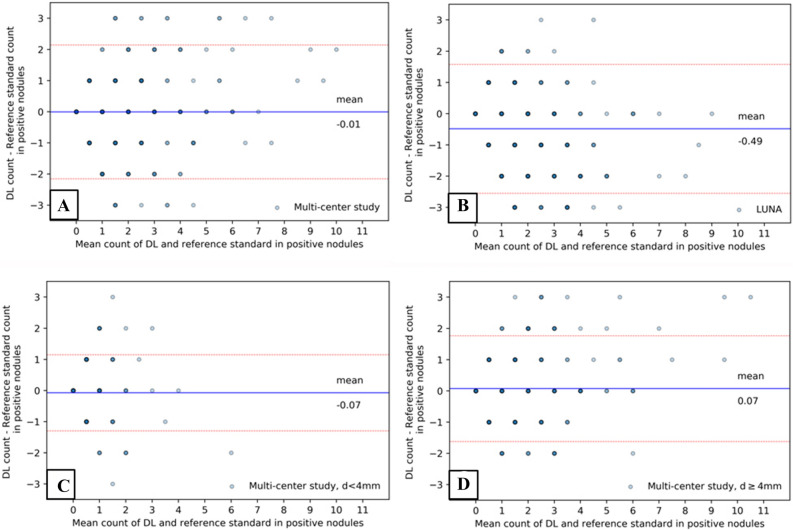
Lung cancer screening based on low-dose CT (LDCT) has now been widely applied because of its effectiveness and ease of performance. Radiologists who evaluate a large LDCT screening images face enormous challenges, including mechanical repetition and boring work, the easy omission of small nodules, lack of consistent criteria, etc. It requires an efficient method for helping radiologists improve nodule detection accuracy with efficiency and cost-effectiveness. Many novel deep neural network-based systems have demonstrated the potential for use in the proposed technique to detect lung nodules. However, the effectiveness of clinical practice has not been fully recognized or proven. Therefore, the aim of this study to develop and assess a deep learning (DL) algorithm in identifying pulmonary nodules (PNs) on LDCT and investigate the prevalence of the PNs in China. Radiologists and algorithm performance were assessed using the FROC score, ROC-AUC, and average time consumption. Agreement between the reference standard and the DL algorithm in detecting positive nodules was assessed per-study by Bland-Altman analysis. The Lung Nodule Analysis (LUNA) public database was used as the external test. The prevalence of NCPNs was investigated as well as other detailed information regarding the number of pulmonary nodules, their location, and characteristics, as interpreted by two radiologists.
肺癌筛查基于低剂量 CT(LDCT),因其有效性和易于实施而得到广泛应用。评估大量 LDCT 筛查图像的放射科医生面临着巨大的挑战,包括机械重复和枯燥的工作、容易遗漏小的结节、缺乏一致的标准等。这需要一种有效的方法来帮助放射科医生提高结节检测的准确性,提高效率和成本效益。许多基于新型深度神经网络的系统已证明在提出的技术中用于检测肺结节具有潜力。然而,其在临床实践中的有效性尚未得到充分的认可或证明。因此,本研究旨在开发和评估一种用于识别 LDCT 上肺结节(PN)的深度学习(DL)算法,并调查中国 PN 的患病率。使用 FROC 评分、ROC-AUC 和平均时间消耗来评估放射科医生和算法的性能。使用 Bland-Altman 分析对参考标准和 DL 算法在检测阳性结节方面的一致性进行了每一项研究的评估。使用 Lung Nodule Analysis(LUNA)公共数据库作为外部测试。还调查了 NCPNs 的患病率,以及两位放射科医生对肺结节数量、位置和特征的其他详细信息的解读。