Garcia-Perez Laura, Famili Farbod, Cordes Martijn, Brugman Martijn, van Eggermond Marja, Wu Haoyu, Chouaref Jihed, Granado David San León, Tiemessen Machteld M, Pike-Overzet Karin, Daxinger Lucia, Staal Frank J T
Department of Immunohematology and Blood Transfusion, Leiden University Medical Center, Leiden, Netherlands.
Department of Human Genetics, Leiden University Medical Center, Leiden, Netherlands.
Sci Adv. 2020 Jul 31;6(31):eaaw7313. doi: 10.1126/sciadv.aaw7313. eCollection 2020 Jul.
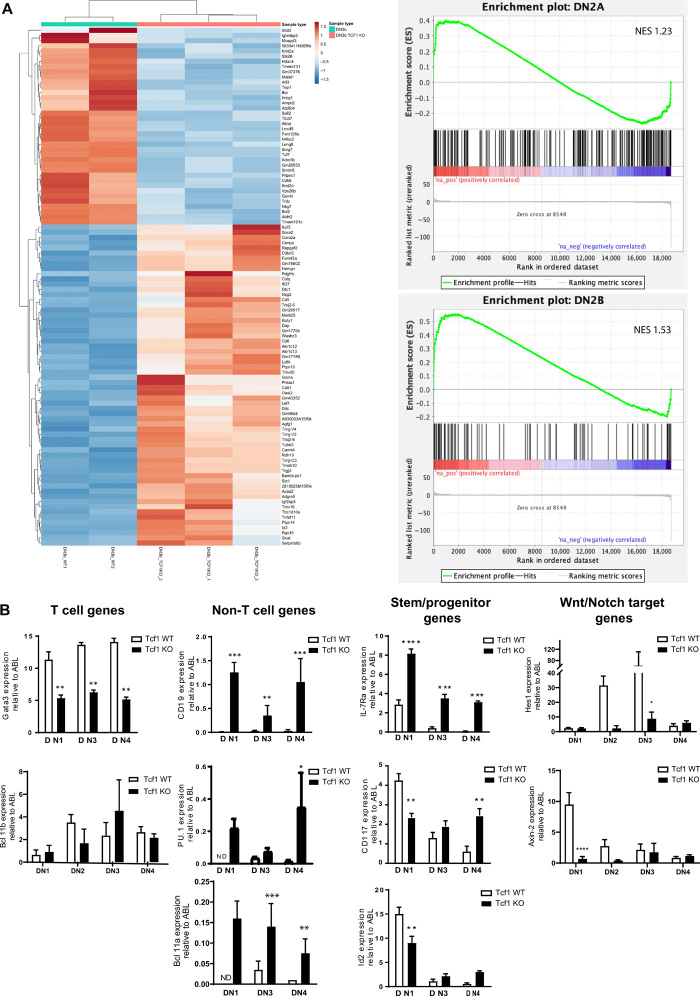
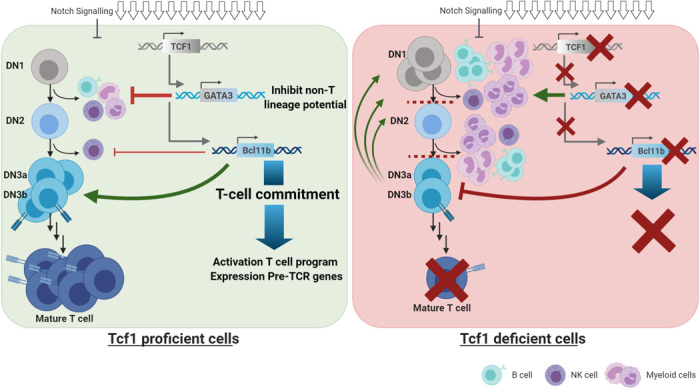
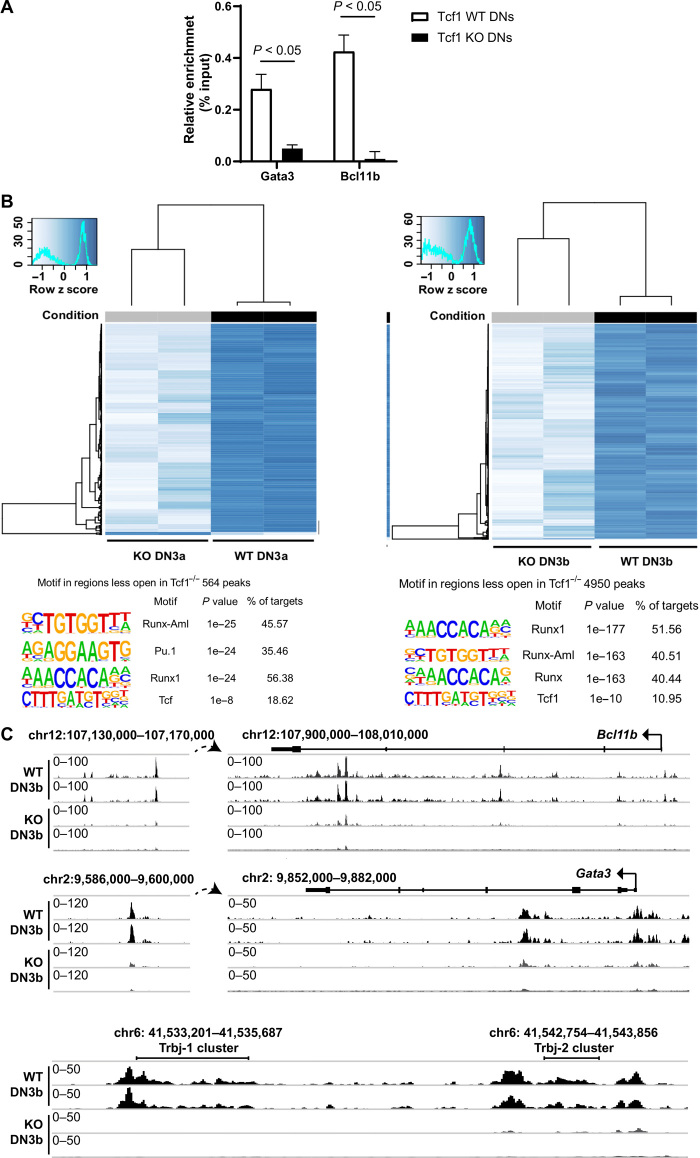
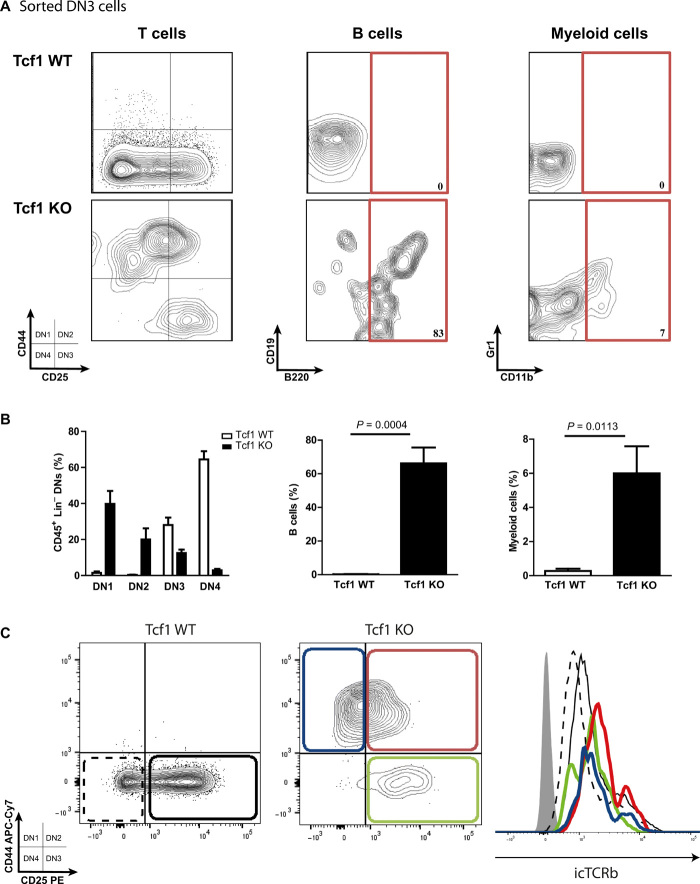
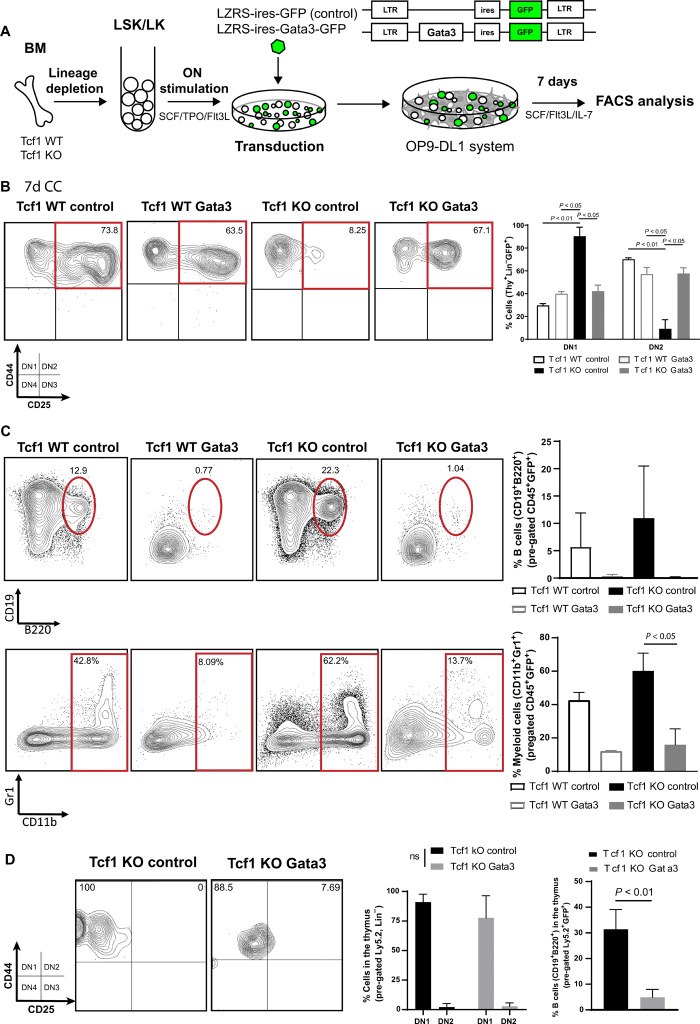
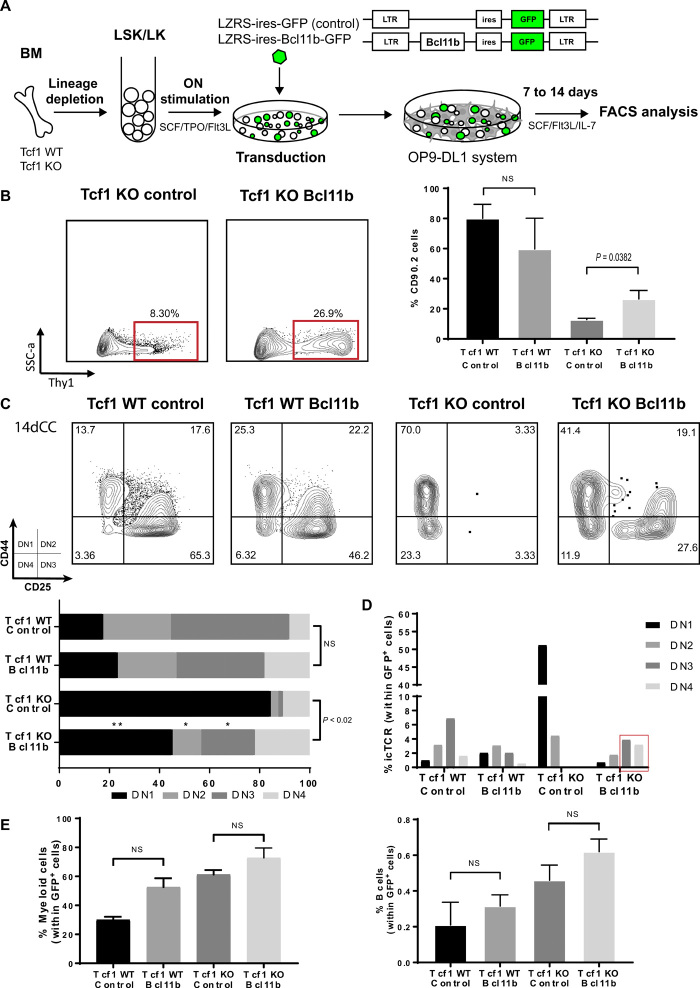
T cell factor 1 (Tcf1) is the first T cell-specific protein induced by Notch signaling in the thymus, leading to the activation of two major target genes, and . Tcf1 deficiency results in partial arrests in T cell development, high apoptosis, and increased development of B and myeloid cells. Phenotypically, seemingly fully T cell-committed thymocytes with Tcf1 deficiency have promiscuous gene expression and an altered epigenetic profile and can dedifferentiate into more immature thymocytes and non-T cells. Restoring Bcl11b expression in Tcf1-deficient cells rescues T cell development but does not strongly suppress the development of non-T cells; in contrast, expressing Gata3 suppresses their development but does not rescue T cell development. Thus, T cell development is controlled by a minimal transcription factor network involving Notch signaling, Tcf1, and the subsequent division of labor between Bcl11b and Gata3, thereby ensuring a properly regulated T cell gene expression program.
T细胞因子1(Tcf1)是胸腺中Notch信号诱导产生的首个T细胞特异性蛋白,可导致两个主要靶基因的激活。Tcf1缺陷会导致T细胞发育部分停滞、高凋亡率以及B细胞和髓系细胞发育增加。从表型上看,看似完全定向于T细胞的Tcf1缺陷胸腺细胞具有混杂的基因表达和改变的表观遗传特征,并且可以去分化为更不成熟的胸腺细胞和非T细胞。在Tcf1缺陷细胞中恢复Bcl11b表达可挽救T细胞发育,但不能强烈抑制非T细胞的发育;相反,表达Gata3可抑制它们的发育,但不能挽救T细胞发育。因此,T细胞发育由一个最小的转录因子网络控制,该网络涉及Notch信号、Tcf1以及随后Bcl11b和Gata3之间的分工,从而确保T细胞基因表达程序得到适当调控。