Department of Biochemistry, Pomeranian Medical University, 70-111 Szczecin, Poland.
Cells. 2020 Aug 11;9(8):1877. doi: 10.3390/cells9081877.
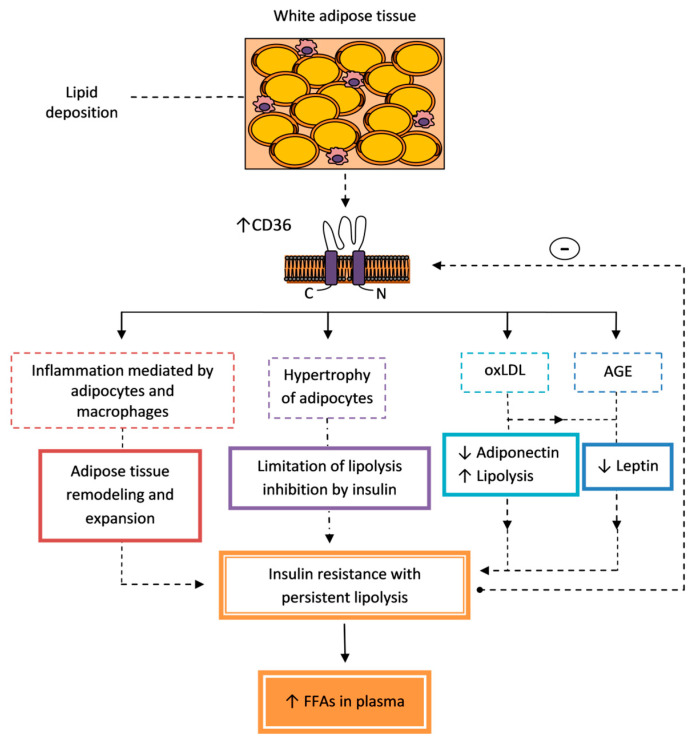
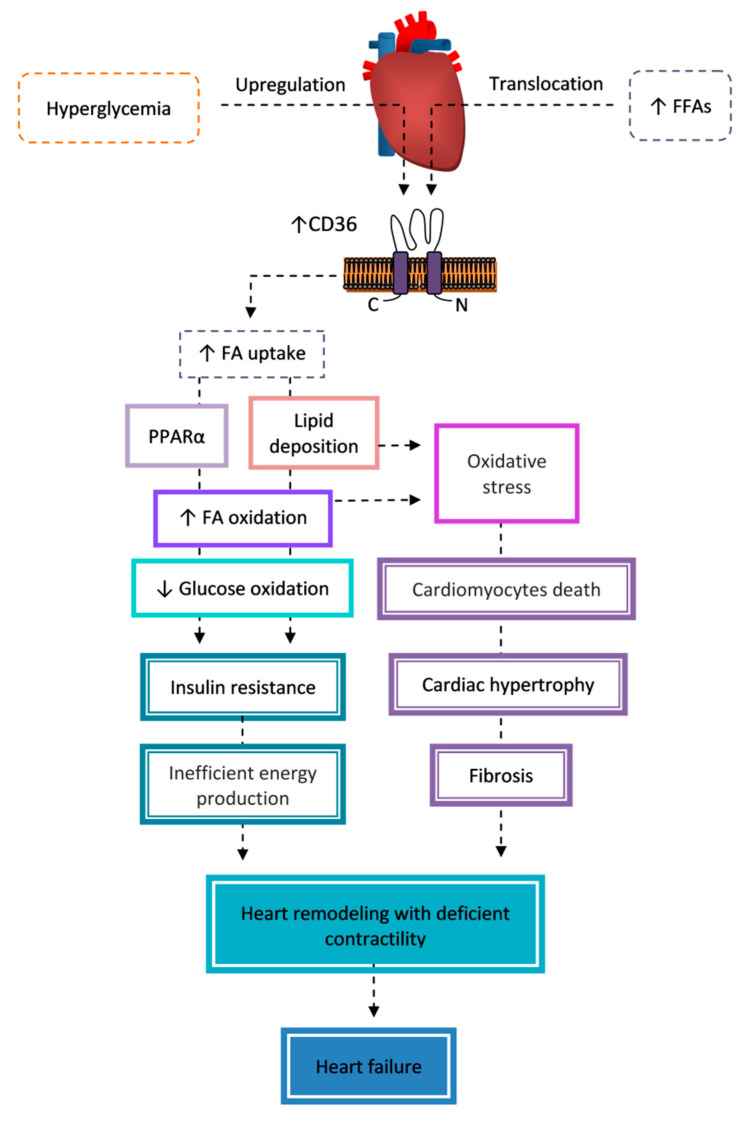
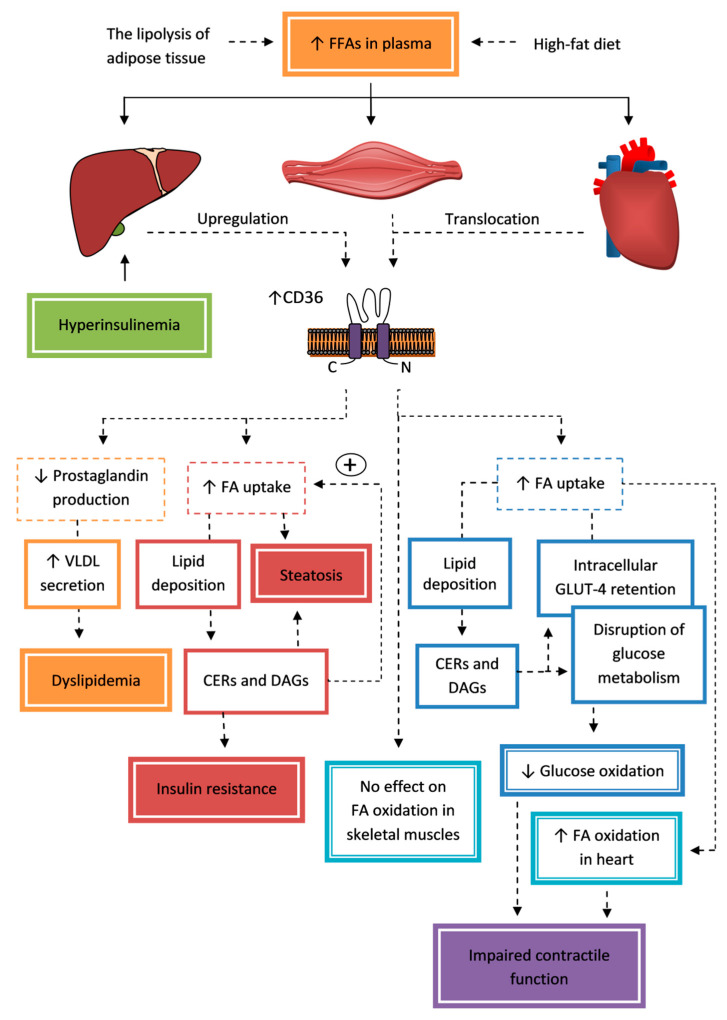
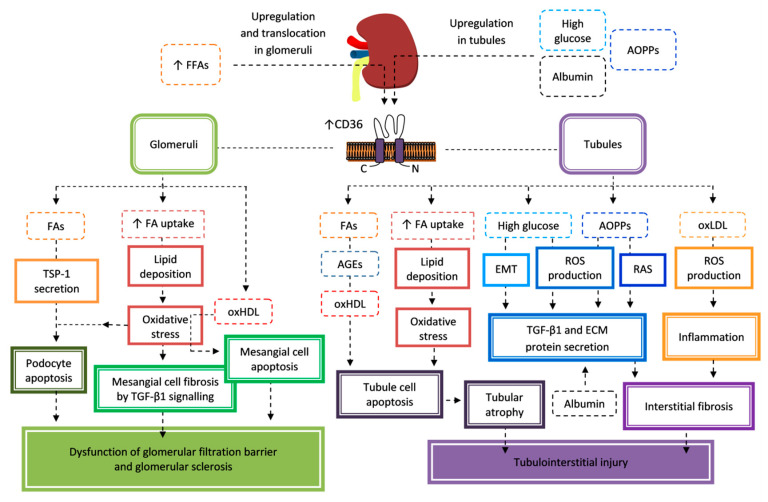
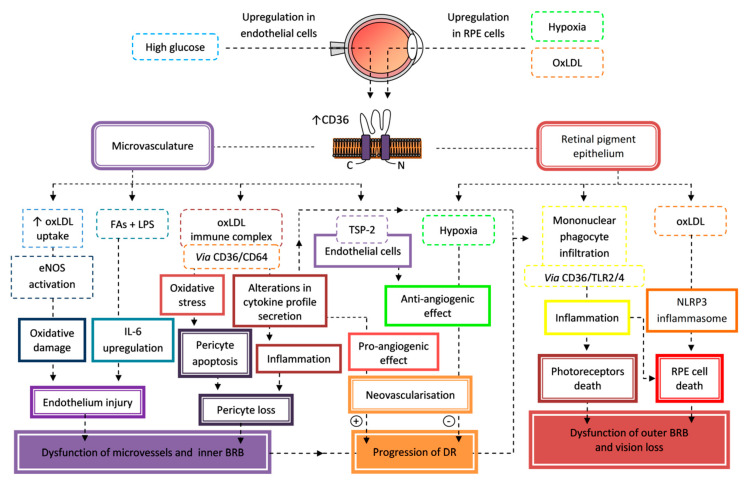
CD36 is a multiligand receptor contributing to glucose and lipid metabolism, immune response, inflammation, thrombosis, and fibrosis. A wide range of tissue expression includes cells sensitive to metabolic abnormalities associated with metabolic syndrome and diabetes mellitus (DM), such as monocytes and macrophages, epithelial cells, adipocytes, hepatocytes, skeletal and cardiac myocytes, pancreatic β-cells, kidney glomeruli and tubules cells, pericytes and pigment epithelium cells of the retina, and Schwann cells. These features make CD36 an important component of the pathogenesis of DM and its complications, but also a promising target in the treatment of these disorders. The detrimental effects of CD36 signaling are mediated by the uptake of fatty acids and modified lipoproteins, deposition of lipids and their lipotoxicity, alterations in insulin response and the utilization of energy substrates, oxidative stress, inflammation, apoptosis, and fibrosis leading to the progressive, often irreversible organ dysfunction. This review summarizes the extensive knowledge of the contribution of CD36 to DM and its complications, including nephropathy, retinopathy, peripheral neuropathy, and cardiomyopathy.
CD36 是一种多配体受体,参与葡萄糖和脂质代谢、免疫反应、炎症、血栓形成和纤维化。其广泛的组织表达包括对与代谢综合征和糖尿病(DM)相关的代谢异常敏感的细胞,如单核细胞和巨噬细胞、上皮细胞、脂肪细胞、肝细胞、骨骼肌和心肌细胞、胰腺β细胞、肾脏肾小球和肾小管细胞、周细胞和视网膜色素上皮细胞以及雪旺细胞。这些特征使 CD36 成为 DM 及其并发症发病机制的重要组成部分,但也是治疗这些疾病的有前途的靶点。CD36 信号的有害作用是通过摄取脂肪酸和修饰的脂蛋白、脂质沉积及其脂毒性、胰岛素反应和能量底物利用的改变、氧化应激、炎症、细胞凋亡和纤维化来介导的,导致进行性的、常常是不可逆的器官功能障碍。这篇综述总结了 CD36 对 DM 及其并发症的广泛认识,包括肾病、视网膜病变、周围神经病变和心肌病。