Cocio Tiago A, Nascimento Erika, von Zeska Kress Marcia R, Bagagli Eduardo, Martinez Roberto
Department of Internal Medicine, Ribeirão Preto Medical School, University of São Paulo, São Paulo, Ribeirão Preto 14049-900, Brazil.
Department of Clinical Analyses, Toxicology and Food Science, School of Pharmaceutical Sciences of Ribeirão Preto, University of São Paulo, São Paulo, Ribeirão Preto 14040-903, Brazil.
J Fungi (Basel). 2020 Aug 11;6(3):132. doi: 10.3390/jof6030132.
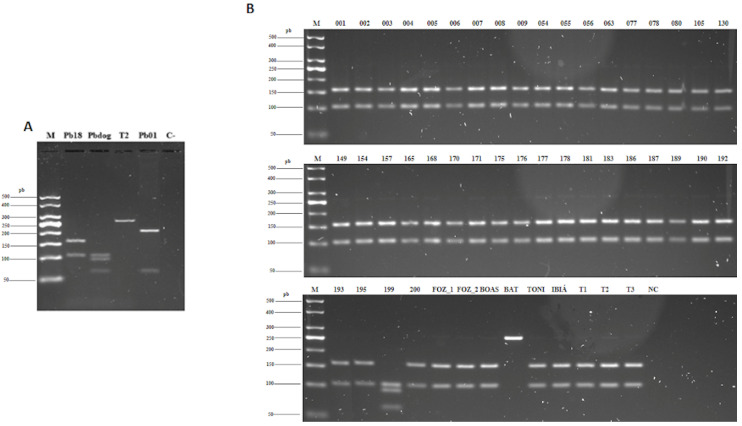
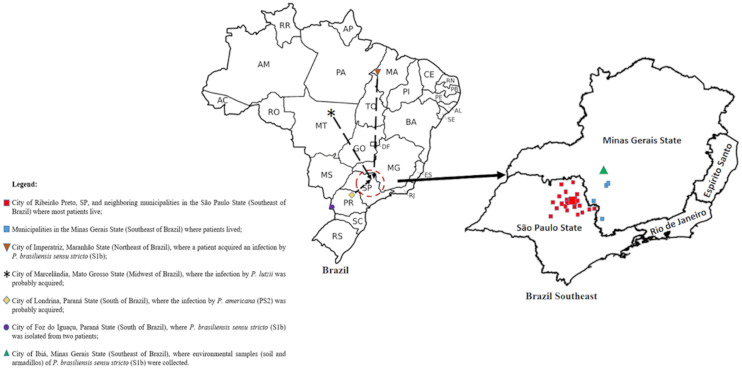
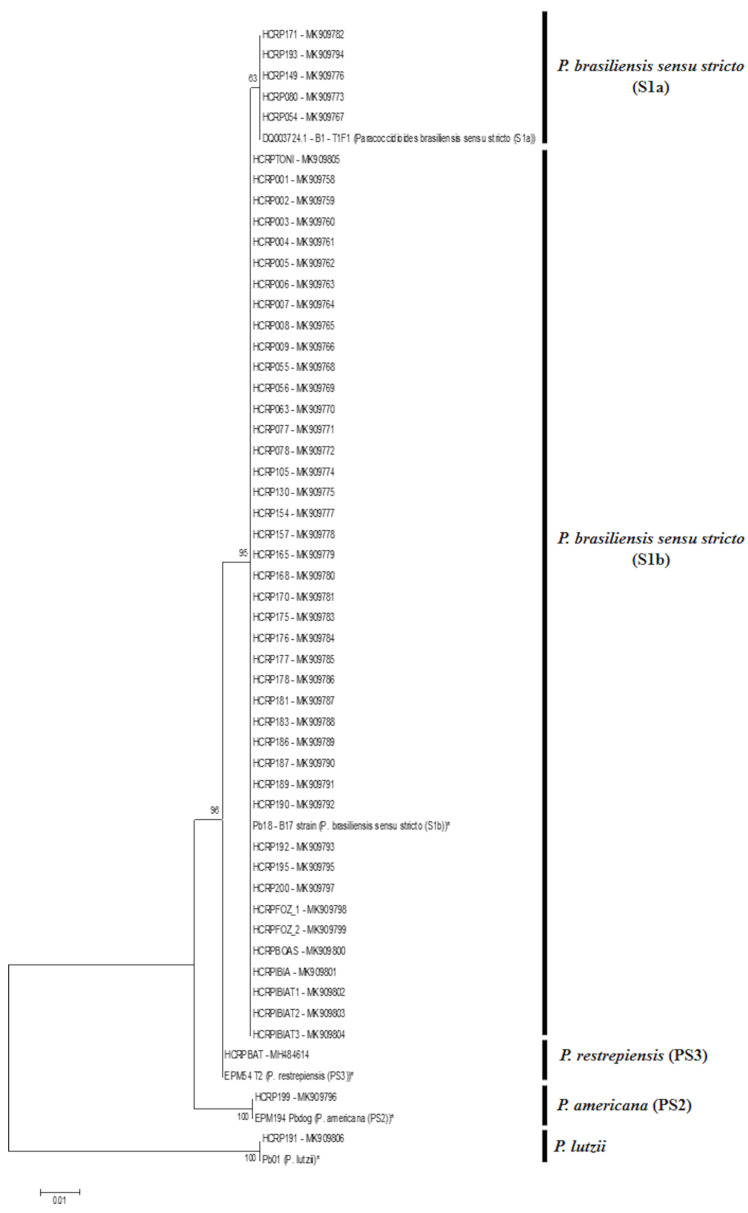
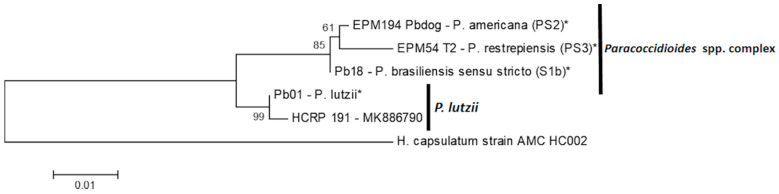
complex and are the etiological agents of paracoccidioidomycosis. The geographic distribution of these species in South America is still poorly comprehended. Fifty samples of spp. were genotyped, with 46 clinical isolates predominantly isolated in the geographic area of Ribeirão Preto, SP, and four environmental isolates collected in Ibiá, MG, southeastern Brazil. These isolates were evaluated by PCR-RFLP (Restriction Fragment Length Polymorphism) of the 1 gene and the sequencing of the exon 2 loci. The species was confirmed by sequencing the internal transcribed spacer (ITS) region of the ribosomal DNA. S1b ( = 42) and S1a ( = 5), ( = 1), ( = 1), and ( = 1) were identified among the clinical isolates. All the environmental isolates were characterized as S1b. The patient infection by , (PS2), and one isolate of S1b most likely occurred in a geographic area far from the fungal isolation site. No association was found between the infecting genotype and the disease form. These results expand the knowledge of the species distribution and emphasize that human migration must also be considered to pinpoint the genotypes in the endemic area.
复杂菌属和副球孢子菌属是副球孢子菌病的病原体。这些菌种在南美洲的地理分布仍未得到充分了解。对50份副球孢子菌属样本进行了基因分型,其中46份临床分离株主要来自圣保罗州里贝朗普雷图地区,4份环境分离株采自巴西东南部米纳斯吉拉斯州伊比亚。通过对1基因进行PCR-RFLP(限制性片段长度多态性)分析以及对2号外显子位点进行测序来评估这些分离株。通过对核糖体DNA的内部转录间隔区(ITS)进行测序来确认菌种。在临床分离株中鉴定出S1b(n = 42)、S1a(n = 5)、副球孢子菌(n = 1)、巴西副球孢子菌(n = 1)和申克孢子丝菌(n = 1)。所有环境分离株均被鉴定为副球孢子菌S1b。副球孢子菌、巴西副球孢子菌(PS2)以及1株副球孢子菌S1b感染患者的情况很可能发生在远离真菌分离地点的地理区域。未发现感染基因型与疾病形式之间存在关联。这些结果扩展了对副球孢子菌属菌种分布的认识,并强调在确定流行地区的基因型时还必须考虑人类迁移因素。