Department of Biological Sciences and The RNA Institute, University at Albany, State University of New York, 1400 Washington Avenue, Albany, NY 12222, USA.
Genome Integrity & Structural Biology Laboratory and Immunity, Inflammation and Disease Laboratory, National Institute of Environmental Health Sciences/National Institutes of Health, 111 TW Alexander Drive, Research Triangle Park, NC 27709, USA.
Nucleic Acids Res. 2020 Sep 18;48(16):8848-8869. doi: 10.1093/nar/gkaa666.
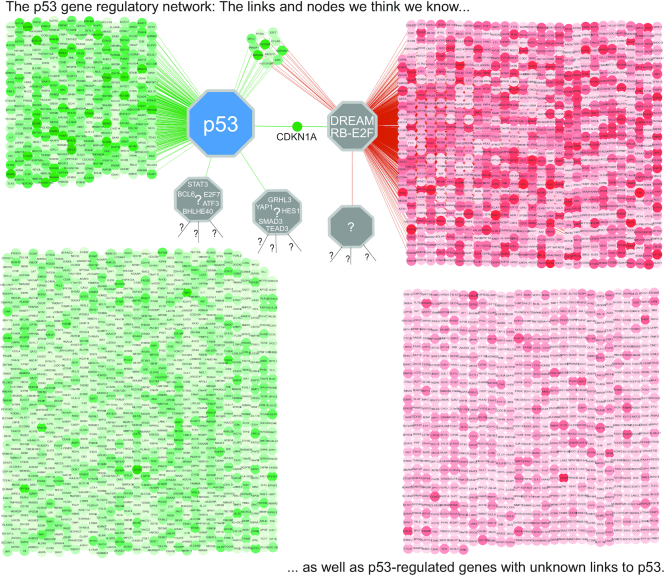
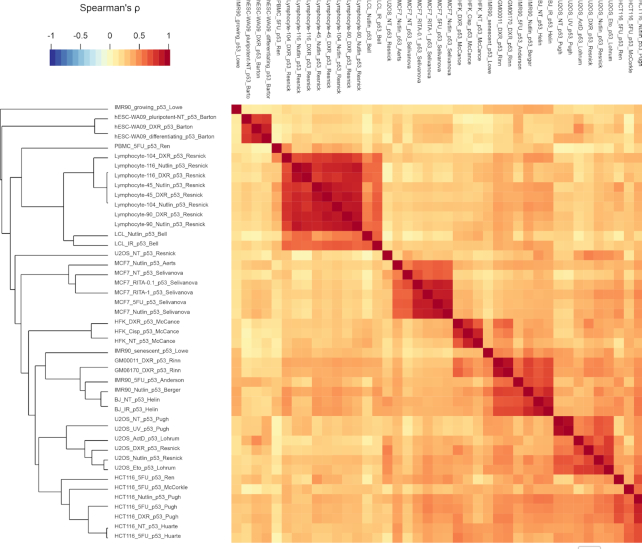
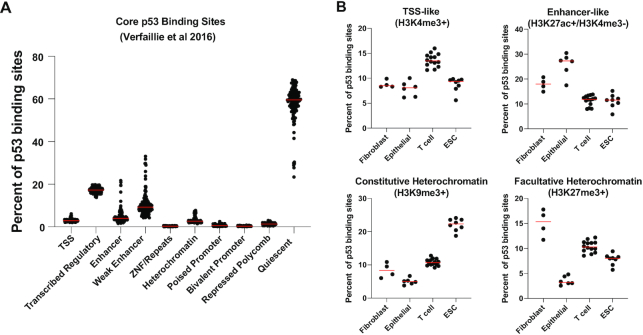
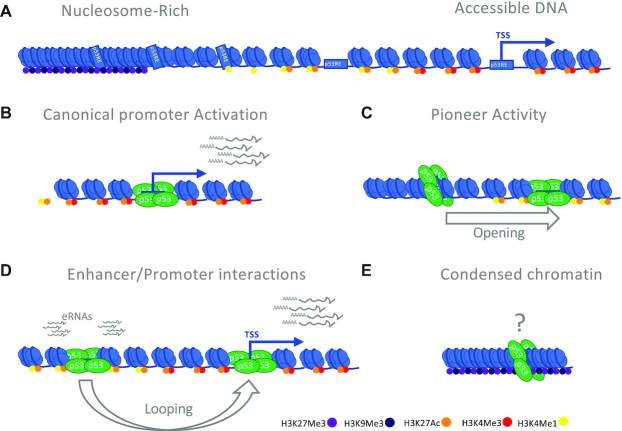
The p53 transcription factor confers its potent tumor suppressor functions primarily through the regulation of a large network of target genes. The recent explosion of next generation sequencing protocols has enabled the study of the p53 gene regulatory network (GRN) and underlying mechanisms at an unprecedented depth and scale, helping us to understand precisely how p53 controls gene regulation. Here, we discuss our current understanding of where and how p53 binds to DNA and chromatin, its pioneer-like role, and how this affects gene regulation. We provide an overview of the p53 GRN and the direct and indirect mechanisms through which p53 affects gene regulation. In particular, we focus on delineating the ubiquitous and cell type-specific network of regulatory elements that p53 engages; reviewing our understanding of how, where, and when p53 binds to DNA and the mechanisms through which these events regulate transcription. Finally, we discuss the evolution of the p53 GRN and how recent work has revealed remarkable differences between vertebrates, which are of particular importance to cancer researchers using mouse models.
p53 转录因子主要通过调节大量靶基因网络来发挥其强大的肿瘤抑制功能。最近新一代测序技术的飞速发展,使我们能够以前所未有的深度和规模研究 p53 基因调控网络(GRN)及其潜在机制,从而帮助我们准确理解 p53 如何控制基因调控。在这里,我们讨论了我们目前对 p53 与 DNA 和染色质结合的位置和方式、其先驱样作用以及这如何影响基因调控的理解。我们概述了 p53 GRN 以及 p53 影响基因调控的直接和间接机制。特别是,我们专注于描绘 p53 涉及的普遍存在和细胞类型特异性的调控元件网络;回顾我们对 p53 与 DNA 结合的位置、方式和时间的理解,以及这些事件调节转录的机制。最后,我们讨论了 p53 GRN 的进化,以及最近的工作如何揭示了脊椎动物之间的显著差异,这对使用小鼠模型的癌症研究人员尤为重要。