Samset B H, Sand M, Smith C J, Bauer S E, Forster P M, Fuglestvedt J S, Osprey S, Schleussner C-F
CICERO Center for International Climate and Environmental Research, Oslo, Norway.
School of Earth and Environment, University of Leeds, Leeds, UK.
Geophys Res Lett. 2018 Jan 28;45(2):1020-1029. doi: 10.1002/2017GL076079. Epub 2018 Jan 8.
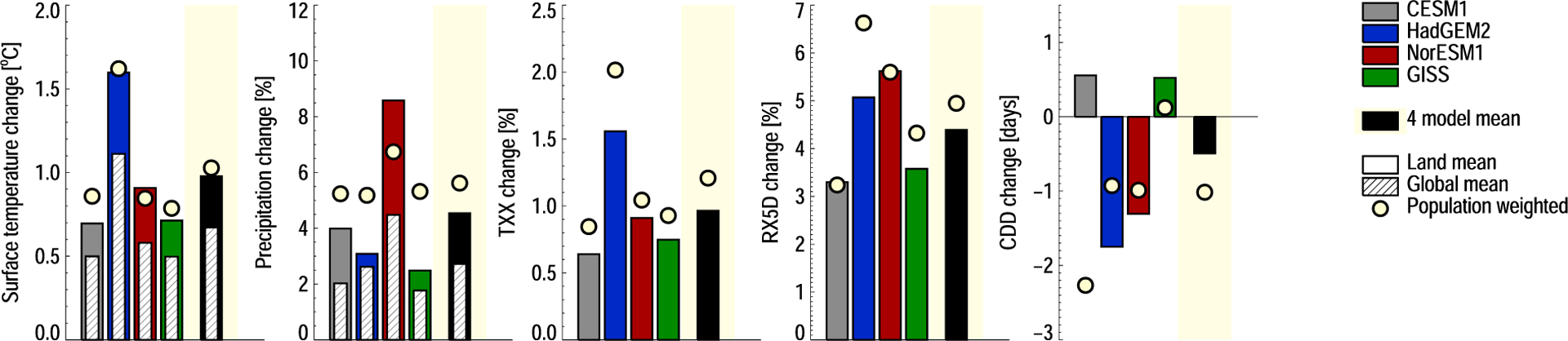
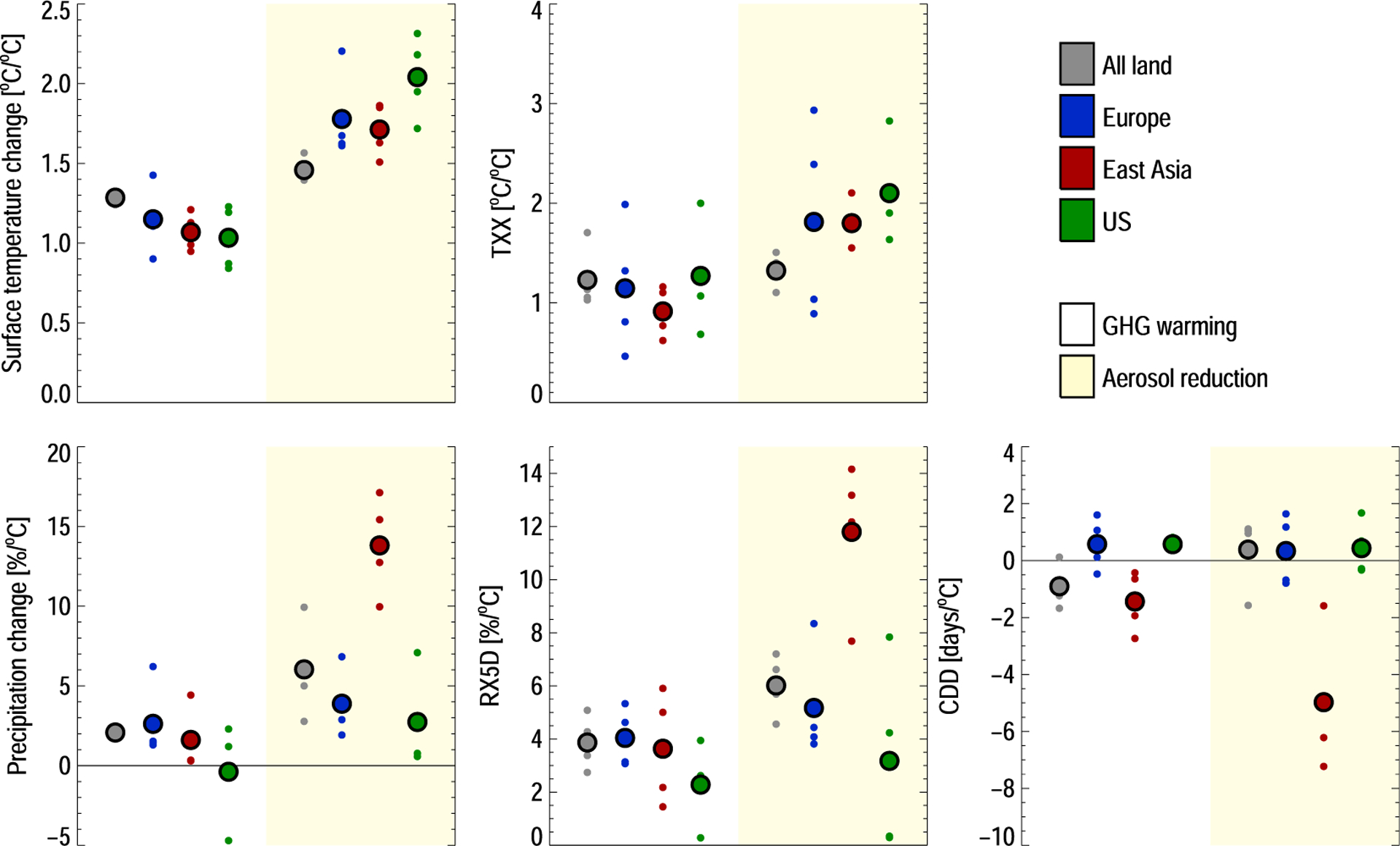
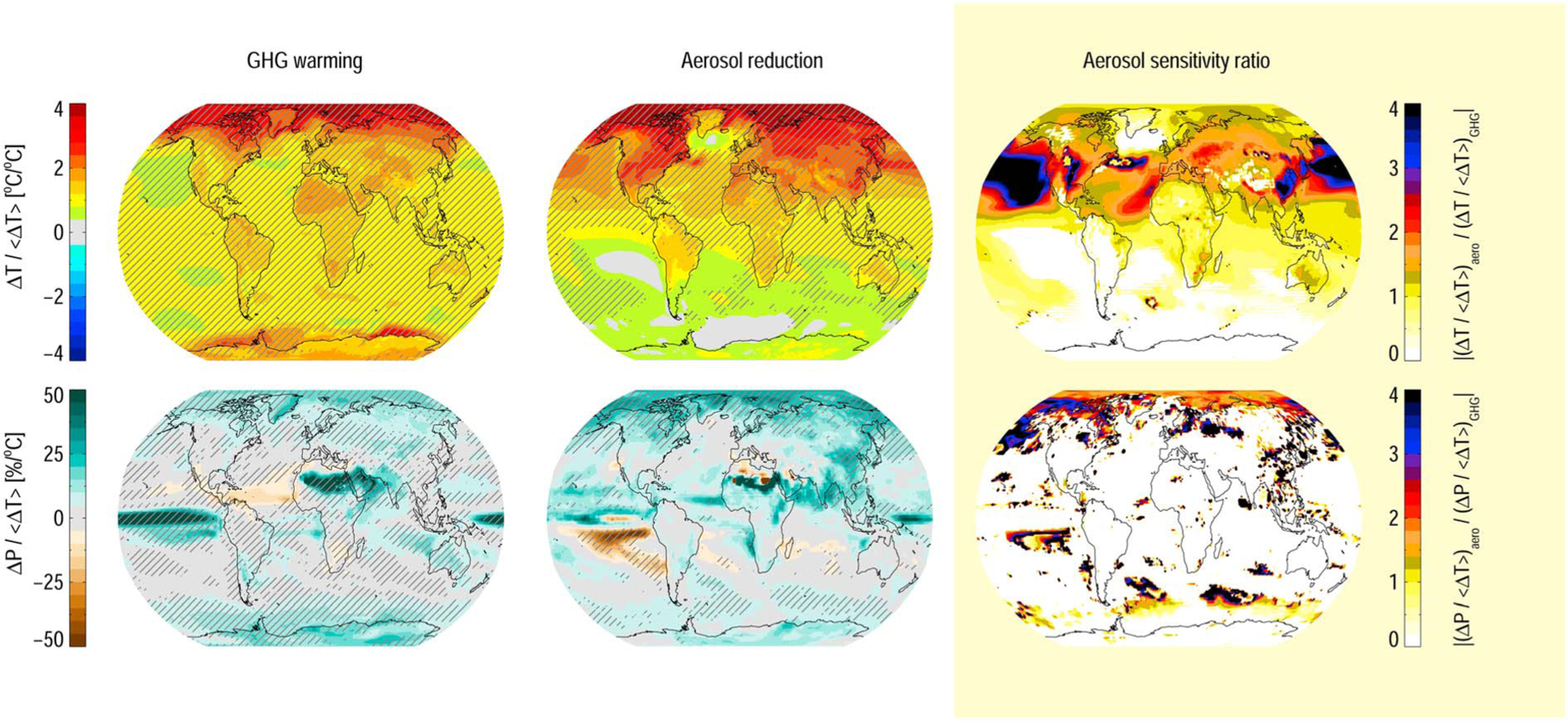
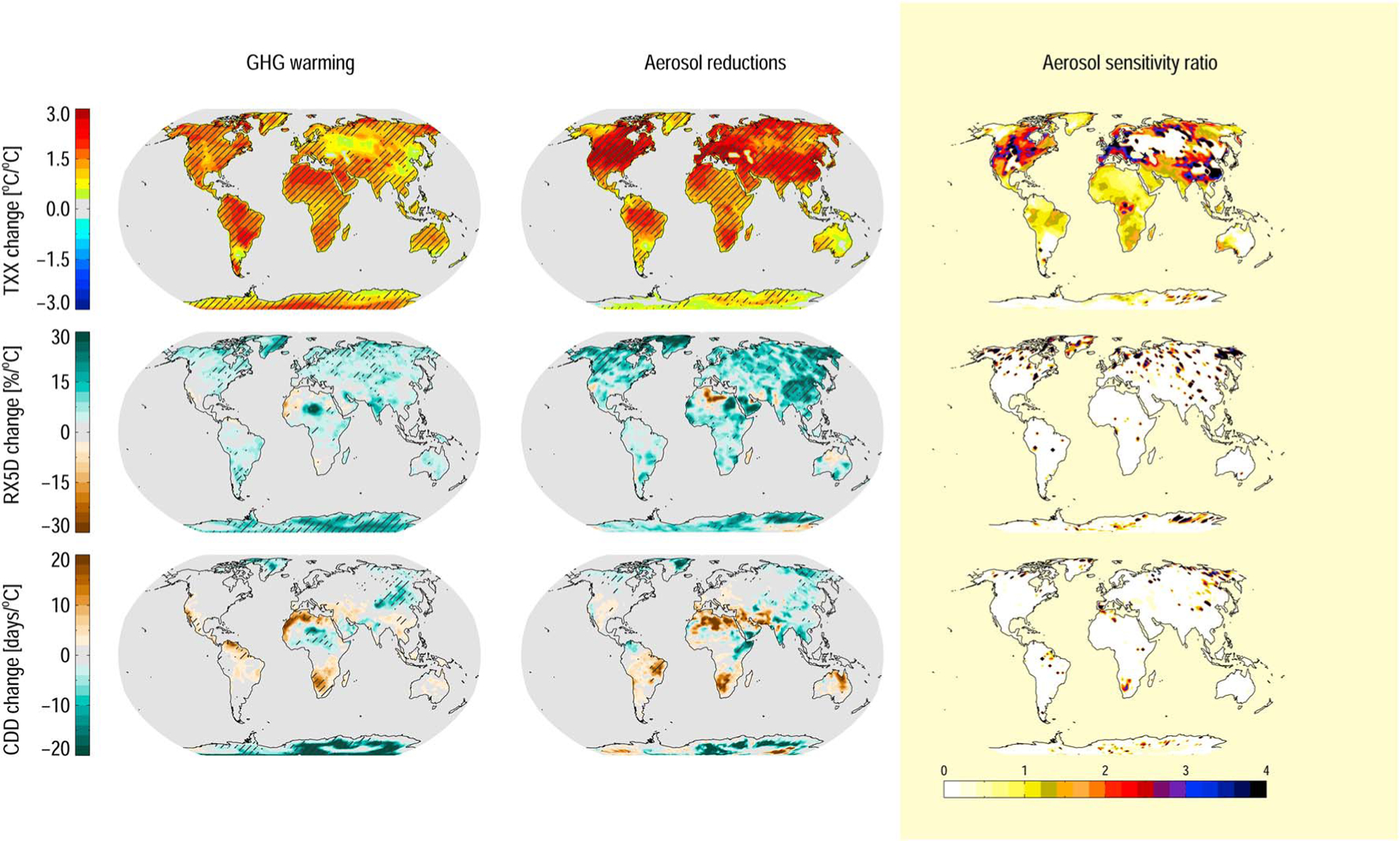
Limiting global warming to 1.5 or 2.0°C requires strong mitigation of anthropogenic greenhouse gas (GHG) emissions. Concurrently, emissions of anthropogenic aerosols will decline, due to coemission with GHG, and measures to improve air quality. However, the combined climate effect of GHG and aerosol emissions over the industrial era is poorly constrained. Here we show the climate impacts from removing present-day anthropogenic aerosol emissions and compare them to the impacts from moderate GHG-dominated global warming. Removing aerosols induces a global mean surface heating of 0.5-1.1°C, and precipitation increase of 2.0-4.6%. Extreme weather indices also increase. We find a higher sensitivity of extreme events to aerosol reductions, per degree of surface warming, in particular over the major aerosol emission regions. Under near-term warming, we find that regional climate change will depend strongly on the balance between aerosol and GHG forcing.
将全球变暖限制在1.5或2.0°C需要大力减少人为温室气体(GHG)排放。同时,由于与温室气体的共同排放以及改善空气质量的措施,人为气溶胶的排放将会下降。然而,工业时代温室气体和气溶胶排放对气候的综合影响仍存在很大的不确定性。在此,我们展示了去除当前人为气溶胶排放对气候的影响,并将其与以温室气体为主导的适度全球变暖的影响进行比较。去除气溶胶会导致全球平均地表升温0.5-1.1°C,降水量增加2.0-4.6%。极端天气指数也会增加。我们发现,每升温1度,极端事件对气溶胶减少的敏感性更高,特别是在主要气溶胶排放区域。在近期变暖的情况下,我们发现区域气候变化将强烈取决于气溶胶和温室气体强迫之间的平衡。