College of Pharmacy and Research Institute of Pharmaceutical Sciences, Gyeongsang National University, Jinju, Gyeongnam 52828, Republic of Korea.
College of Pharmacy and Inje Institute of Pharmaceutical Sciences and Research, Inje University, Gimhae, Gyeongnam 50834, Republic of Korea.
Int J Nanomedicine. 2020 Jul 31;15:5459-5471. doi: 10.2147/IJN.S255874. eCollection 2020.
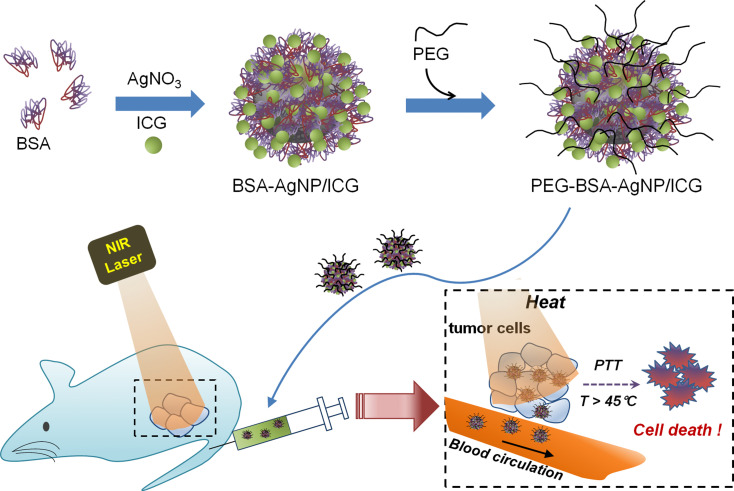
Indocyanine green (ICG), a near infrared (NIR) dye clinically approved in medical diagnostics, possesses great heat conversion efficiency, which renders itself as an effective photosensitizer for photothermal therapy (PTT) of cancer. However, there remain bottleneck challenges for use in PTT, which are the poor photo and plasma stability of ICG. To address these problems, in this research, ICG-loaded silver nanoparticles were prepared and evaluated for the applicability as an effective agent for photothermal cancer therapy.
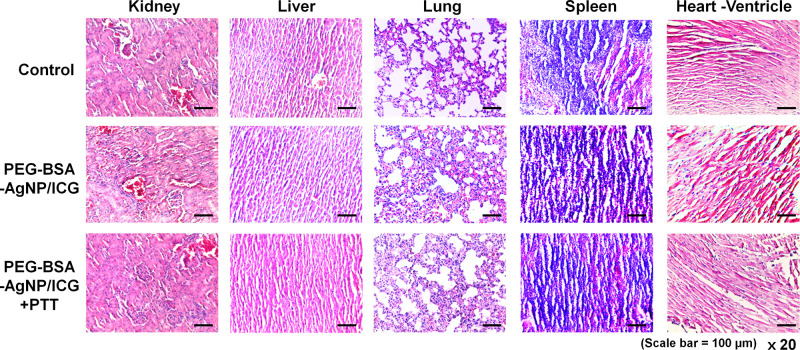
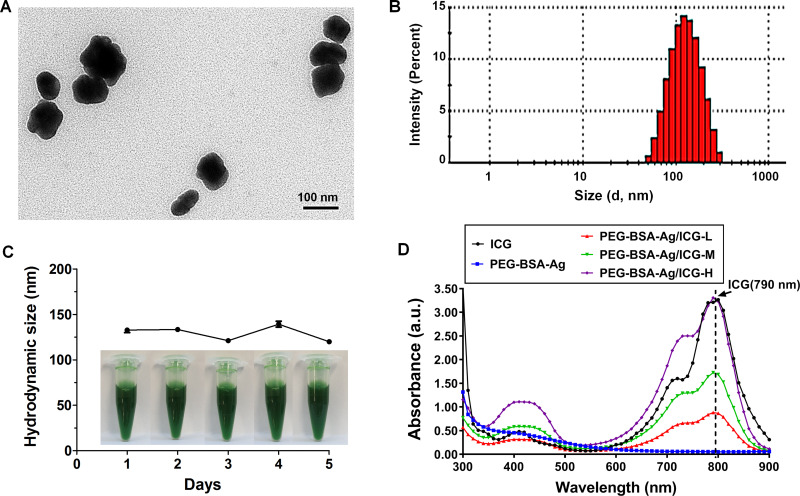
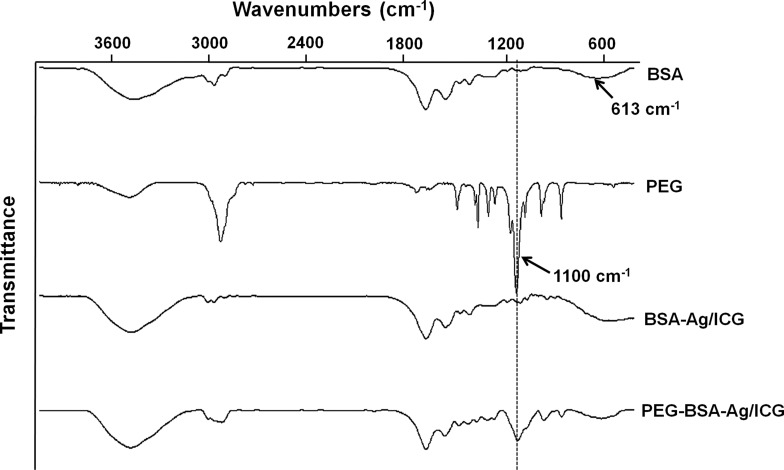
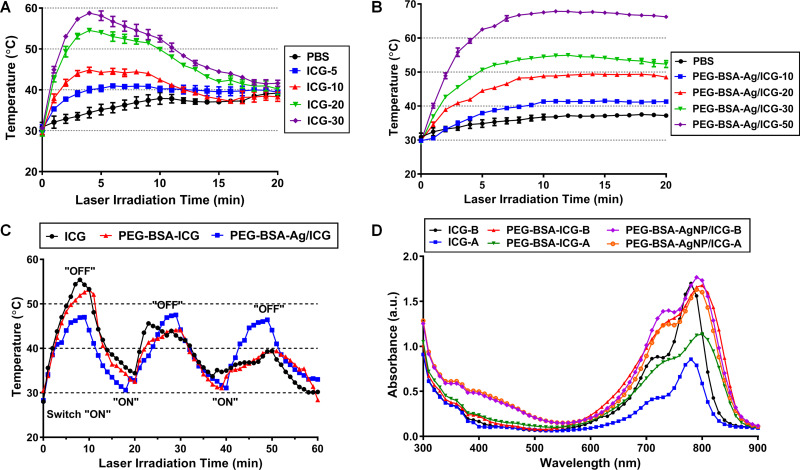
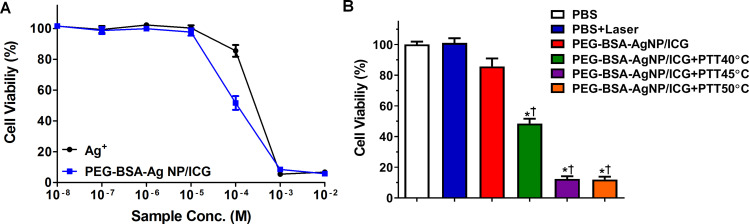
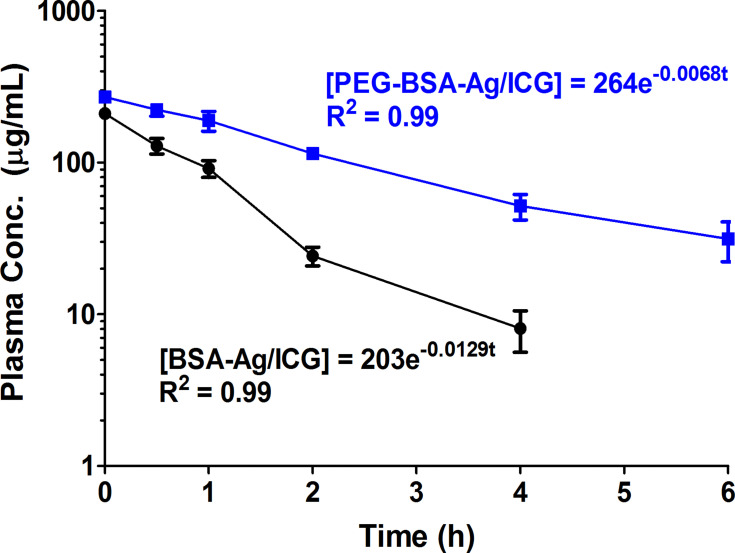
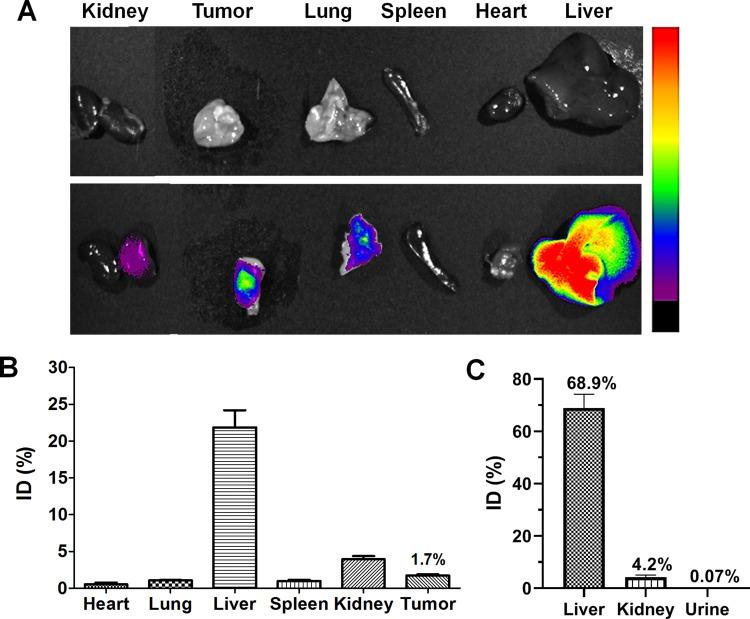
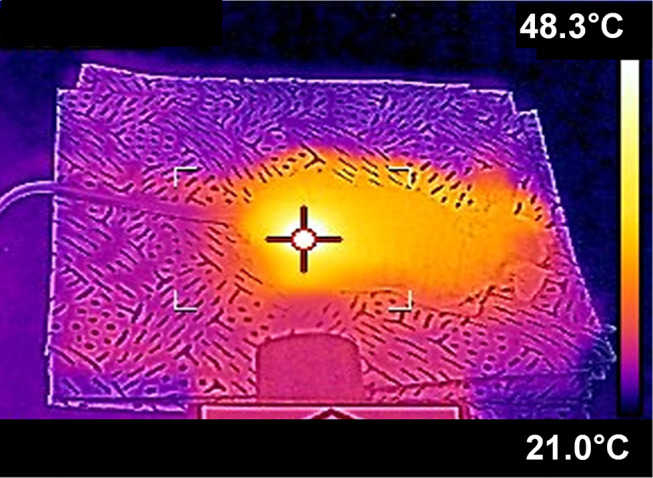
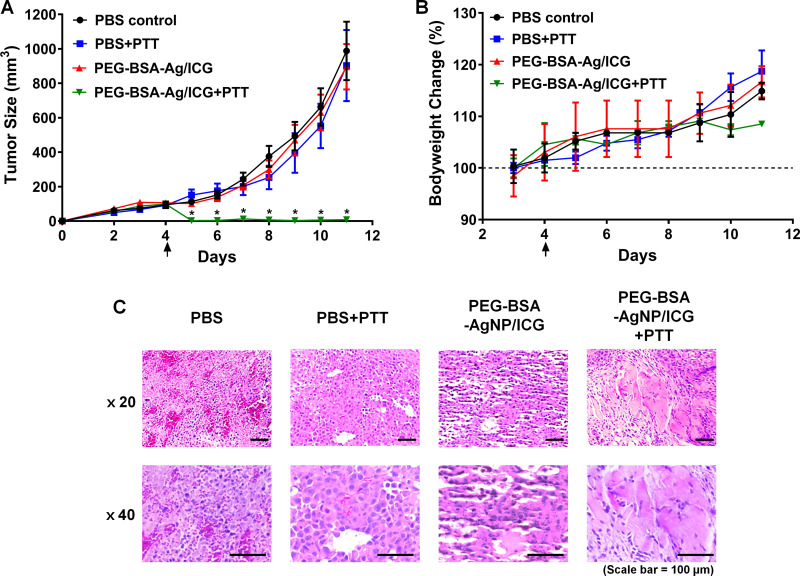
PEGylated bovine serum albumin (BSA)-coated silver core/shell nanoparticles were synthesized with a high loading of ICG ("PEG-BSA-AgNP/ICG"). Physical characterization was carried out using size analyzer, transmission electron microscopy, and Fourier transform infrared spectrophotometry to identify successful preparation and size stability. ICG-loading content and the photothermal conversion efficiency of the particles were confirmed with inductively coupled plasma mass spectrometry and laser instruments. In vitro studies showed that the PEG-BSA-AgNP/ICG could provide great photostability for ICG, and their applicability for PTT was verified from the cellular study results. Furthermore, when the PEG-BSA-AgNP/ICG were tested in vivo, study results exhibited that ICG could stably remain in the blood circulation for a markedly long period (plasma half-life: 112 min), and about 1.7% ID/g tissue could be accumulated in the tumor tissue at 4 h post-injection. Such nanoparticle accumulation in the tumor enabled tumor surface temperature to be risen to 50°C (required for photo-ablation) by laser irradiation and led to successful inhibition of tumor growth in the B16F10 s.c. syngeneic nude mice model, with minimal systemic toxicity.
Our findings demonstrated that PEG-BSA-AgNPs could serve as effective carriers for delivering ICG to the tumor tissue with great stability and safety.
吲哚菁绿(ICG)是一种临床批准用于医学诊断的近红外(NIR)染料,具有很高的热转换效率,可作为光热治疗(PTT)癌症的有效光敏剂。然而,ICG 在 PTT 中的应用仍存在瓶颈挑战,即 ICG 的光和等离子体稳定性差。为了解决这些问题,本研究制备了负载 ICG 的银纳米粒子,并评估了其作为光热癌症治疗有效试剂的适用性。
采用高负载量 ICG(“PEG-BSA-AgNP/ICG”)合成了聚乙二醇化牛血清白蛋白(BSA)包覆的银核/壳纳米粒子。使用粒径分析仪、透射电子显微镜和傅里叶变换红外光谱对其进行物理特性表征,以鉴定成功的制备和尺寸稳定性。通过电感耦合等离子体质谱和激光仪器确定 ICG 的载药量和光热转换效率。体外研究表明,PEG-BSA-AgNP/ICG 可为 ICG 提供出色的光稳定性,从细胞研究结果验证了其在 PTT 中的适用性。此外,当在体内测试 PEG-BSA-AgNP/ICG 时,研究结果表明 ICG 能够在血液循环中稳定地长时间保留(血浆半衰期:112 分钟),并且在注射后 4 小时,约 1.7%ID/g 组织可在肿瘤组织中积累。这种纳米粒子在肿瘤中的积累使肿瘤表面温度能够通过激光照射升高到 50°C(光消融所需),并导致 B16F10 皮下同源裸鼠模型中的肿瘤生长成功抑制,同时具有最小的全身毒性。
我们的研究结果表明,PEG-BSA-AgNPs 可以作为将 ICG 递送至肿瘤组织的有效载体,具有很高的稳定性和安全性。