Ha Bui Thi Thu, Pham Van Tac, Mirzoev Tolib
Hanoi University of Public Health, Hanoi, Vietnam.
Department of Manpower, Ministry of Health, Hanoi, Vietnam.
Risk Manag Healthc Policy. 2020 Jul 30;13:915-926. doi: 10.2147/RMHP.S250748. eCollection 2020.
There is increasing interest in the understanding of key influences over successful implementation of health policies within ever-changing contexts of national health systems. The epidemiological transition in Vietnam, combined with an urgent need for improving efficiency of the national health system under the government's administrative reforms, form important facilitators of restructuring the public health system. This paper explored the implementation processes of policy on establishment of the Centers for Diseases Control (CDC) in Vietnam during 2016-2019.
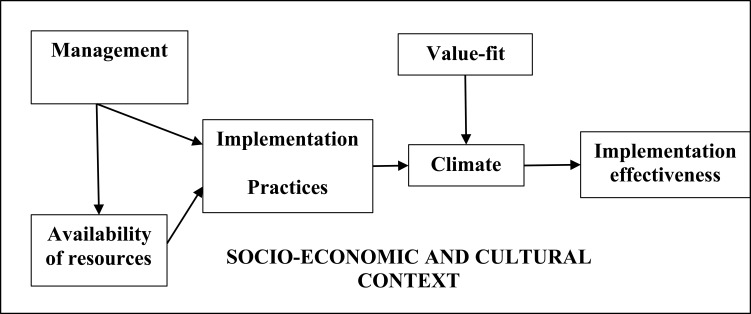
The study employed a cross-sectional and mixed methods design. Staff surveys were collected at 55 out of 63 provinces and in-depth interviews, focus groups were conducted in three purposefully selected provinces. Quantitative data were analysed using descriptive statistics and qualitative data were analyzed thematically. The innovation implementation framework guided the study.
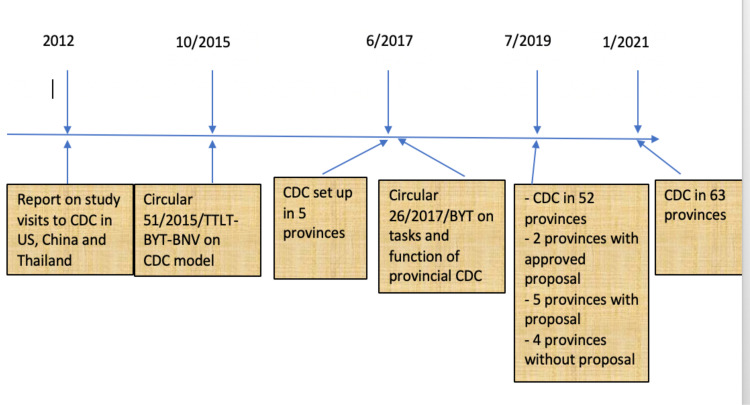
After 3 years of introduction, 82.5% of provinces had established the CDCs. Implementation of CDC establishment policy was influenced by 1) management support; 2) alignment between policy and practice; 3) values towards CDC,; and 4) implementation climate. Other external key influencers included political, social, and cultural factors.
Our study provides a framework and evidence to guide future inquiry into the factors that affect the relationship between policy implementation and other contextual factors in healthcare organizations.
在国家卫生系统不断变化的背景下,人们越来越关注对影响卫生政策成功实施的关键因素的理解。越南的流行病学转变,加上政府行政改革中提高国家卫生系统效率的迫切需求,构成了公共卫生系统重组的重要推动因素。本文探讨了2016 - 2019年越南疾病控制中心(CDC)设立政策的实施过程。
本研究采用横断面和混合方法设计。在63个省份中的55个省份进行了员工调查,并在三个有目的选择的省份进行了深入访谈和焦点小组讨论。定量数据采用描述性统计分析,定性数据采用主题分析。创新实施框架指导了本研究。
经过3年的推行,82.5%的省份设立了疾病控制中心。疾病控制中心设立政策的实施受到以下因素影响:1)管理支持;2)政策与实践的一致性;3)对疾病控制中心的价值观;4)实施氛围。其他外部关键影响因素包括政治、社会和文化因素。
我们的研究提供了一个框架和证据,以指导未来对影响医疗组织中政策实施与其他背景因素之间关系的因素的探究。