Guangdong Engineering Research Center of Chinese Medicine & Disease Susceptibility, Jinan University, Guangzhou 510632, China.
International Cooperative Laboratory of Traditional Chinese Medicine Modernization and Innovative Drug Development of Chinese Ministry of Education (MOE), College of Pharmacy, Jinan University, Guangzhou 510632, China.
Theranostics. 2020 Jul 11;10(20):9032-9049. doi: 10.7150/thno.46921. eCollection 2020.
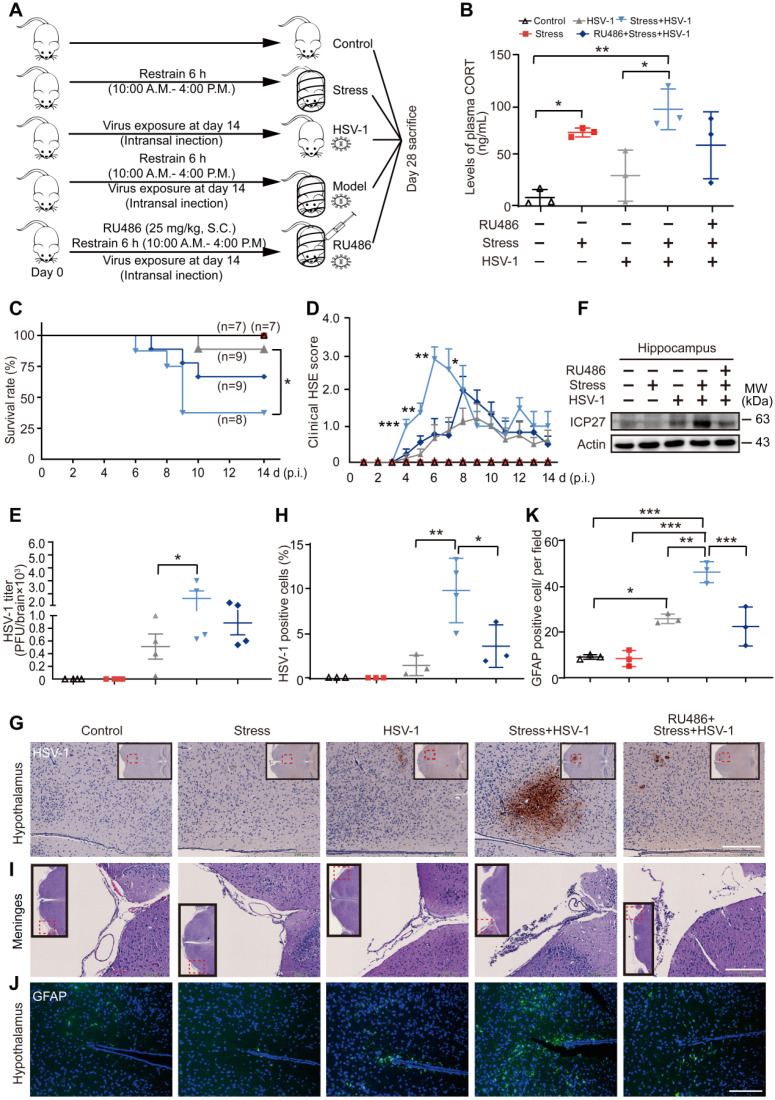
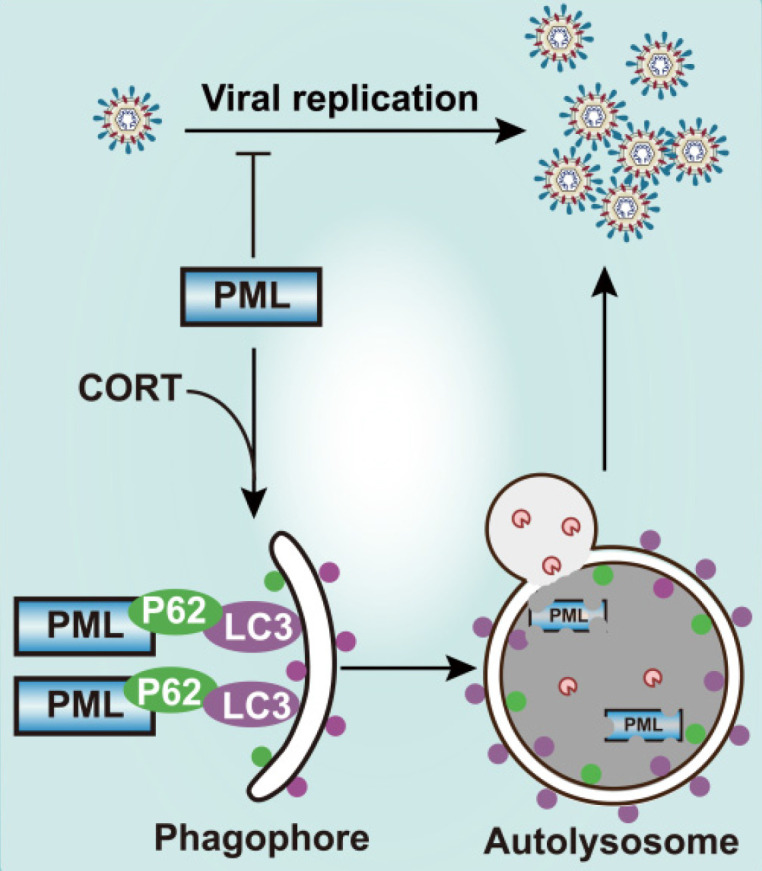
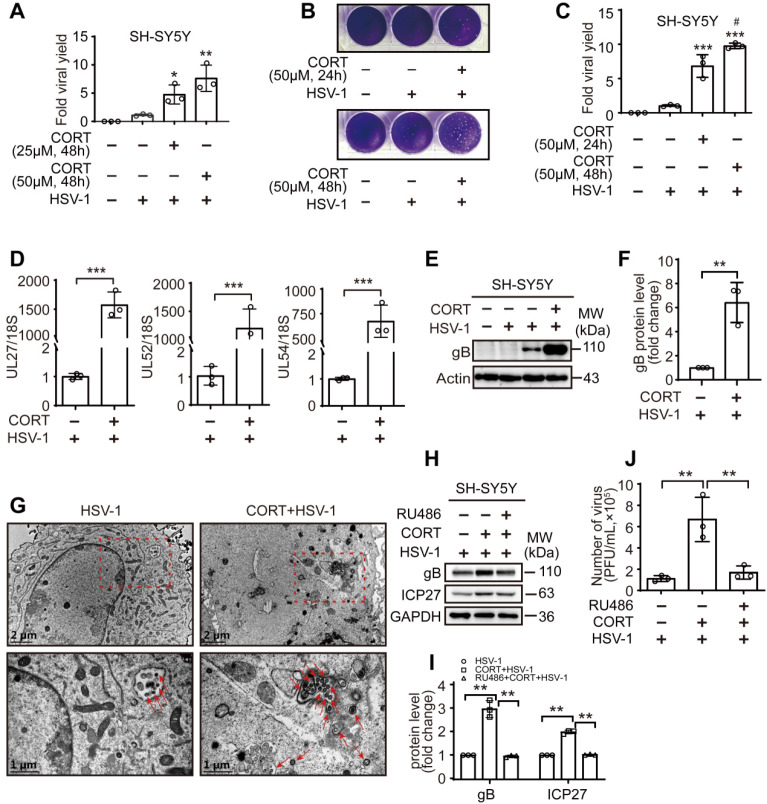
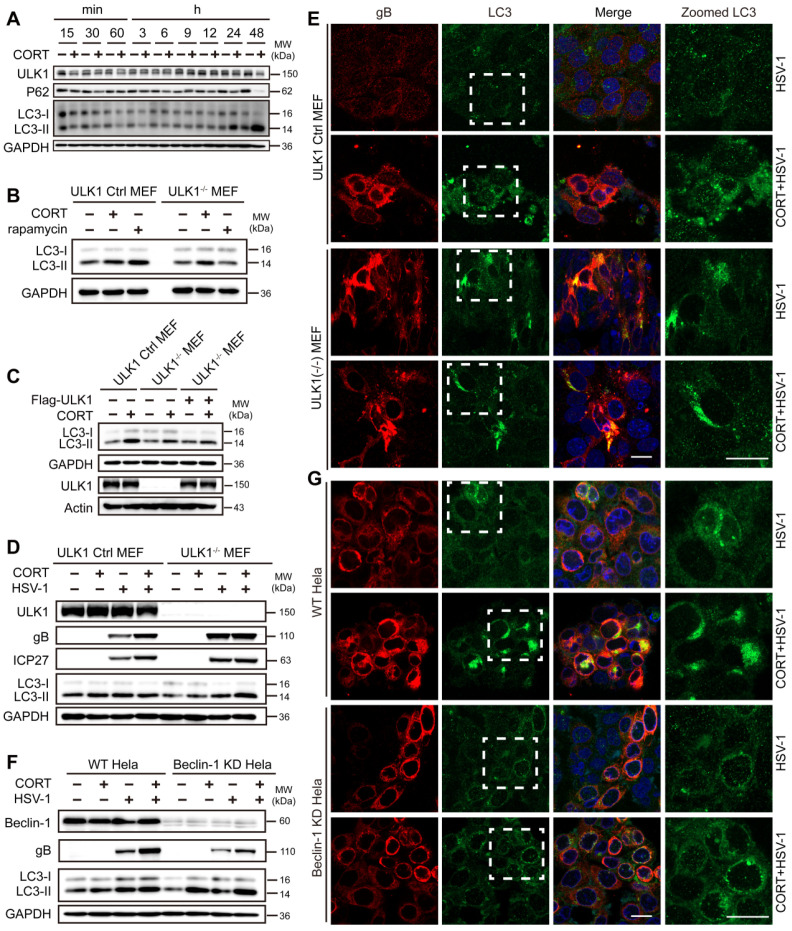
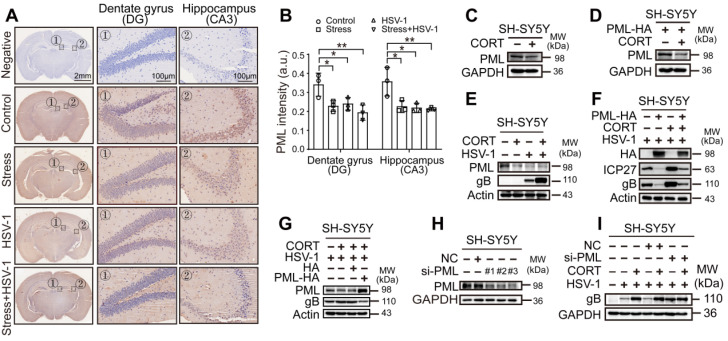
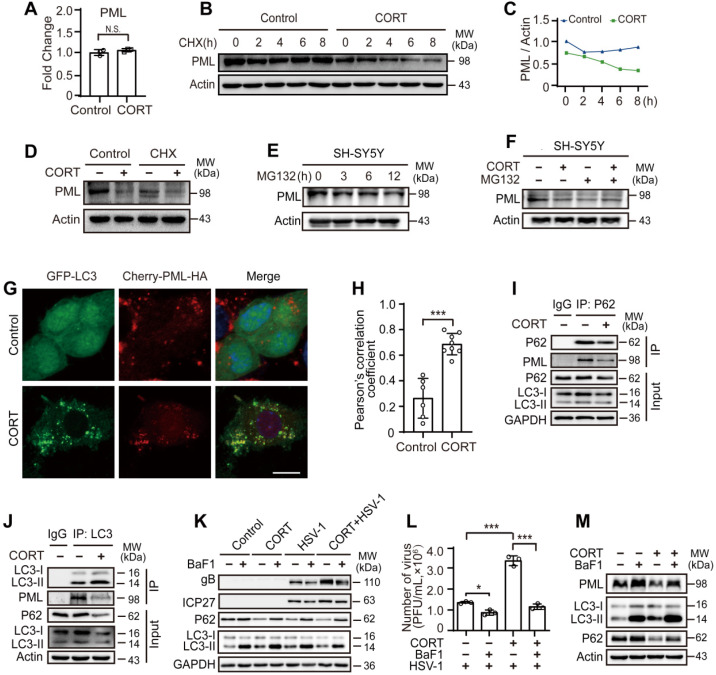
Herpes simplex virus type 1 (HSV-1) is a neurotropic virus that can cause a variety of clinical syndromes including mucocutaneous disease and HSV-1 encephalitis (HSE). Here, we characterize the molecular mechanisms underlying the susceptibility to HSV-1 under stressful conditions. Restraint stress and corticosterone (CORT, a primary stress hormone) were respectively used to establish HSV-1 susceptible model and . Viral titers were determined by plaque assay. Western blotting, immunofluorescence, transmission electron microscopy (TEM), qRT-PCR, H&E staining, IHC staining and flow cytometry were employed to evaluate virus-related protein expressions and detect the activation of autophagy. Loss- and gain-function assays, co-immunoprecipitation (co-IP) technique and autophagy agonist/antagonist treatments were applied in mechanistic experiments. Restraint stress increased the susceptibility of mouse brain to HSV-1. Similarly, CORT treatment enhanced the susceptibility of neural cells to HSV-1. Furthermore, PML protein level in HSV-1 infected brain tissues and neural cells was remarkably decreased by stress treatment or CORT treatment , while its transcriptional level was not affected. Notably, a striking decline in protein expressions of ICP27 and gB was observed in PML-overexpressing cells, which was reversed by CORT treatment. By contrast, protein expression of gB was increased by knockdown with si- in virus-infected SH-SY5Y cells. We further discovered that CORT-driven PML degradation was dependent on the activation of autophagy in a ULK1-independent manner, rather than proteasome pathway. Bafilomycin A1 (BaF1) attenuated the augmentation effect of CORT on HSV-1 infection. The expressions of viral proteins were reduced in LC3-depleted cells, and the degradation of PML by CORT-induced autophagy was prevented in cells with LC3 knockdown by RNAi. Interestingly, PML was revealed to interact with the autophagic cargo receptor P62 and the autophagic effector protein LC3. Additionally, CORT failed to increase gB protein level when PML was silenced, providing direct evidence linking autophagic degradation of PML and CORT-induced virus susceptibility. Our results revealed that restraint stress/CORT increased HSV-1 susceptibility by delivering PML into autolysosomes for degradation. The results obtained from and o models not only demonstrated the adverse effects of stress on HSV-1 infection, but also systematically investigated the underlying molecular mechanisms. These discoveries broaden our understanding of the interplay between host and viruses, and a comprehensive understanding of the role of autophagy in viral infection will provide information for future development of innovative drugs against viral infection.
单纯疱疹病毒 1 型(HSV-1)是一种嗜神经病毒,可引起多种临床综合征,包括黏膜皮肤疾病和 HSV-1 脑炎(HSE)。在这里,我们描述了在应激条件下易感染 HSV-1 的分子机制。束缚应激和皮质酮(CORT,主要应激激素)分别用于建立 HSV-1 易感模型和。通过噬斑测定法确定病毒滴度。Western blot、免疫荧光、透射电子显微镜(TEM)、qRT-PCR、H&E 染色、免疫组化染色和流式细胞术用于评估病毒相关蛋白表达并检测自噬的激活。使用失活和功能获得实验、共免疫沉淀(co-IP)技术和自噬激动剂/拮抗剂处理进行机制实验。束缚应激增加了小鼠大脑对 HSV-1 的易感性。同样,CORT 处理增强了神经细胞对 HSV-1 的易感性。此外,应激处理或 CORT 处理后,HSV-1 感染脑组织和神经细胞中的 PML 蛋白水平显着降低,但其转录水平不受影响。值得注意的是,在 PML 过表达细胞中观察到 ICP27 和 gB 的蛋白表达显着下降,而 CORT 处理可逆转这种下降。相比之下,在病毒感染的 SH-SY5Y 细胞中用 si-敲低时,gB 的蛋白表达增加。我们进一步发现,CORT 驱动的 PML 降解依赖于自噬的激活,而不是蛋白酶体途径,这种激活与 ULK1 无关。Bafilomycin A1(BaF1)减弱了 CORT 对 HSV-1 感染的增强作用。在 LC3 耗尽的细胞中,病毒蛋白的表达减少,并且在用 RNAi 敲低 LC3 时,CORT 诱导的自噬对 PML 的降解被阻止。有趣的是,PML 被揭示与自噬货物受体 P62 和自噬效应蛋白 LC3 相互作用。此外,当沉默 PML 时,CORT 未能增加 gB 蛋白水平,这为自噬降解 PML 和 CORT 诱导的病毒易感性之间的直接联系提供了直接证据。我们的结果表明,束缚应激/CORT 通过将 PML 递送至自溶酶体进行降解来增加 HSV-1 的易感性。和 o 模型的结果不仅证明了应激对 HSV-1 感染的不利影响,而且还系统地研究了潜在的分子机制。这些发现拓宽了我们对宿主与病毒相互作用的理解,对自噬在病毒感染中的作用的全面了解将为开发针对病毒感染的创新药物提供信息。