Guangdong Laboratory for Lingnan Modern Agriculture/College of Veterinary Medicine, South China Agricultural University/Guangdong Technology Research for Traditional Chinese Veterinary Medicine and Natural Medicine, Guangzhou 510642, China.
Institute of Animal Health, Guangdong Academy of Agricultural Sciences, Guangzhou 510640, China.
Oxid Med Cell Longev. 2020 Jul 30;2020:1241894. doi: 10.1155/2020/1241894. eCollection 2020.
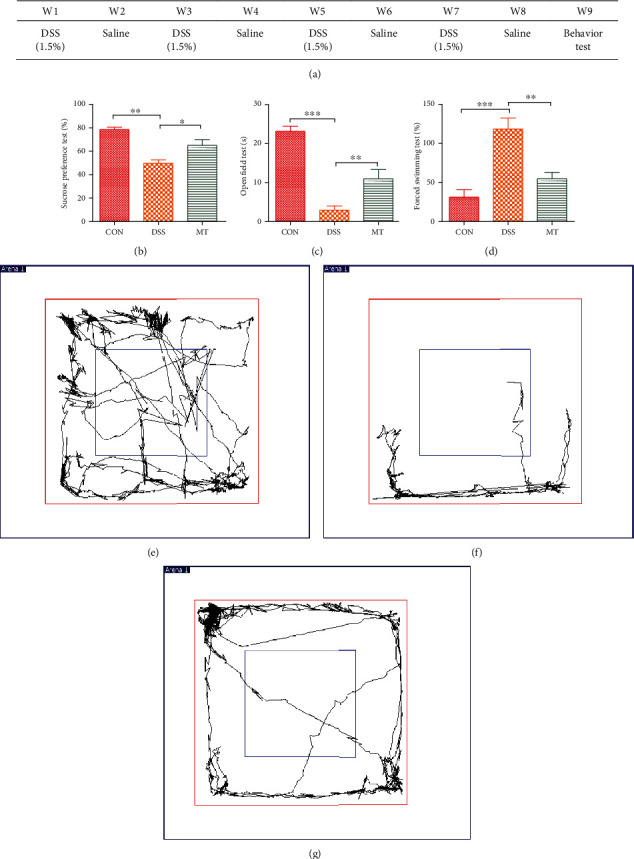
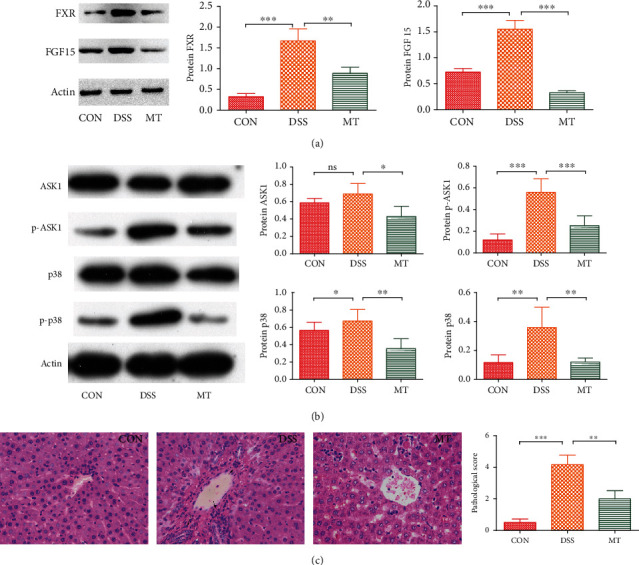
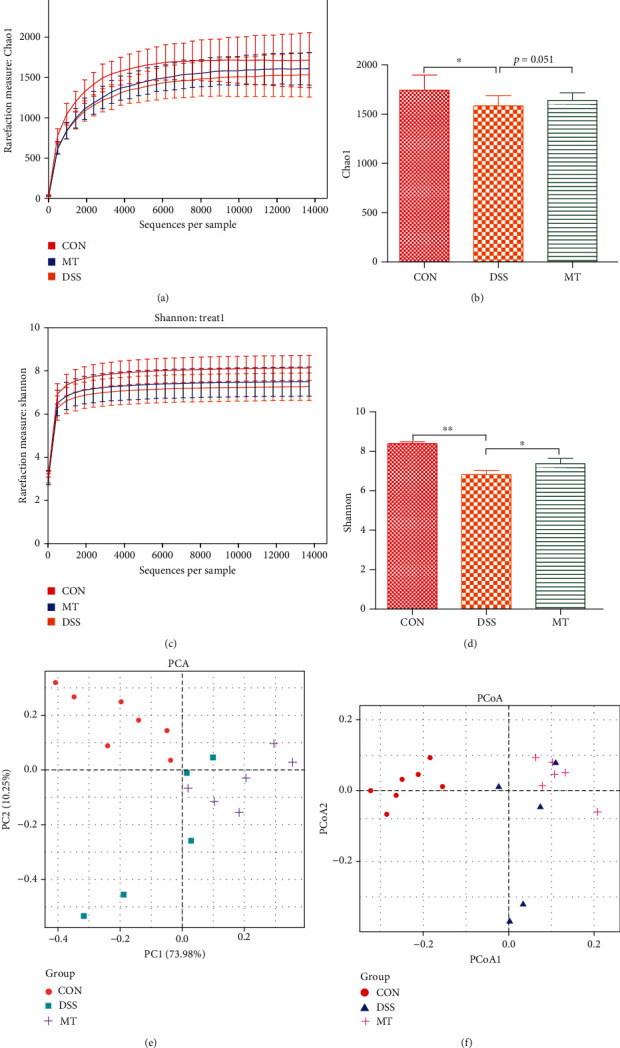
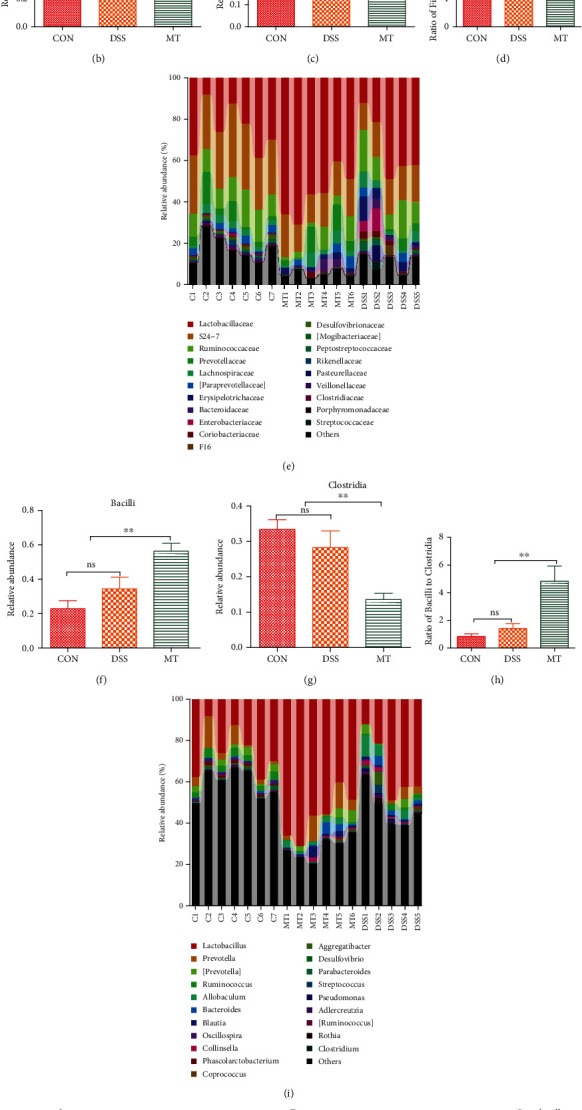
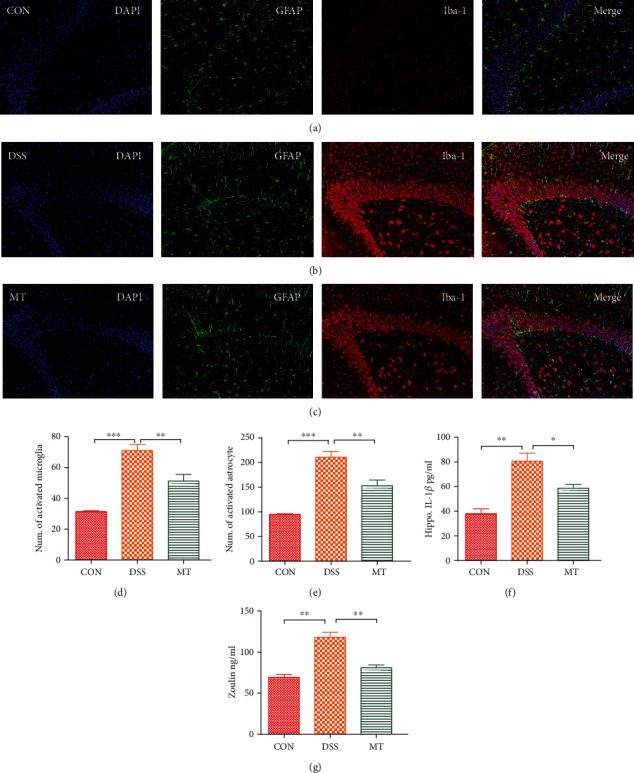
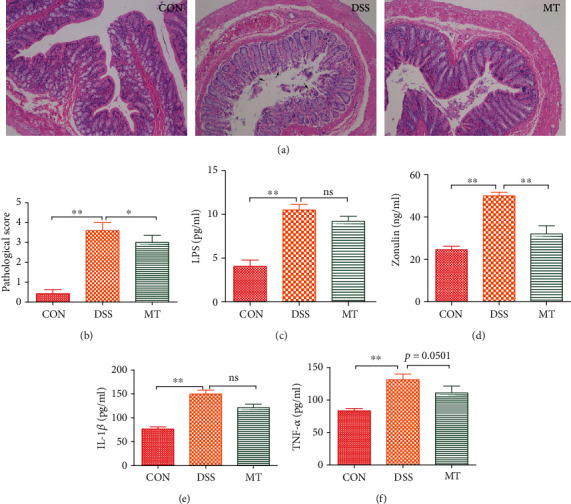
There is a bidirectional relationship between inflammatory bowel disease (IBD) and depression/anxiety. Emerging evidences indicate that the liver may be involved in microbiota-gut-brain axis. This experiment focused on the role of melatonin in regulating the gut microbiota and explores its mechanism on dextran sulphate sodium- (DSS-) induced neuroinflammation and liver injury. Long-term DSS-treatment increased lipopolysaccharide (LPS), proinflammation cytokines IL-1 and TNF-, and gut leak in rats, breaking blood-brain barrier and overactivated astrocytes and microglia. Ultimately, the rats showed depression-like behavior, including reduction of sucrose preference and central time in open field test and elevation of immobility time in a forced swimming test. Oral administration with melatonin alleviated neuroinflammation and depression-like behaviors. However, melatonin supplementation did not decrease the level of LPS but increase short-chain fatty acid (SCFA) production to protect DSS-induced neuroinflammation. Additionally, western blotting analysis suggested that signaling pathways farnesoid X receptor-fibroblast growth factor 15 (FXR-FGF 15) in gut and apoptosis signal-regulating kinase 1 (ASK1) in the liver overactivated in DSS-treated rats, indicating liver metabolic disorder. Supplementation with melatonin markedly inhibited the activation of these two signaling pathways and its downstream p38. As for the gut microbiota, we found that immune response- and SCFA production-related microbiota, like and significantly increased, while bile salt hydrolase activity-related microbiota, like and , significantly decreased after melatonin supplementation. These altered microbiota were consistent with the alleviation of neuroinflammation and metabolic disorder. Taken together, our findings suggest melatonin contributes to reshape gut microbiota and improves inflammatory processes in the hippocampus (HPC) and metabolic disorders in the liver of DSS rats.
炎症性肠病 (IBD) 与抑郁/焦虑之间存在双向关系。新出现的证据表明,肝脏可能参与了微生物群-肠道-大脑轴。本实验重点研究了褪黑素在调节肠道微生物群中的作用,并探讨了其在葡聚糖硫酸钠 (DSS-) 诱导的神经炎症和肝损伤中的机制。长期 DSS 处理会增加大鼠的脂多糖 (LPS)、促炎细胞因子 IL-1 和 TNF-以及肠道通透性,破坏血脑屏障,过度激活星形胶质细胞和小胶质细胞。最终,大鼠表现出类似抑郁的行为,包括蔗糖偏好和旷场试验中央时间减少,强迫游泳试验中不动时间增加。褪黑素口服给药可缓解神经炎症和类似抑郁的行为。然而,褪黑素补充并未降低 LPS 水平,而是增加短链脂肪酸 (SCFA) 的产生以保护 DSS 诱导的神经炎症。此外,Western blot 分析表明,DSS 处理大鼠的肠道中芳基烃受体-成纤维细胞生长因子 15 (FXR-FGF 15) 和肝脏中的凋亡信号调节激酶 1 (ASK1) 信号通路过度激活,表明肝脏代谢紊乱。褪黑素补充剂可显著抑制这两条信号通路及其下游 p38 的激活。至于肠道微生物群,我们发现免疫反应和 SCFA 产生相关的微生物群,如 和 显著增加,而胆汁盐水解酶活性相关的微生物群,如 和 ,在褪黑素补充后显著减少。这些改变的微生物群与神经炎症和代谢紊乱的缓解一致。总之,我们的研究结果表明,褪黑素有助于重塑肠道微生物群,并改善 DSS 大鼠海马 (HPC) 中的炎症过程和肝脏的代谢紊乱。