Institute of Integrative Medicine, Department of Integrated Traditional Chinese and Western Medicine, Xiangya Hospital, Central South University, Changsha 410008, China.
Shantou University Medical College, Shantou, Guangdong Province, China.
Biosci Rep. 2021 Mar 26;41(3). doi: 10.1042/BSR20201910.
To explore the mechanism of Radix Rhei Et Rhizome (Dahuang, DH) intervention in intracerebral hemorrhage (ICH) based on systematic pharmacology and proteomics strategy.
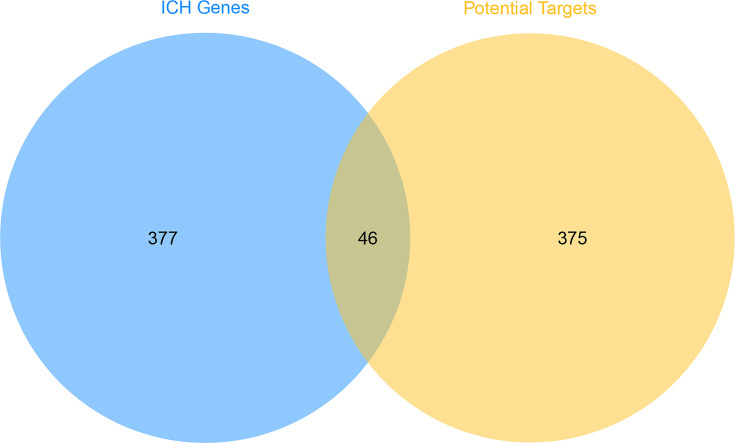
The systematic pharmacological strategies were utilized to find the bioactive compounds of Radix Rhei Et Rhizome, predict its potential targets, and collect ICH's disease genes; then, the Cytoscape 3.7.1 software was applied for network construction and network topology analysis. After that, in-depth analysis of the proteomics data of Radix Rhei Et Rhizome intervention in ICH was performed to complement and validate the results of systematic pharmacological predictions.
A total of three major networks were constructed in the present study: (1) compound-compound target network of Radix Rhei Et Rhizome, (2) DH-ICH PPI network, (3) proteomics proteins' PPI network. These three major networks have been analyzed by network topology, and several small networks derived (such as signaling pathway networks). The enrichment analysis showed that Radix Rhei Et Rhizome can intervene in several biological process (such as inflammation, smooth muscle proliferation, platelet activation, blood pressure regulation, angiogenesis, hypoxia, and inflammatory response of leukocytes), signaling pathway (such as FoxO signaling pathway, complement and coagulation cascades, cGMP-PKG signaling pathway, and Rap1 signaling pathway), and reactome pathway (such as signaling by interleukins, interleukin-4 and interleukin-13 signaling, nuclear receptor transcription pathway, and platelet activation).
Radix Rhei Et Rhizome may intervene in ICH-related biological process, signaling pathway, and reactome pathway found in this research so as to achieve the effect of treating ICH related injuries.
基于系统药理学和蛋白质组学策略,探讨大黄(DH)干预脑出血(ICH)的作用机制。
采用系统药理学策略寻找大黄的生物活性化合物,预测其潜在靶点,并收集 ICH 疾病基因;然后,应用 Cytoscape 3.7.1 软件进行网络构建和网络拓扑分析。之后,对大黄干预 ICH 的蛋白质组学数据进行深入分析,以补充和验证系统药理学预测的结果。
本研究构建了三个主要网络:(1)大黄化合物-化合物靶标网络,(2)DH-ICH PPI 网络,(3)蛋白质组学蛋白质 PPI 网络。通过网络拓扑分析了这三个主要网络,并衍生出几个小网络(如信号通路网络)。富集分析表明,大黄可干预多种生物学过程(如炎症、平滑肌增殖、血小板激活、血压调节、血管生成、缺氧和白细胞炎症反应)、信号通路(如 FoxO 信号通路、补体和凝血级联、cGMP-PKG 信号通路和 Rap1 信号通路)和反应组通路(如细胞因子信号、白细胞介素 4 和白细胞介素 13 信号、核受体转录途径和血小板激活)。
大黄可能通过干预本研究中发现的与 ICH 相关的生物学过程、信号通路和反应组通路,达到治疗 ICH 相关损伤的效果。