Department of Non-Communicable Diseases, Ministry of Health and Population, Cairo, Egypt.
Department of Epidemiology, High Institute of Public Health, Alexandria University, Alexandria, Egypt.
PLoS Negl Trop Dis. 2020 Aug 17;14(8):e0008558. doi: 10.1371/journal.pntd.0008558. eCollection 2020 Aug.
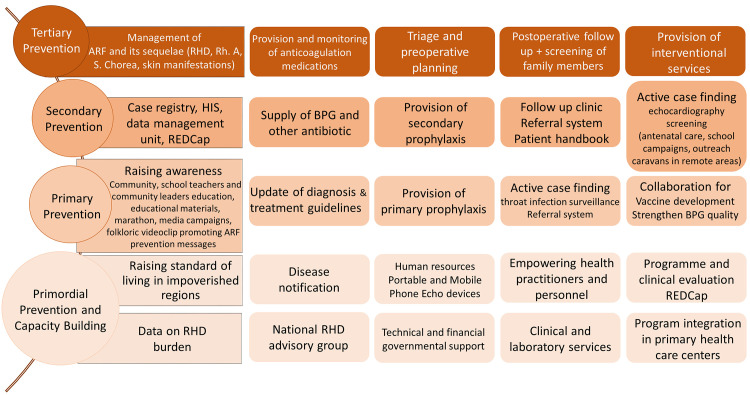
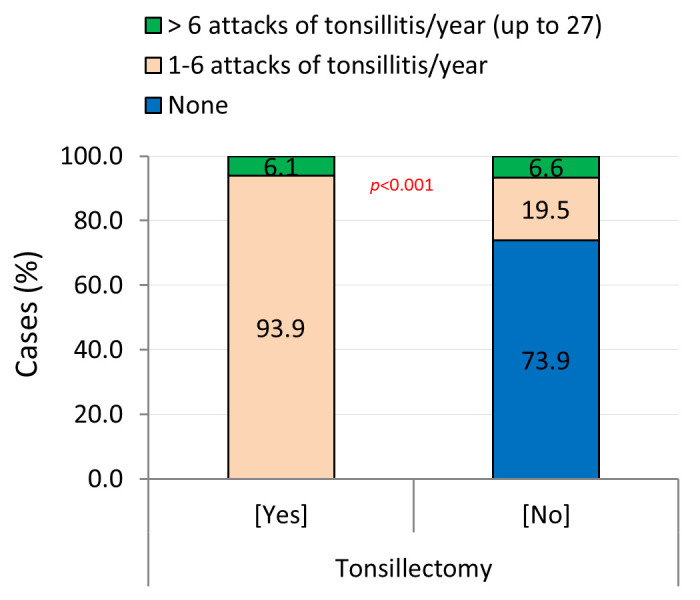
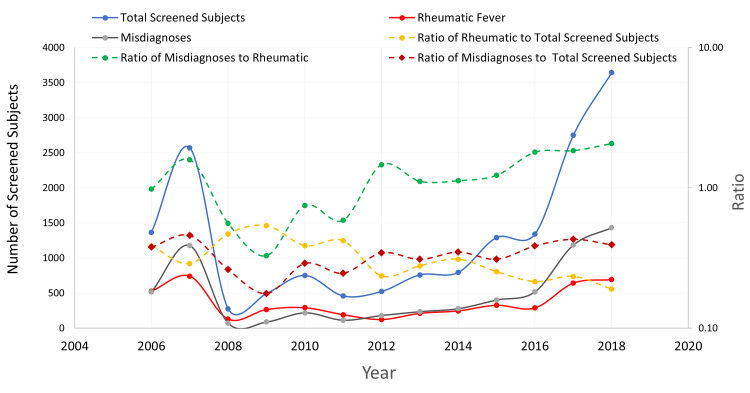
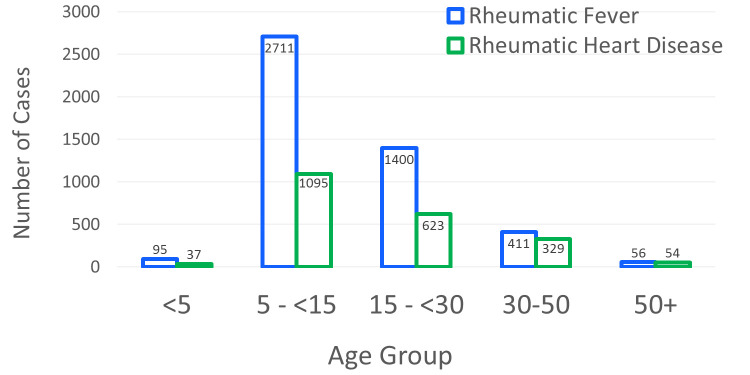
Rheumatic heart disease (RHD) as a chronic sequela of repeated episodes of acute rheumatic fever (ARF), remains a cause of cardiac morbidity in Egypt although it is given full attention through a national RHD prevention and control program. The present report reviews our experience with subjects presenting with ARF or its sequelae in a single RHD centre and describes the disease pattern over the last decade. A cross-sectional study was conducted in El-Mahalla RHD centre between 2006 and 2018. A total of 17014 individual were enrolled and evaluated. Diagnosis ARF was based on the 2015 revised Jones criteria and RHD was ruled in by echocardiography. The majority of the screened subjects were female (63.2%), in the age group 5-15 years (64.6%), rural residents (61.2%), had primary education (43.0%), and of low socioeconomic standard (50.2%). The total percentage of cases presenting with ARF sequelae was 29.3% [carditis/RHD (10.8%), rheumatic arthritis (Rh.A) (14.9%), and Sydenham's chorea (0.05%)]. Noticeably, 72% were free of any cardiac insult, of which 37.7% were victims of misdiagnoses made elsewhere by untrained practitioners who prescribed for them long term injectable long-acting penicillin [Benzathine Penicillin G (BPG)] without need. About 54% of the study cohort reported the occurrence of recurrent attacks of tonsillitis of which 65.2% underwent tonsillectomy. Among those who experienced tonsillectomy and/or received BPG in the past, 14.5% and 22.3% respectively had eventually developed RHD. Screening of family members of some RHD cases who needed cardiac surgery revealed 20.7% with undiagnosed ARF sequalae [RHD (56.0%) and Rh.A (52.2%)]. Upon the follow-up of RHD cases, 1.2% had improved, 98.4% were stable and 0.4% had their heart condition deteriorated. Misdiagnosis of ARF or its sequelae and poor compliance with BPG use may affect efforts being exerted to curtail the disease. Updating national guidelines, capacity building, and reliance on appropriate investigations should be emphasized. Since the genetic basis of RHD is literally confirmed, a family history of RHD warrants screening of all family members for early detection of the disease.
风湿性心脏病(RHD)是反复发生的急性风湿热(ARF)的慢性后遗症,尽管埃及通过国家 RHD 预防和控制计划对此给予了充分关注,但它仍然是导致心脏发病率的一个原因。本报告回顾了我们在单一 RHD 中心对出现 ARF 或其后遗症的患者的经验,并描述了过去十年的疾病模式。在 2006 年至 2018 年期间,在 El-Mahalla RHD 中心进行了一项横断面研究。共纳入并评估了 17014 名个体。ARF 的诊断基于 2015 年修订的 Jones 标准,RHD 通过超声心动图判定。筛查出的大多数患者为女性(63.2%),年龄在 5-15 岁之间(64.6%),为农村居民(61.2%),接受过小学教育(43.0%),社会经济地位较低(50.2%)。出现 ARF 后遗症的患者比例为 29.3%[心内膜炎/RHD(10.8%)、风湿性关节炎(Rh.A)(14.9%)和风湿性舞蹈病(0.05%)]。值得注意的是,72%的患者没有任何心脏损伤,其中 37.7%的患者曾被未经培训的医生误诊,并长期接受长效苄星青霉素(Benzathine Penicillin G,BPG)注射治疗,而这些医生不需要进行这种治疗。大约 54%的研究人群报告发生了反复发作的扁桃体炎,其中 65.2%接受了扁桃体切除术。在过去接受过扁桃体切除术和/或 BPG 治疗的患者中,分别有 14.5%和 22.3%最终发展为 RHD。对一些需要心脏手术的 RHD 患者的家庭成员进行筛查,发现 20.7%存在未诊断的 ARF 后遗症[RHD(56.0%)和 Rh.A(52.2%)]。对 RHD 患者进行随访后,1.2%的患者病情有所改善,98.4%的患者病情稳定,0.4%的患者病情恶化。ARF 或其后遗症的误诊和 BPG 使用依从性差可能会影响遏制疾病的努力。应强调更新国家指南、能力建设和依赖适当的检查。由于 RHD 的遗传基础已得到证实,因此 RHD 的家族史需要对所有家庭成员进行筛查,以早期发现疾病。