Institute of Botany, Jiangsu Province and Chinese Academy of Sciences, Nanjing, 210014, China.
Jiangsu Key Laboratory for the Research and Utilization of Plant Resources, Nanjing, 210014, China.
BMC Complement Med Ther. 2020 Aug 17;20(1):255. doi: 10.1186/s12906-020-03020-4.
Acori Tatarinowii Rhizome (ATR) is a well-recognized Chinese herbal medicine prescribed to treat neurological disorders. The essential oil (ATEO) is considered as the active fraction of ATR and the content of ATEO is used as the only indicator for ATR content determination. The quality of ATEO varies widely due to region difference; however, little is known about how to study ATEO quality chemically and biologically in response to region difference. Thus, it is of great importance to identify volatile active components in ATEO to conduct quality study. In this study, we analyzed ATEO from different regions in China using chemical component analysis combined with biological activity evaluation.
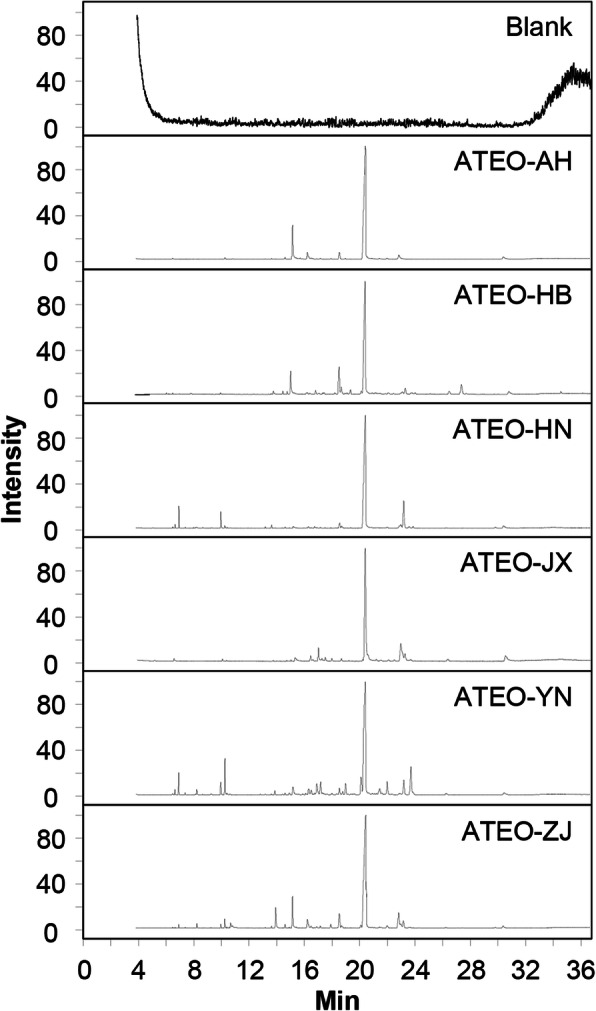
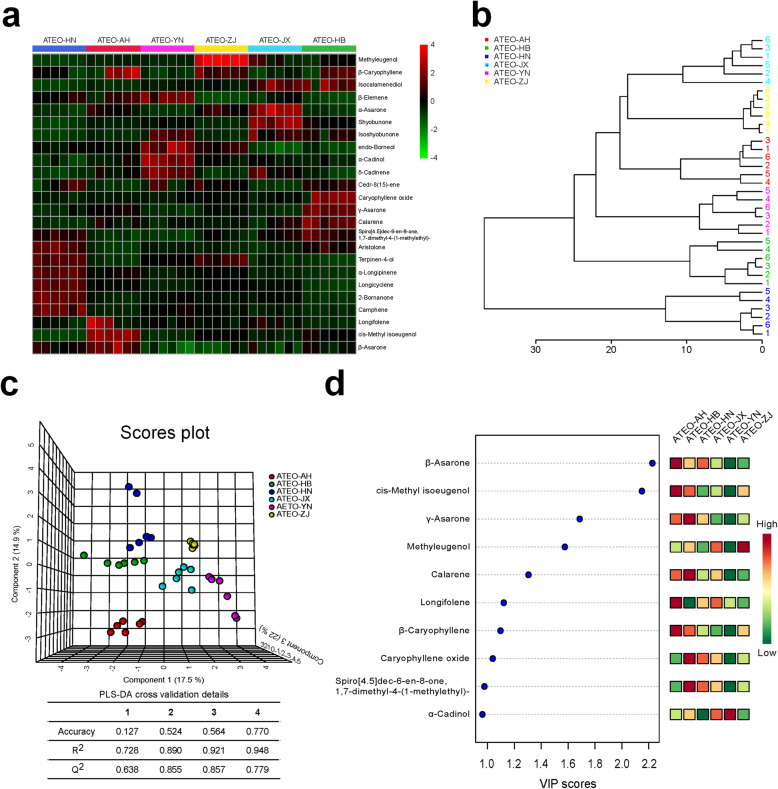
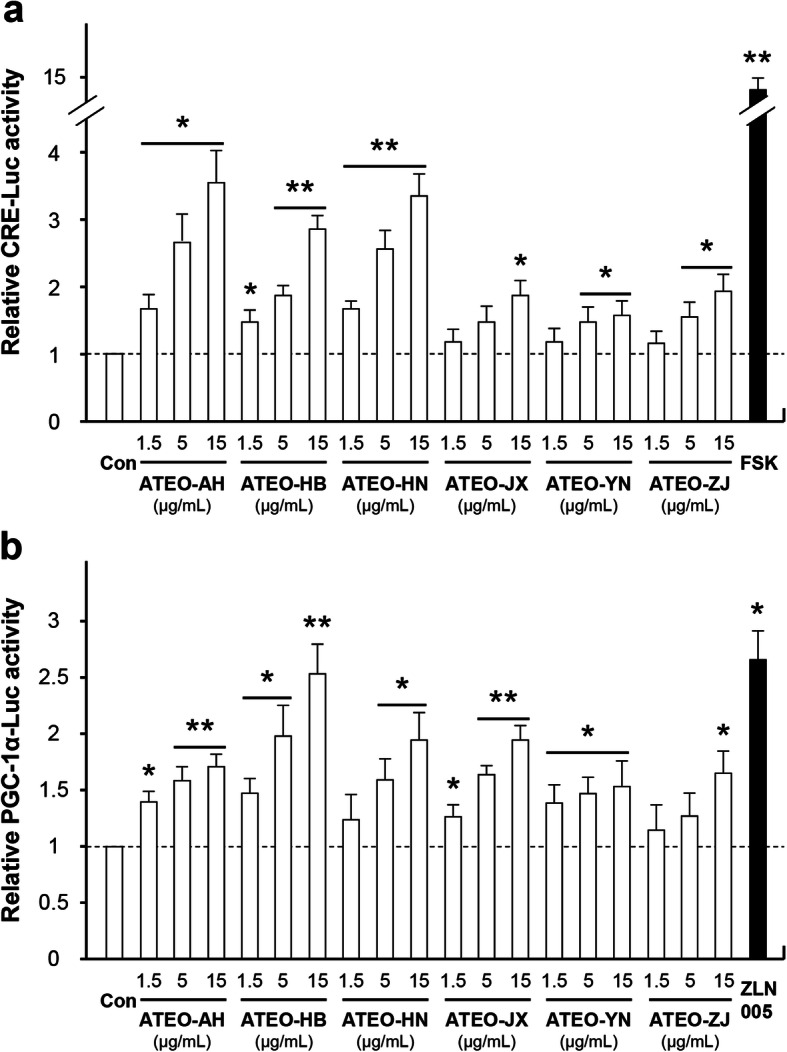
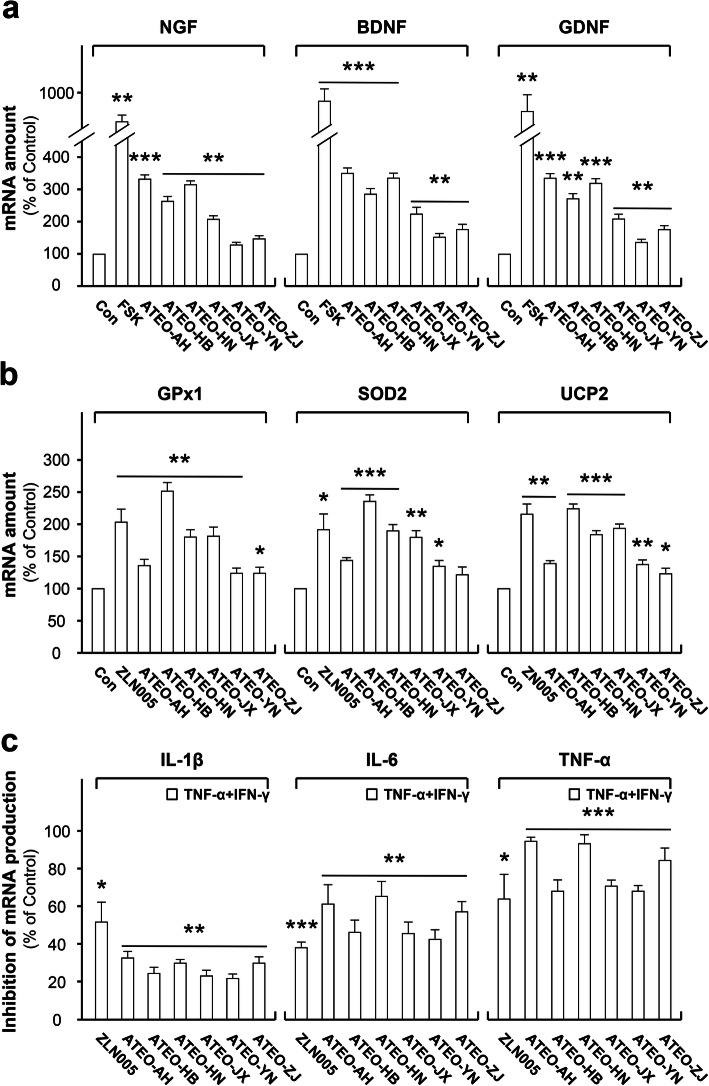
GC-MS was used to obtain different volatile component profiles of ATEO and significantly changed volatile components were screened out. The neuroprotective activities of ATEO, including anti-oxidation, anti-inflammation and neurotrophic functions, were revealed in C6 glioma cells. The correlation study between the bioactivities and the components was performed.
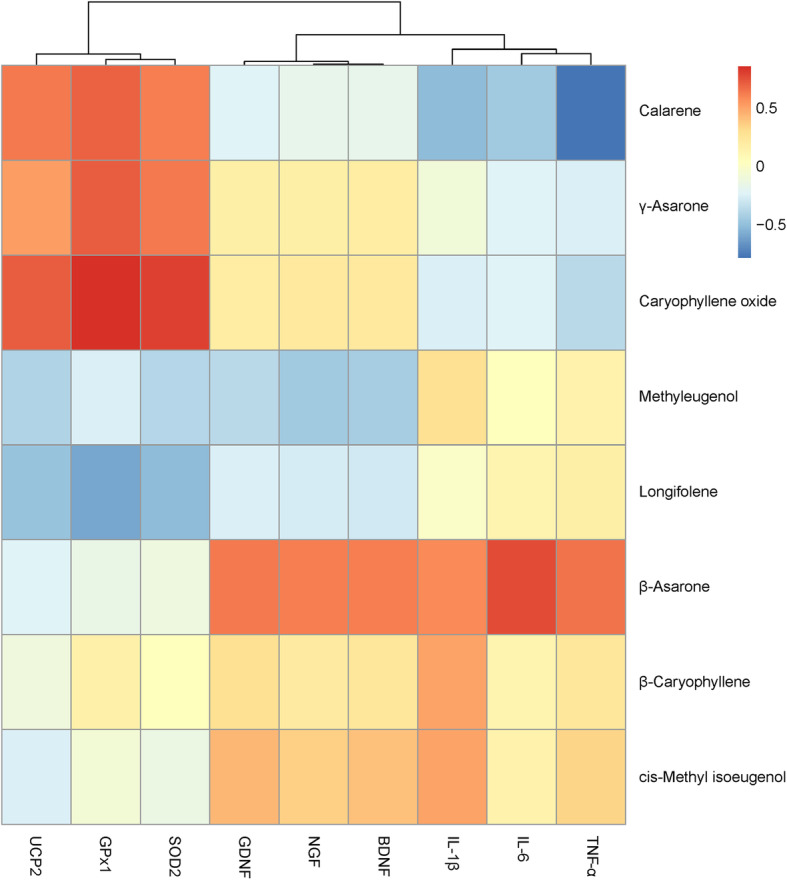
57 volatile components, including terpenoids, phenylpropanoids, aromatic compounds, and other aliphatic compounds, were identified. 8 volatile components (β-asarone, cis-methyl isoeugenol, γ-asarone, methyleugenol, calarene, longifolene, β-caryophyllene and caryophyllene oxide) from ATEO were significantly changed due to region difference and 2 of them (β-asarone and γ-asarone) showed strong correlation with neuroprotective activities.
Our results reveal that ATEO from different regions in China show great changes in chemical composition and biological activity. Moreover, phenylpropanoids (β-asarone and γ-asarone) present strong correlation with the bioactivities, which are considered as volatile active components in ATEO. The findings will be useful for the development of quality study of ATEO.
石菖蒲是一种被广泛认可的中药,用于治疗神经紊乱。石菖蒲挥发油(ATEO)被认为是石菖蒲的有效成分,其含量被用作石菖蒲含量测定的唯一指标。由于产地差异,ATEO 的质量差异很大;然而,对于如何针对产地差异从化学和生物学角度研究 ATEO 质量,知之甚少。因此,确定 ATEO 中的挥发性活性成分对于进行质量研究非常重要。在这项研究中,我们使用化学组分分析结合生物活性评价,分析了来自中国不同地区的 ATEO。
GC-MS 用于获得 ATEO 的不同挥发性成分谱,并筛选出显著变化的挥发性成分。在 C6 神经胶质瘤细胞中,研究了 ATEO 的神经保护活性,包括抗氧化、抗炎和神经营养功能。对生物活性与成分之间的相关性进行了研究。
鉴定出 57 种挥发性成分,包括萜类、苯丙素类、芳香族化合物和其他脂肪族化合物。由于产地差异,8 种挥发性成分(β-细辛脑、顺式-甲基丁香酚、γ-细辛脑、丁香酚、蒈烯、长叶烯、β-石竹烯和石竹烯氧化物)在 ATEO 中发生了显著变化,其中 2 种(β-细辛脑和γ-细辛脑)与神经保护活性呈强相关性。
我们的研究结果表明,来自中国不同地区的 ATEO 在化学成分和生物活性方面存在较大差异。此外,苯丙素类(β-细辛脑和γ-细辛脑)与生物活性呈强相关性,被认为是 ATEO 中的挥发性活性成分。这些发现将有助于 ATEO 质量研究的发展。