Department of Surgery, University of Melbourne, 5th Floor Clinical Sciences Building, Royal Melbourne Hospital, Grattan Street, Parkville, VIC, 3050, Australia.
Melbourne Bioinformatics, The University of Melbourne, Carlton, VIC, 3053, Australia.
Genome Med. 2020 Aug 17;12(1):72. doi: 10.1186/s13073-020-00770-1.
DNA originating from degenerate tumour cells can be detected in the circulation in many tumour types, where it can be used as a marker of disease burden as well as to monitor treatment response. Although circulating tumour DNA (ctDNA) measurement has prognostic/predictive value in metastatic prostate cancer, its utility in localised disease is unknown.
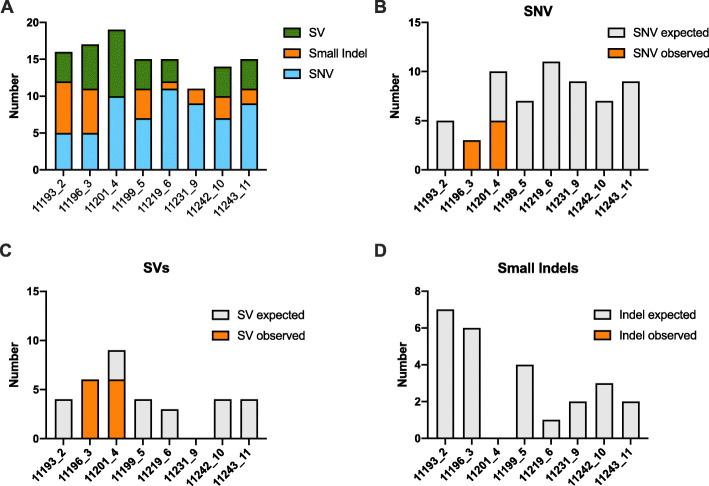
We performed whole-genome sequencing of tumour-normal pairs in eight patients with clinically localised disease undergoing prostatectomy, identifying high confidence genomic aberrations. A bespoke DNA capture and amplification panel against the highest prevalence, highest confidence aberrations for each individual was designed and used to interrogate ctDNA isolated from plasma prospectively obtained pre- and post- (24 h and 6 weeks) surgery. In a separate cohort (n = 189), we identified the presence of ctDNA TP53 mutations in preoperative plasma in a retrospective cohort and determined its association with biochemical- and metastasis-free survival.
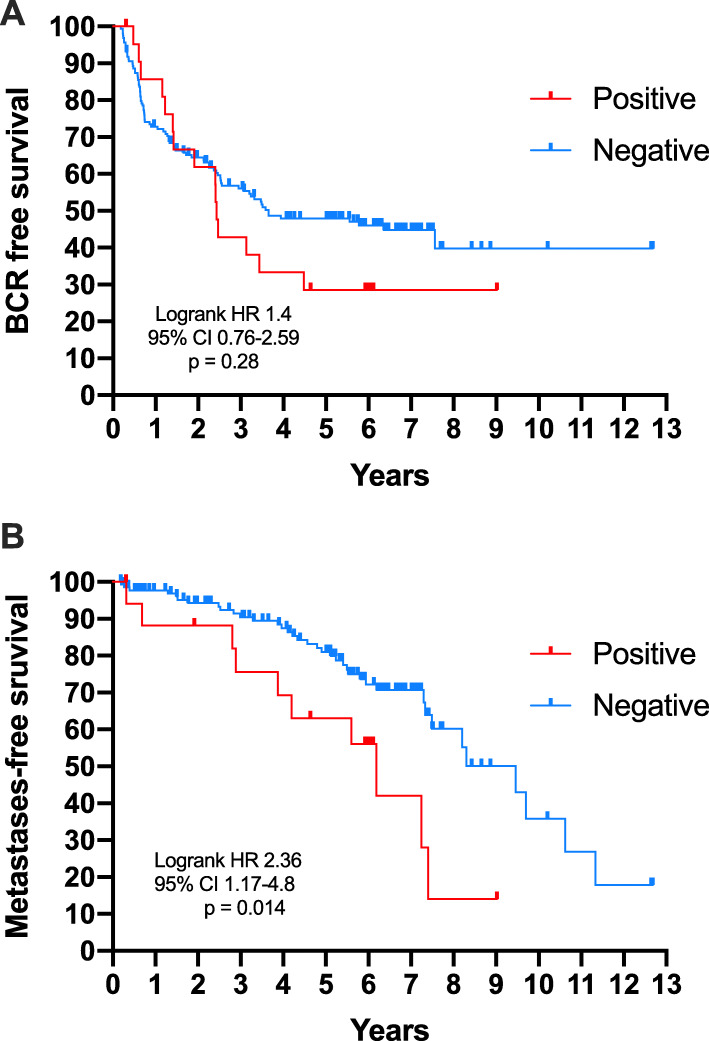
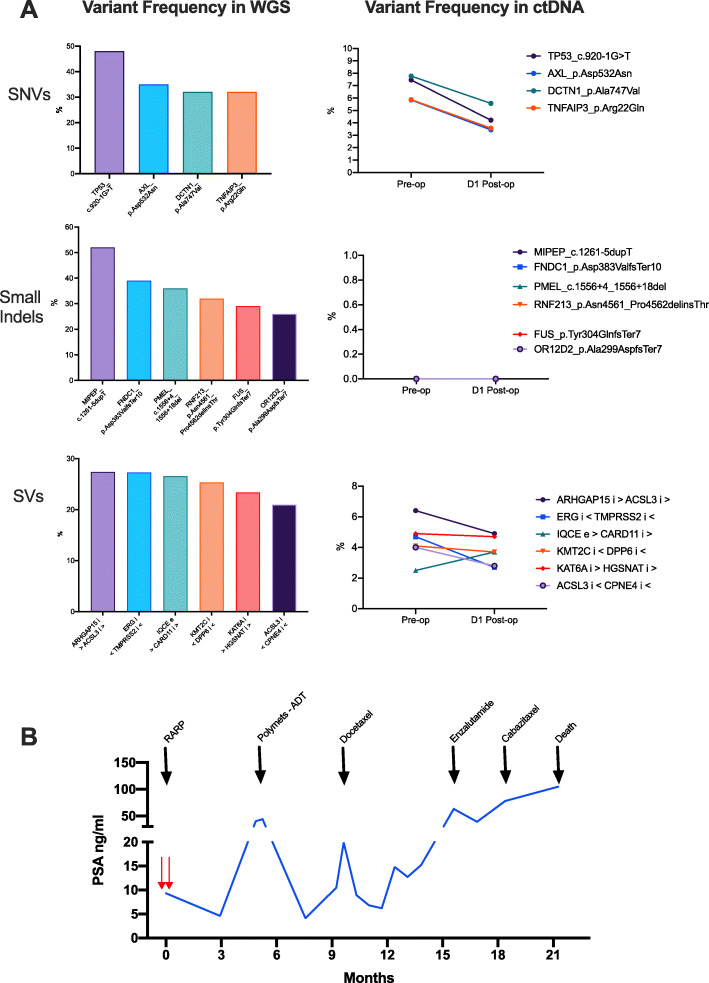
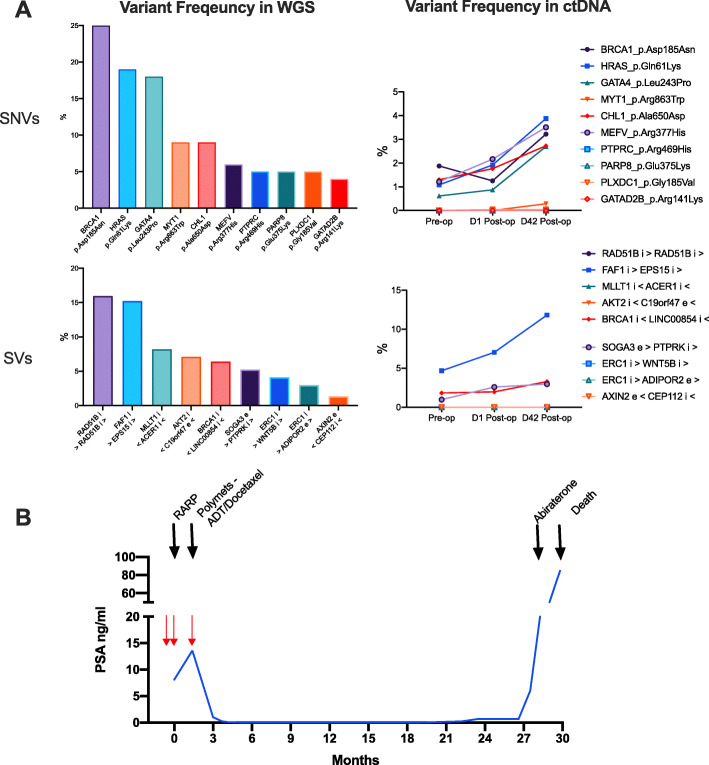
Tumour variants in ctDNA were positively identified pre-treatment in two of eight patients, which in both cases remained detectable postoperatively. Patients with tumour variants in ctDNA had extremely rapid disease recurrence and progression compared to those where variants could not be detected. In terms of aberrations targeted, single nucleotide and structural variants outperformed indels and copy number aberrations. Detection of ctDNA TP53 mutations was associated with a significantly shorter metastasis-free survival (6.2 vs. 9.5 years (HR 2.4; 95% CIs 1.2-4.8, p = 0.014).
CtDNA is uncommonly detected in localised prostate cancer, but its presence portends more rapidly progressive disease.
在许多肿瘤类型中,退化的肿瘤细胞中的 DNA 可以在循环中被检测到,它可以作为疾病负担的标志物,也可以监测治疗反应。虽然循环肿瘤 DNA(ctDNA)测量在转移性前列腺癌中有预后/预测价值,但在局部疾病中的应用尚不清楚。
我们对 8 例接受前列腺切除术的局部疾病患者的肿瘤-正常对进行了全基因组测序,确定了高可信度的基因组异常。针对每个个体的最高患病率、最高可信度异常,设计了定制的 DNA 捕获和扩增面板,并用于前瞻性检测术前和术后(24 小时和 6 周)采集的血浆中的 ctDNA。在另一个队列(n=189)中,我们在回顾性队列中鉴定了术前血浆中 ctDNA TP53 突变的存在,并确定了其与生化无复发生存和无转移生存的关联。
在 8 例患者中的 2 例患者中,术前在 ctDNA 中阳性鉴定出肿瘤变异,在这两种情况下,术后仍可检测到。在 ctDNA 中检测到肿瘤变异的患者与无法检测到变异的患者相比,疾病复发和进展极为迅速。就靶向的异常而言,单核苷酸和结构变异优于插入缺失和拷贝数异常。ctDNA TP53 突变的检测与较短的无转移生存相关(6.2 年与 9.5 年(HR 2.4;95%CI 1.2-4.8,p=0.014)。
ctDNA 在局部前列腺癌中很少被检测到,但它的存在预示着疾病进展更快。