Department of Cancer Physiology, H. Lee Moffitt Cancer Center and Research Institute, Tampa, FL, 33612, USA.
Cancer Institute, Second Affiliated Hospital, Zhejiang University School of Medicine, 310058, Hangzhou, P.R. China.
Nat Commun. 2020 Aug 17;11(1):4113. doi: 10.1038/s41467-020-17756-7.
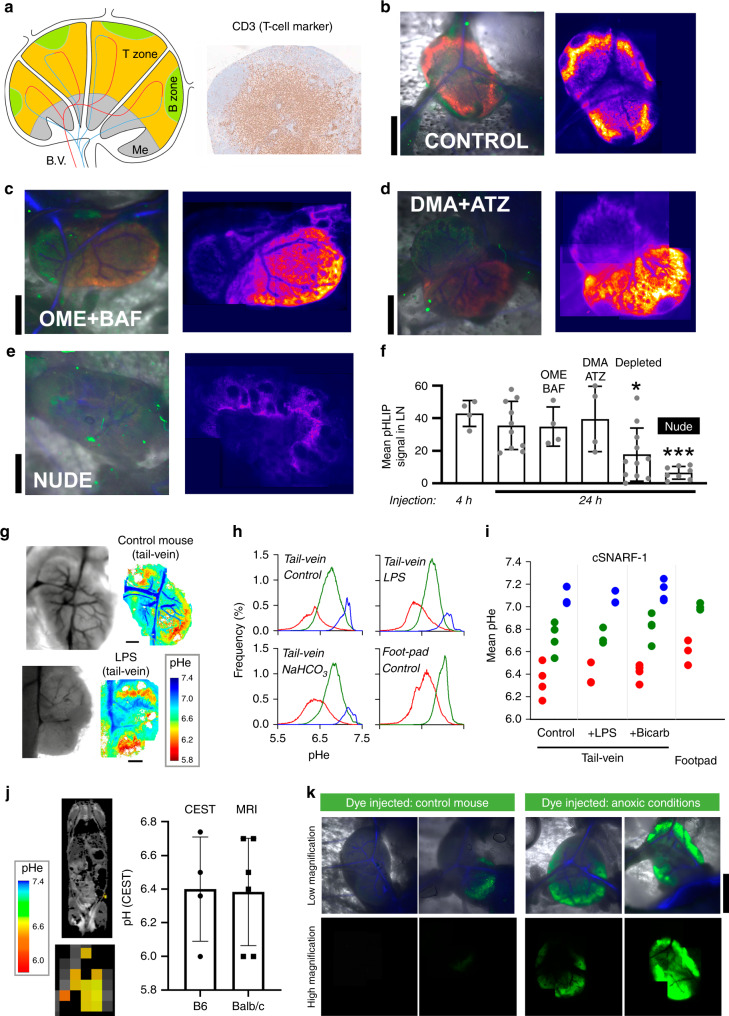
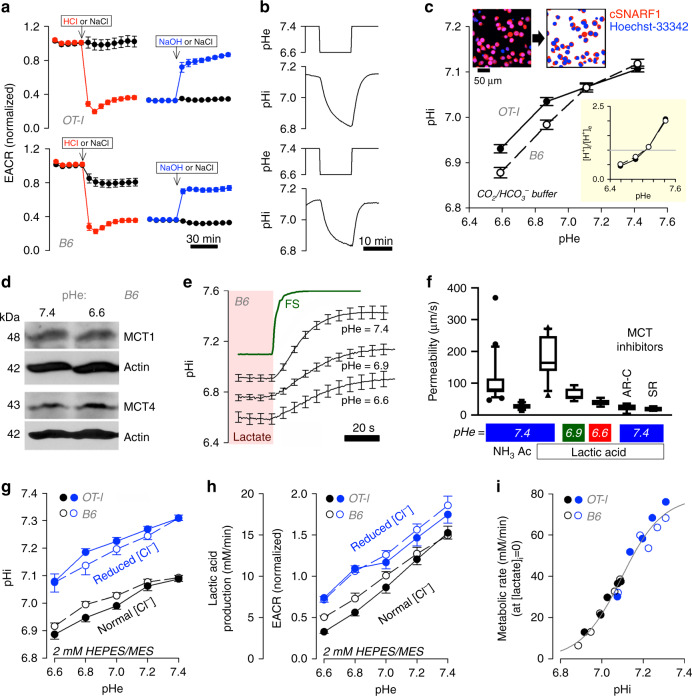
The acidic pH of tumors profoundly inhibits effector functions of activated CD8 + T-cells. We hypothesize that this is a physiological process in immune regulation, and that it occurs within lymph nodes (LNs), which are likely acidic because of low convective flow and high glucose metabolism. Here we show by in vivo fluorescence and MR imaging, that LN paracortical zones are profoundly acidic. These acidic niches are absent in athymic Nu/Nu and lymphodepleted mice, implicating T-cells in the acidifying process. T-cell glycolysis is inhibited at the low pH observed in LNs. We show that this is due to acid inhibition of monocarboxylate transporters (MCTs), resulting in a negative feedback on glycolytic rate. Importantly, we demonstrate that this acid pH does not hinder initial activation of naïve T-cells by dendritic cells. Thus, we describe an acidic niche within the immune system, and demonstrate its physiological role in regulating T-cell activation.
肿瘤的酸性 pH 值严重抑制了激活的 CD8+T 细胞的效应功能。我们假设这是免疫调节中的一个生理过程,并且它发生在淋巴结 (LN) 中,由于低对流和高葡萄糖代谢,LN 可能呈酸性。在这里,我们通过体内荧光和磁共振成像显示,LN 皮质区呈明显酸性。在无胸腺 Nu/Nu 和淋巴耗竭小鼠中不存在这些酸性龛位,这表明 T 细胞参与了酸化过程。在 LN 中观察到的低 pH 值下,T 细胞的糖酵解受到抑制。我们表明,这是由于酸抑制单羧酸转运蛋白 (MCT) ,导致糖酵解速率的负反馈。重要的是,我们证明这种酸性 pH 值不会阻碍树突状细胞对初始 T 细胞的激活。因此,我们描述了免疫系统内的酸性小生境,并证明了其在调节 T 细胞激活中的生理作用。