Janzing H M J, Bessems S A M, Ligthart M A P, Van Lieshout E M M, Theeuwes H P, Barten D G, Verhofstad M H J
Department of Surgery, VieCuri Medical Center, Venlo, The Netherlands.
Trauma Research Unit Department of Surgery, Erasmus MC, University Medical Center Rotterdam, Rotterdam, The Netherlands.
3D Print Med. 2020 Aug 18;6(1):22. doi: 10.1186/s41205-020-00075-4.
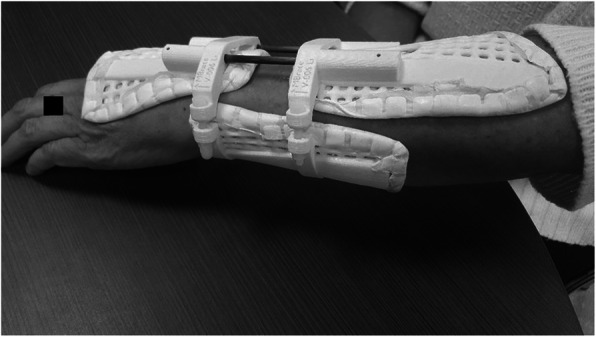
The aim of this work was to develop a three-dimensionally (3D) printed brace for the acute treatment of dorsally dislocated and correctly reduced distal radius fractures (DRF). The hypothesis was that a brace shaped to the mirror image of the contralateral (non-fractured) wrist will have an optimal anatomical fit, resulting in improved comfort and lower rates of secondary fracture displacement.
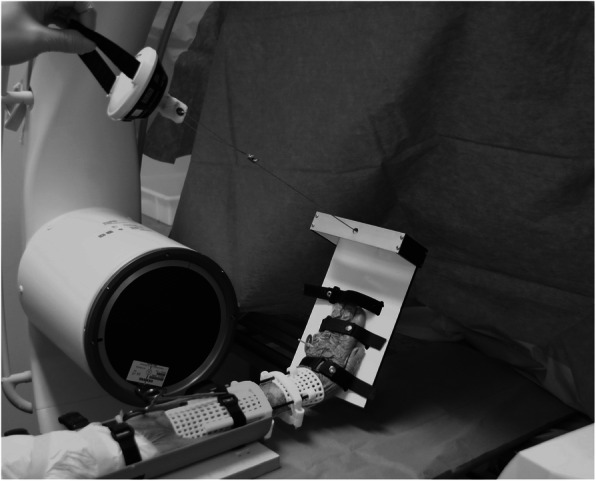
Validation: the circumference of both wrists and comfort of the brace were studied in healthy volunteers and effectiveness of the brace was evaluated in an ex vivo fracture model. Clinical study: the brace was tested for comfort and effectiveness in patients with a well reduced unstable DRF.
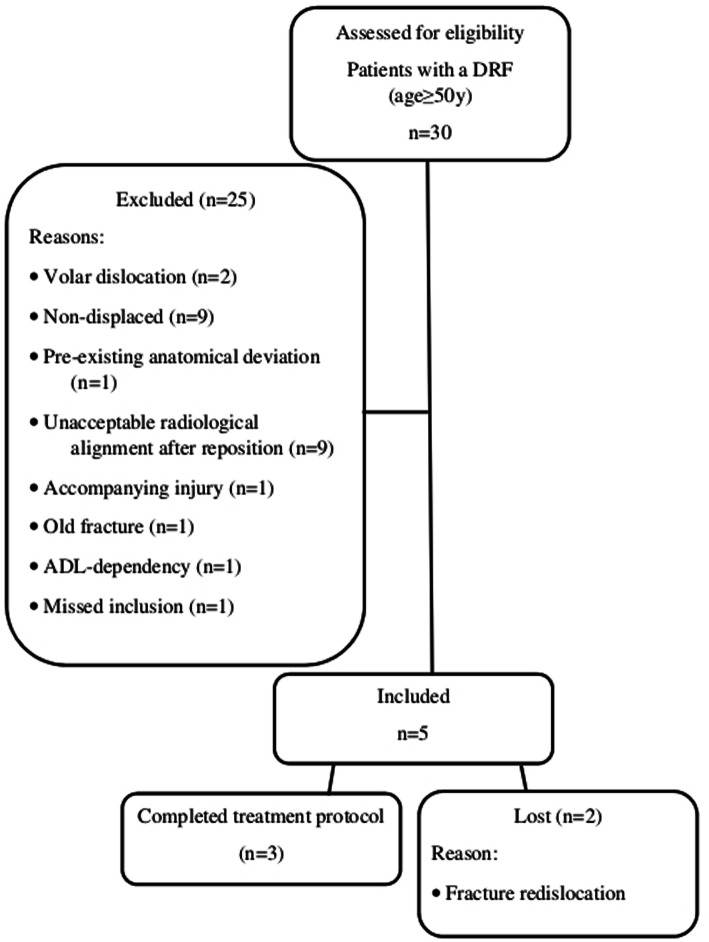
Validation: the circumference of both wrists may be different, the brace retained the reduction in the ex vivo fracture model and was well tolerated in the volunteers. Clinical study: in DRF patients comfort scores were lower and pain scores higher compared to the healthy volunteers. After 3 and 5 weeks all patients were independent in ADL according to the Katz-index. Posttraumatic swelling subsided in the first week. In two of the five patients secondary fracture dislocation occurred.
Treatment of a dislocated DRF in the acute setting (day one) with a custom-made 3D printed brace, anatomically modelled from a 3D scan of the contralateral wrist, is possible. Difference between both wrists and posttraumatic swelling must be adapted for. The high rate of secondary fracture displacement led to early discontinuation of the study and a small sample size.
Name of the registry: ClinicalTrials.Gov Trial registration number: NCT03848702 Date of registration: 02/21/2019, retrospectively registered.
本研究旨在开发一种用于急性治疗背侧脱位且已正确复位的桡骨远端骨折(DRF)的三维(3D)打印支具。我们的假设是,根据对侧(未骨折)手腕的镜像形状制作的支具将具有最佳的解剖学贴合度,从而提高舒适度并降低二次骨折移位的发生率。
验证:在健康志愿者中研究了双腕的周长以及支具的舒适度,并在体外骨折模型中评估了支具的有效性。临床研究:对复位良好的不稳定DRF患者测试了支具的舒适度和有效性。
验证:双腕周长可能不同,支具在体外骨折模型中保持了复位效果,且志愿者耐受性良好。临床研究:与健康志愿者相比,DRF患者的舒适度评分较低,疼痛评分较高。3周和5周后,根据Katz指数,所有患者在日常生活活动中均实现自理。创伤后肿胀在第一周消退。五名患者中有两名发生了二次骨折脱位。
使用根据对侧手腕的3D扫描进行解剖建模的定制3D打印支具,在急性情况下(第一天)治疗脱位的DRF是可行的。必须考虑双腕差异和创伤后肿胀。二次骨折移位的高发生率导致研究提前终止且样本量较小。
注册机构名称:ClinicalTrials.Gov 试验注册号:NCT03848702 注册日期:2019年2月21日,追溯注册。