Wang Wenbiao, Zhou Zhengui, Zhou Xiaohong, Chen Limin, Bie Shuang, Jing Zhengjun
Department of Thyroid Breast Surgery, Gong An County People's Hospital, Gong An, Jingzhou, 434300, Hubei, China.
AMB Express. 2020 Aug 18;10(1):148. doi: 10.1186/s13568-020-01074-8.
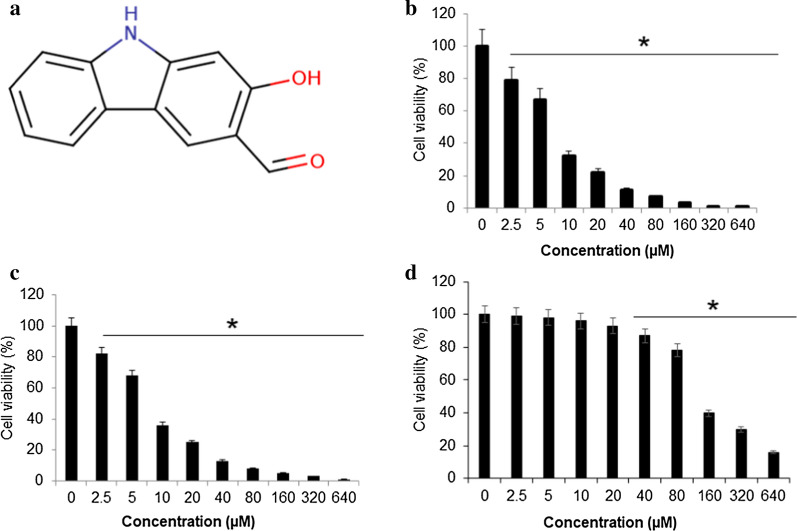
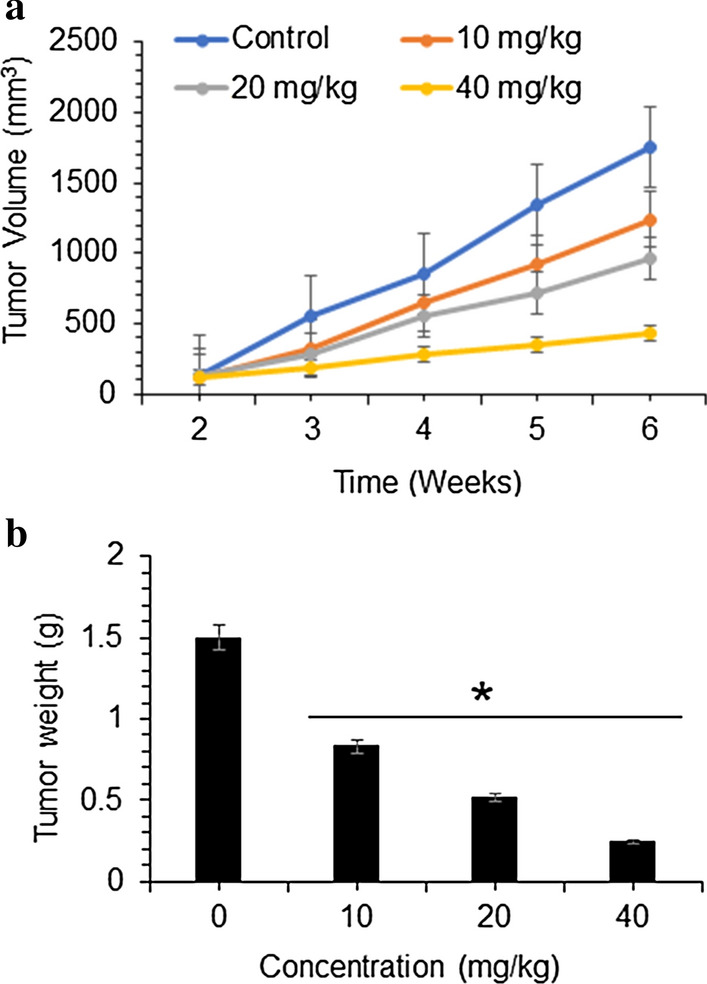
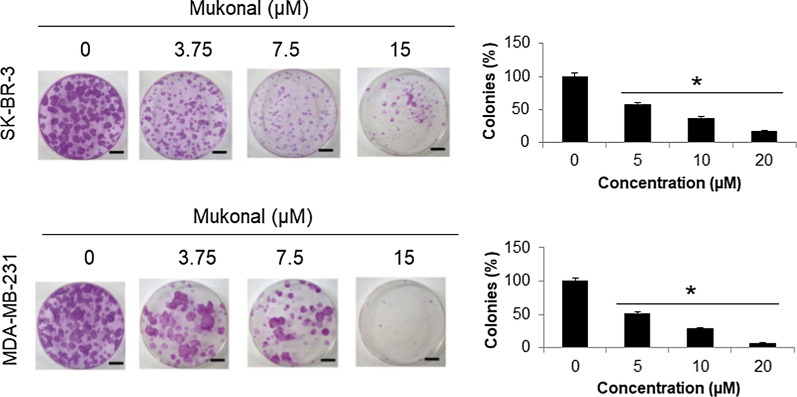
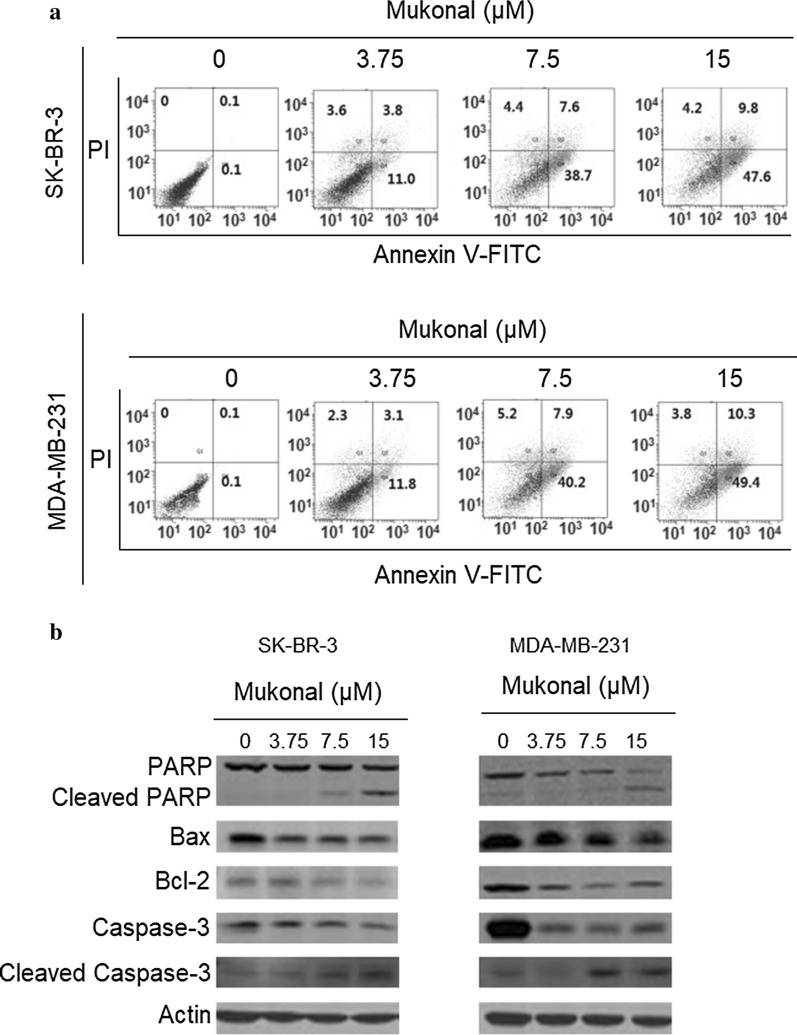
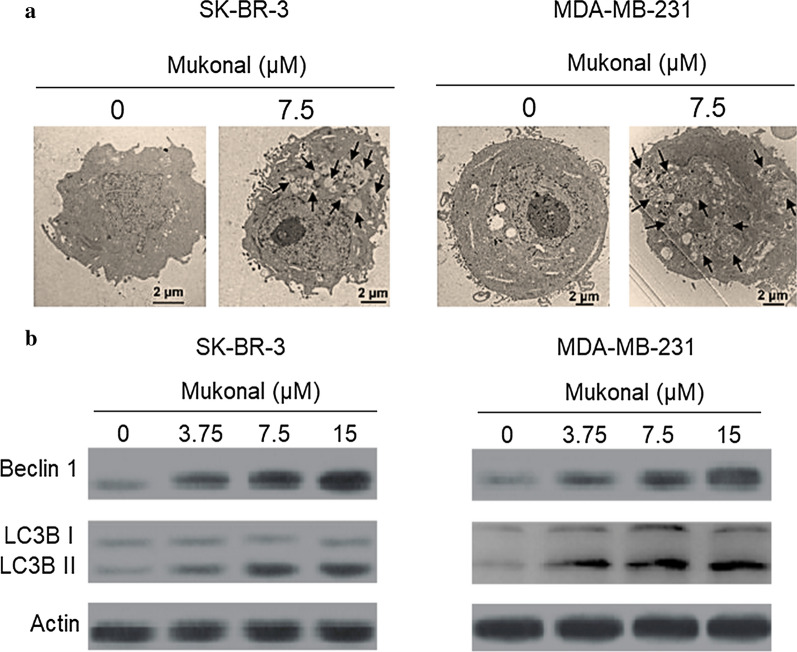
Mukonal is an active member of carbazole alkaloids isolated from Murraya koenigii. It has been shown to possess remarkable biological and pharmacological activities including anticancer activity. Therefore, the aim of current investigation was to explore anti-breast cancer activity of mukonal and to explore the underlying mechanism. Results indicate that mukonal has potential to induce antiproliferative effects against MDA-MB-231 and SK-BR-3 cells with an IC of 7.5 µM. No significant toxicity of mukonal was observed in case of normal breast cells. The antiproliferative effects of mukonal were found to proceed via apoptosis, which was further supported by increased cleavage of PARP and caspase-3 and reduced expression of Bcl-2. Mukonal induced autophagic cells death in breast cancer cells as was evidenced by formation of autophagosomes and enhanced expressions of Beclin-1, LC3B-I and LC3B-II proteins. In vivo examination of anti-breast cancer property of mukonal indicated that it could potentially reduce tumor weight and volume in xenografted mice models. In conclusion, mukonal has a remarkable potential of inhibiting breast cancer via induction of apoptosis and autophagy. Mukonal also inhibited xenografted tumors models in a dose-dependent manner. Therefore, mukonal may prove lead molecule in breast cancer drug discovery and treatment provided further investigations are recommended.
米可那尔是从九里香中分离出的咔唑生物碱的活性成分。已证明它具有显著的生物学和药理活性,包括抗癌活性。因此,当前研究的目的是探索米可那尔的抗乳腺癌活性并探究其潜在机制。结果表明,米可那尔对MDA-MB-231和SK-BR-3细胞具有诱导抗增殖作用,IC50为7.5 μM。在正常乳腺细胞中未观察到米可那尔有明显毒性。发现米可那尔的抗增殖作用是通过凋亡进行的,PARP和caspase-3的切割增加以及Bcl-2表达降低进一步支持了这一点。米可那尔诱导乳腺癌细胞发生自噬性细胞死亡,这通过自噬体的形成以及Beclin-1、LC3B-I和LC3B-II蛋白表达增强得到证明。米可那尔抗乳腺癌特性的体内研究表明,它可能会降低异种移植小鼠模型中的肿瘤重量和体积。总之,米可那尔具有通过诱导凋亡和自噬来显著抑制乳腺癌的潜力。米可那尔还以剂量依赖性方式抑制异种移植肿瘤模型。因此,如果建议进一步研究,米可那尔可能会成为乳腺癌药物研发和治疗中的先导分子。