Wang Juan, Chai Jianmin, Sun Lina, Zhao Jiangchao, Chang Chun
Department of Respiratory and Critical Care Medicine, Peking University Third Hospital, Beijing, China.
Department of Animal Science, Division of Agriculture, University of Arkansas, Fayetteville, AR, 72701, USA.
BMC Infect Dis. 2020 Aug 18;20(1):610. doi: 10.1186/s12879-020-05313-y.
Chronic obstructive pulmonary disease (COPD) is one of the most prevalent diseases worldwide. Episodes of acute exacerbations of COPD (AECOPD) are associated with disease severity and progression. Although substantial progress has been made in understanding the dynamics of AECOPD, little is known about the sputum microbiome of AECOPD in the Chinese population.
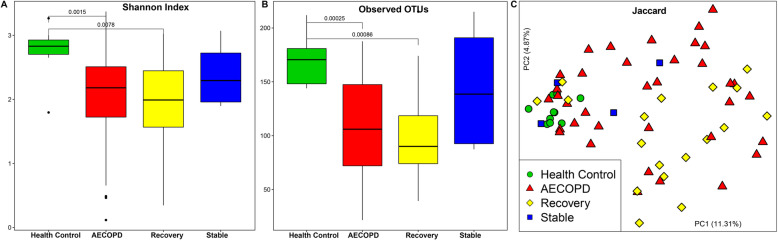
In this study, we characterized the sputum microbiomes from sputum specimens collected from healthy controls (n = 10), stable (n = 4), AECOPD (n = 36), and recovery (n = 18) stages by sequencing the V3-V4 region of the 16S rRNA gene with a HiSeq sequencer.
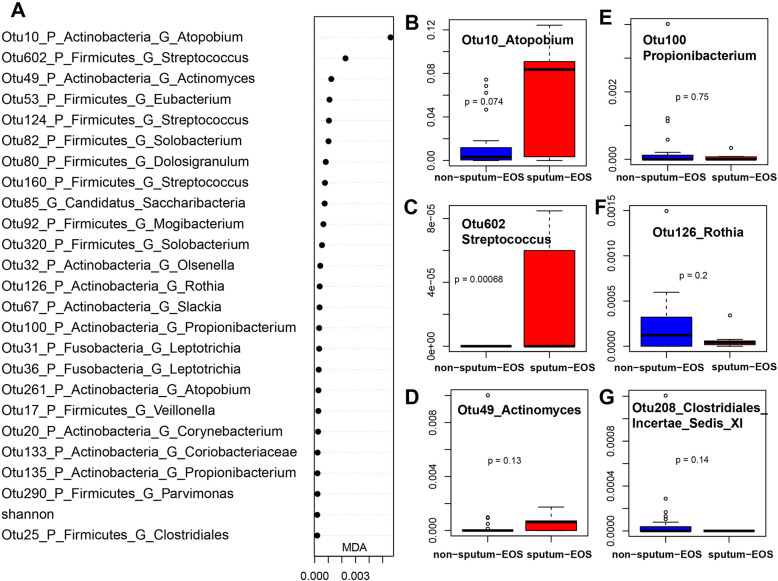
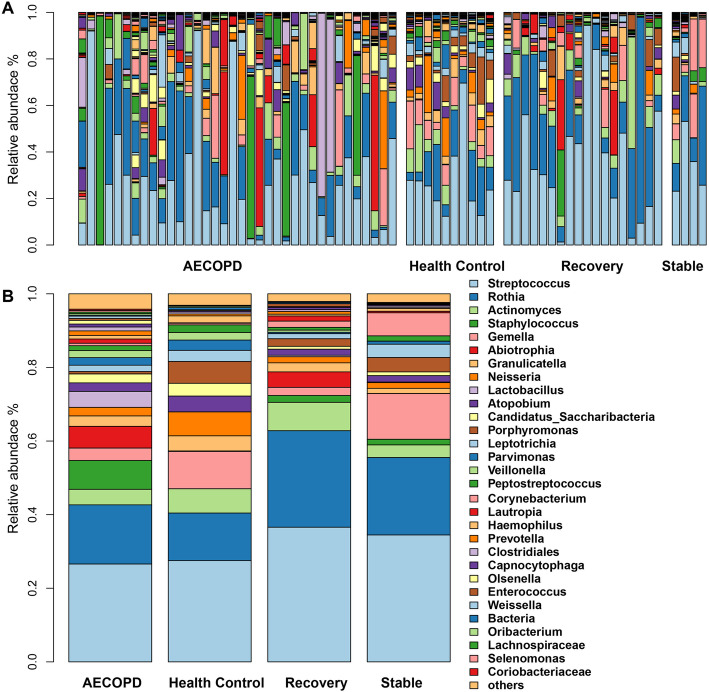
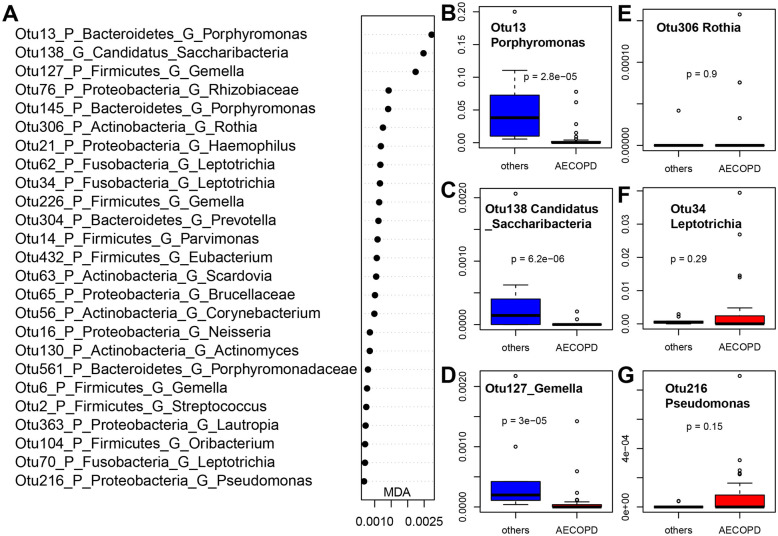
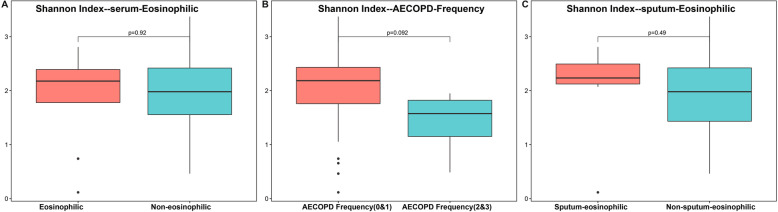
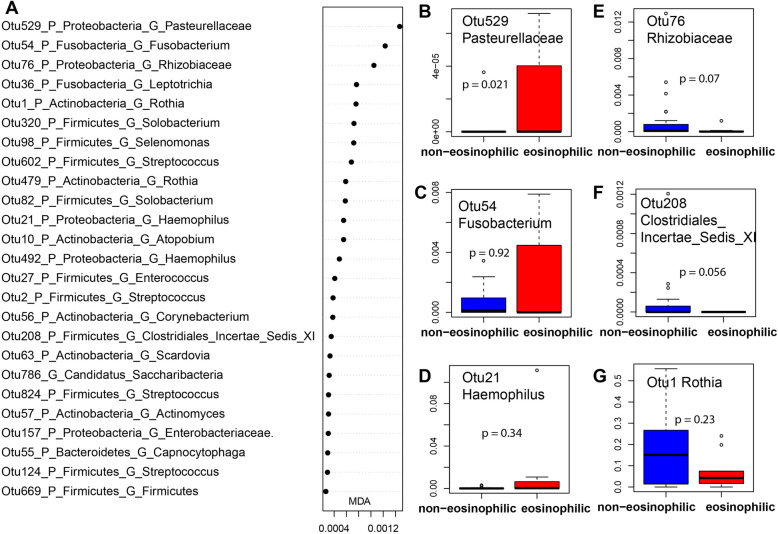
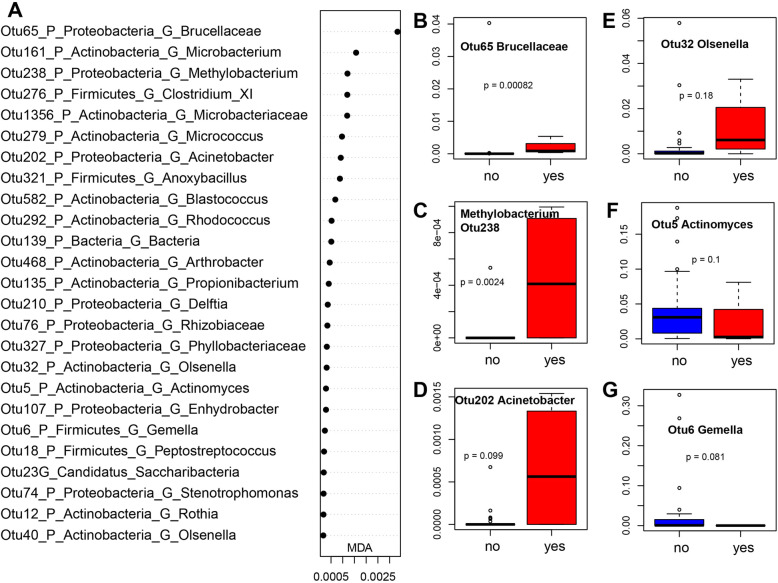
Streptococcus was the most dominant genus among all the different types of sputum. A random forest model was developed to identify bacterial taxa that differentiate AECOPD samples from others. Most of the top predictors, except Pseudomonas, were less abundant in AECOPD samples. We also developed random forest models to differentiate subtypes of AECOPD based on blood eosinophil counts, the frequency of AECOPD, and sputum eosinophils. Bacterial taxa associated with Pasteurellaceae, Fusobacterium, Solobacterium, Haemophilus, Atopobium, Corynebacterium and Streptococcus, were enriched in the sputum microbiomes of eosinophilic AECOPD. Random forest models also demonstrate that a total of 2 bacterial OTUs were needed to differentiate frequent from non-frequent AECOPDs, and 23 OTUs were enough to accurately predict sputum-eosinophilic (sputum eosinophilic concentration ≥ 3%) AECOPD.
This study expanded our understanding of the sputum microbiome associated with different subtypes and clinical status of patients with AECOPD in a Chinese cohort, which provides insights into novel and more targeted management of the different subtypes of AECOPD.
慢性阻塞性肺疾病(COPD)是全球最常见的疾病之一。慢性阻塞性肺疾病急性加重期(AECOPD)与疾病严重程度和进展相关。尽管在理解AECOPD的动态变化方面取得了重大进展,但对于中国人群中AECOPD的痰液微生物组了解甚少。
在本研究中,我们通过使用HiSeq测序仪对16S rRNA基因的V3-V4区域进行测序,对从健康对照(n = 10)、稳定期(n = 4)、AECOPD期(n = 36)和恢复期(n = 18)收集的痰液标本中的痰液微生物组进行了特征分析。
链球菌是所有不同类型痰液中最主要的菌属。开发了一种随机森林模型来识别区分AECOPD样本与其他样本的细菌分类群。除假单胞菌外,大多数顶级预测因子在AECOPD样本中的丰度较低。我们还开发了随机森林模型,以根据血液嗜酸性粒细胞计数、AECOPD的频率和痰液嗜酸性粒细胞来区分AECOPD的亚型。与巴斯德菌科、梭杆菌属、解脲棒杆菌属、嗜血杆菌属、阿托波氏菌属、棒状杆菌属和链球菌相关的细菌分类群在嗜酸性粒细胞性AECOPD的痰液微生物组中富集。随机森林模型还表明,总共需要2个细菌OTU来区分频繁发作与非频繁发作的AECOPD,23个OTU足以准确预测痰液嗜酸性粒细胞性(痰液嗜酸性粒细胞浓度≥3%)AECOPD。
本研究扩展了我们对中国队列中与AECOPD患者不同亚型和临床状态相关的痰液微生物组的理解,为AECOPD不同亚型的新型和更有针对性的管理提供了见解。